Maserati Boomerang
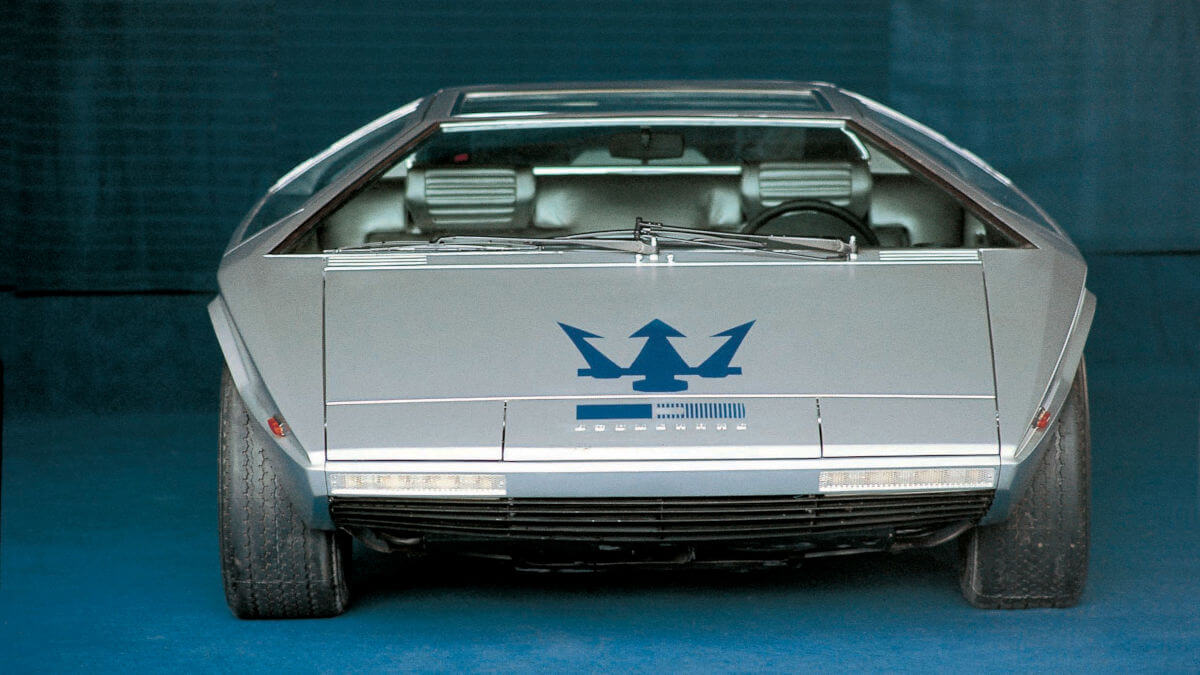
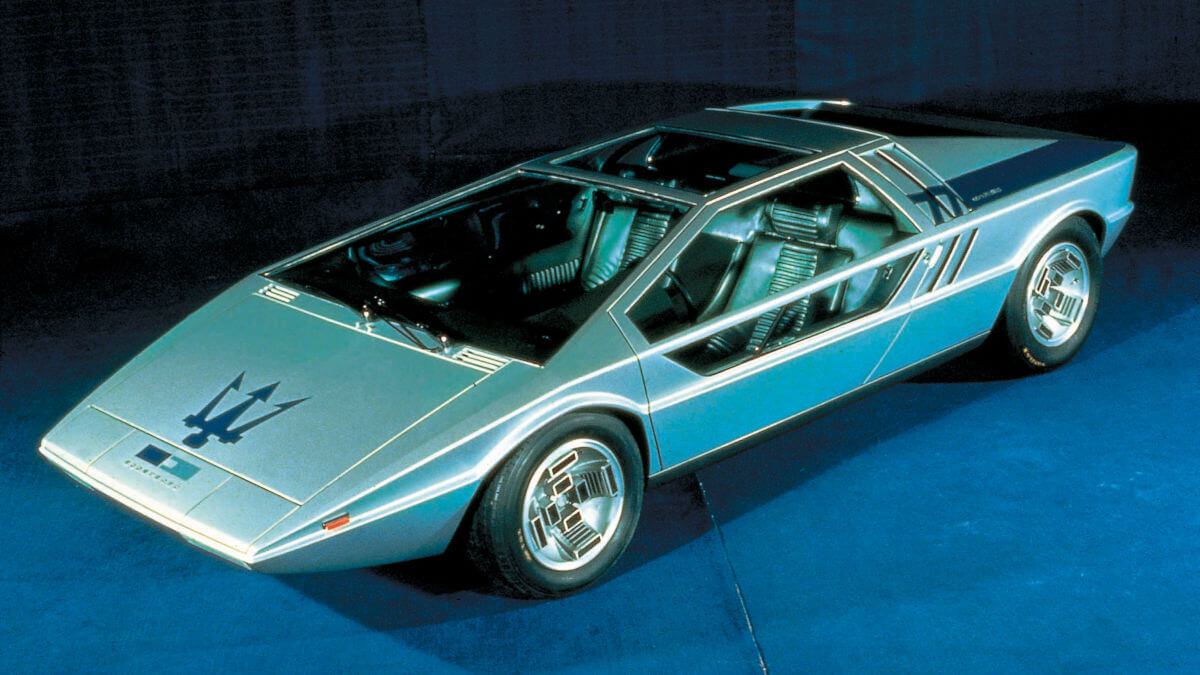
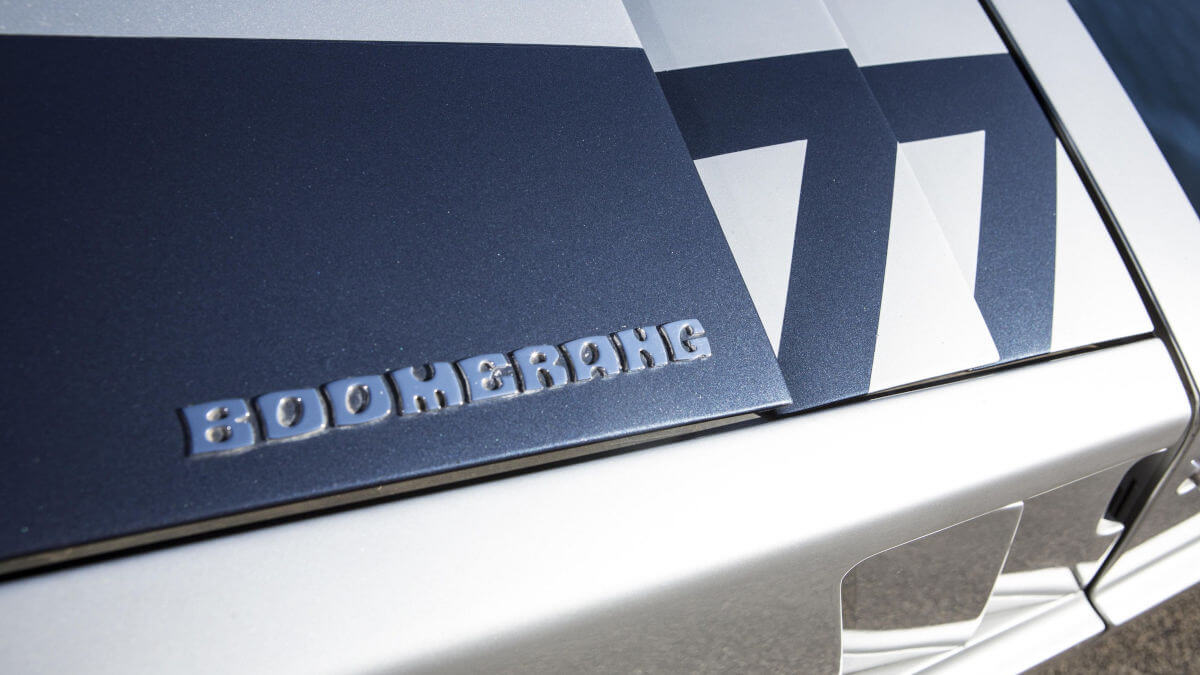
The 1970s were characterised in the automotive sector particularly by wedge-shaped sports cars. In addition to series models such as the Lamborghini Countach or the Lancia Stratos, there were numerous concept cars. One of them is currently celebrating its 50th anniversary. Giorgetto Giugiaro created a grey wedge as a true dream car in his then still young company Italdesign. It had its world premiere at the Geneva Motor Show on 9 March 1972. Neptune’s trident on the front section was particularly striking. In fact, the car was developed together with Maserati. Italdesign had already shown a first small mockup model of the Boomerang sports car at the Turin Motor Show in 1971. Maserati gave its official blessing for a 1:1 scale car, but Italdesign’s aim was to bring a fully drivable car to Geneva – in a departure from the usual concept cars.
Platform from the Maserati Bora
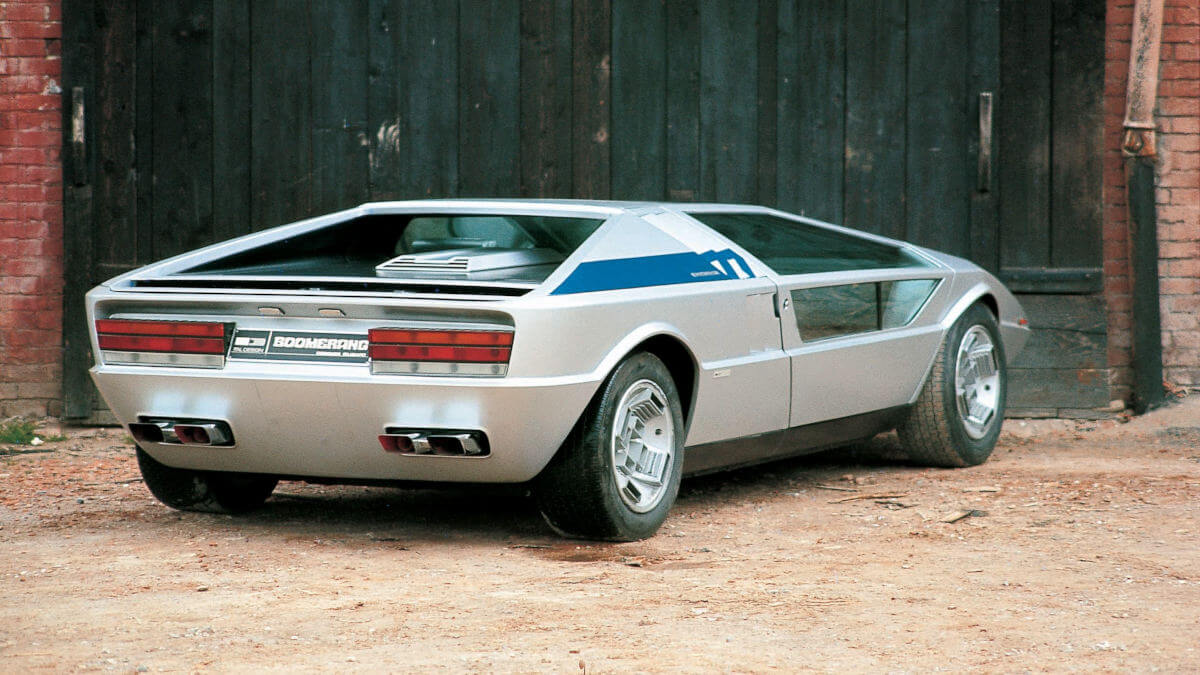
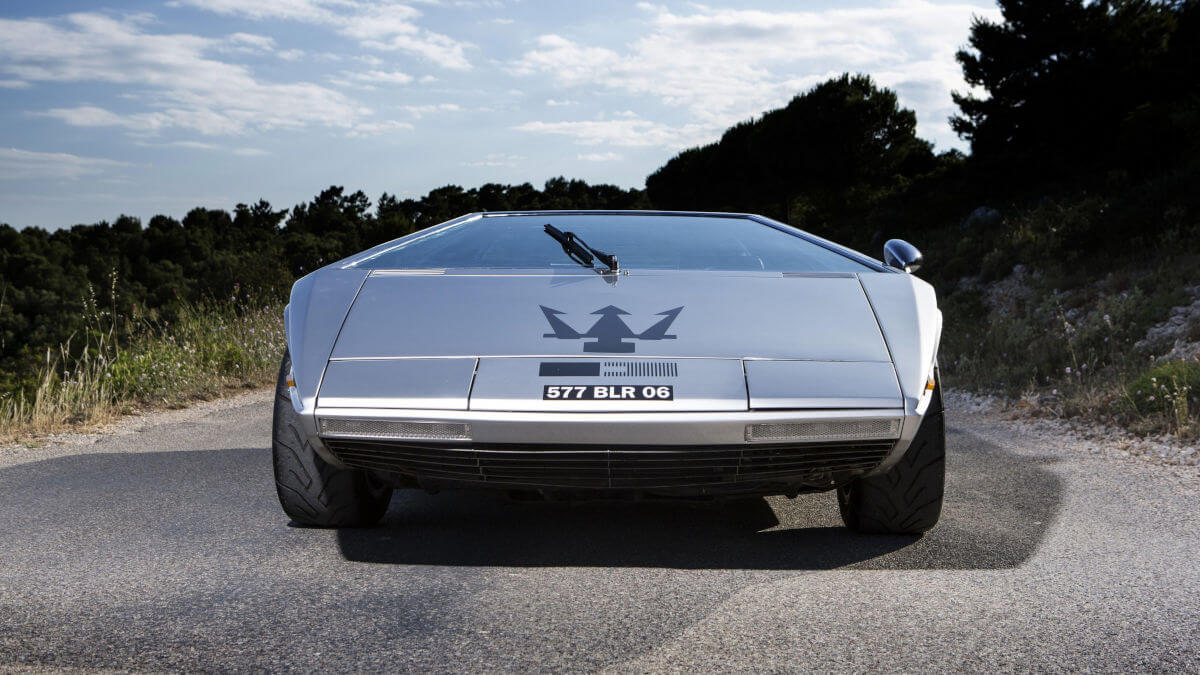
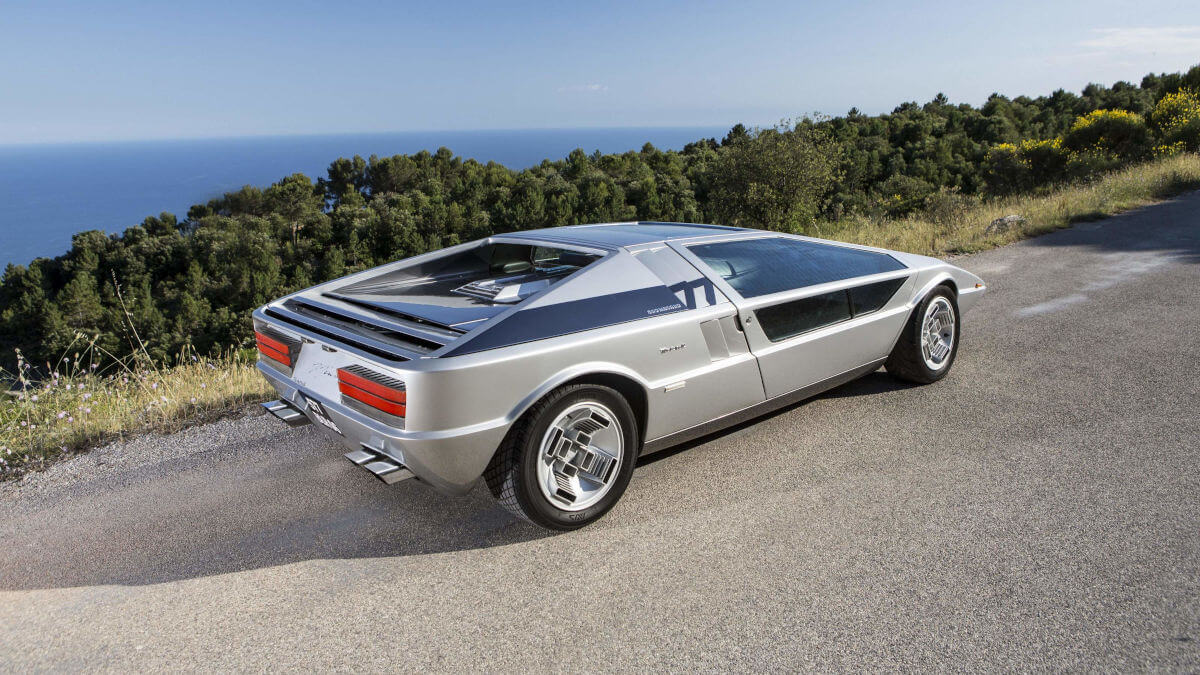
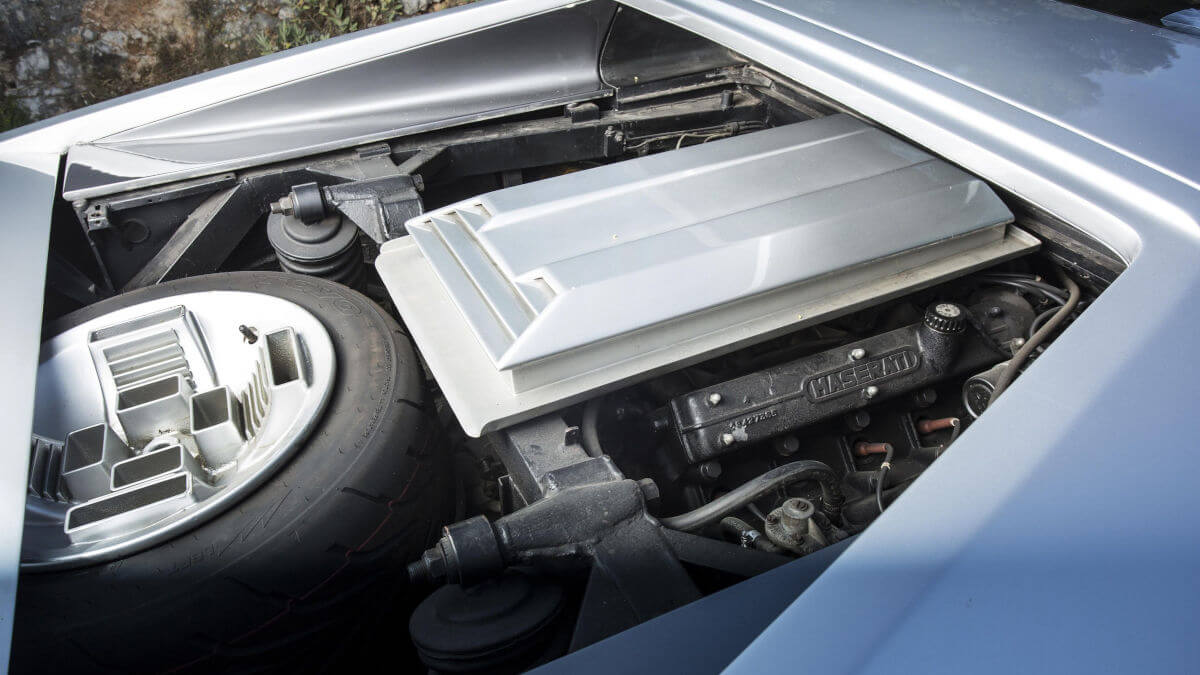
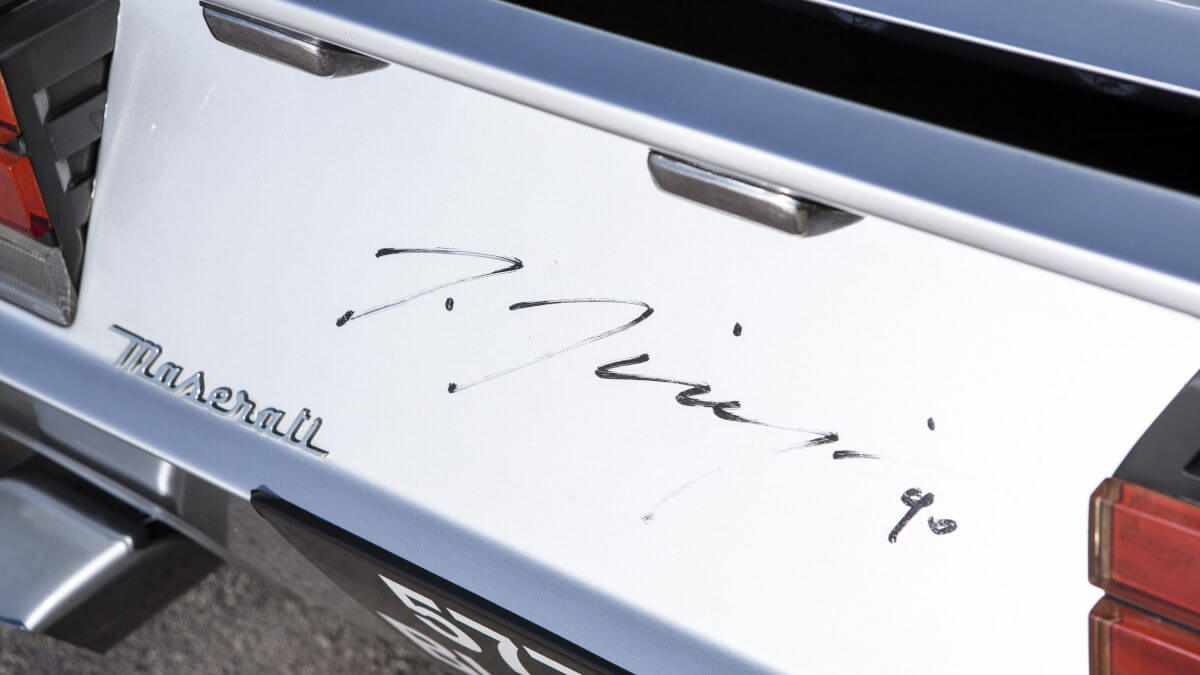
The basis for the concept car was the floor assembly of a Maserati Bora. This means that a 4.7 liter V8 engine with 310 hp is hidden directly behind the two occupants. This power was transmitted to the rear wheels via a manual five-speed gearbox. According to the technical data published in 1972, the Boomerang reaches a topspeed of almost 186 mph. Whether this value was ever tested may be doubted. However, the wedge shape with a relatively small frontal area might well have enabled higher speeds than were possible with the Bora. The front section tapers from the fenders to the (invisible) bumper. Likewise, the side windows slope sharply inwards. Additional windows are fitted in the doors. Together with the large glass roof, they provide a light-flooded cockpit. Since 1990, Giorgetto Giugiaro’s signature has adorned the rear betwen the tail lights.









One-off with license plates
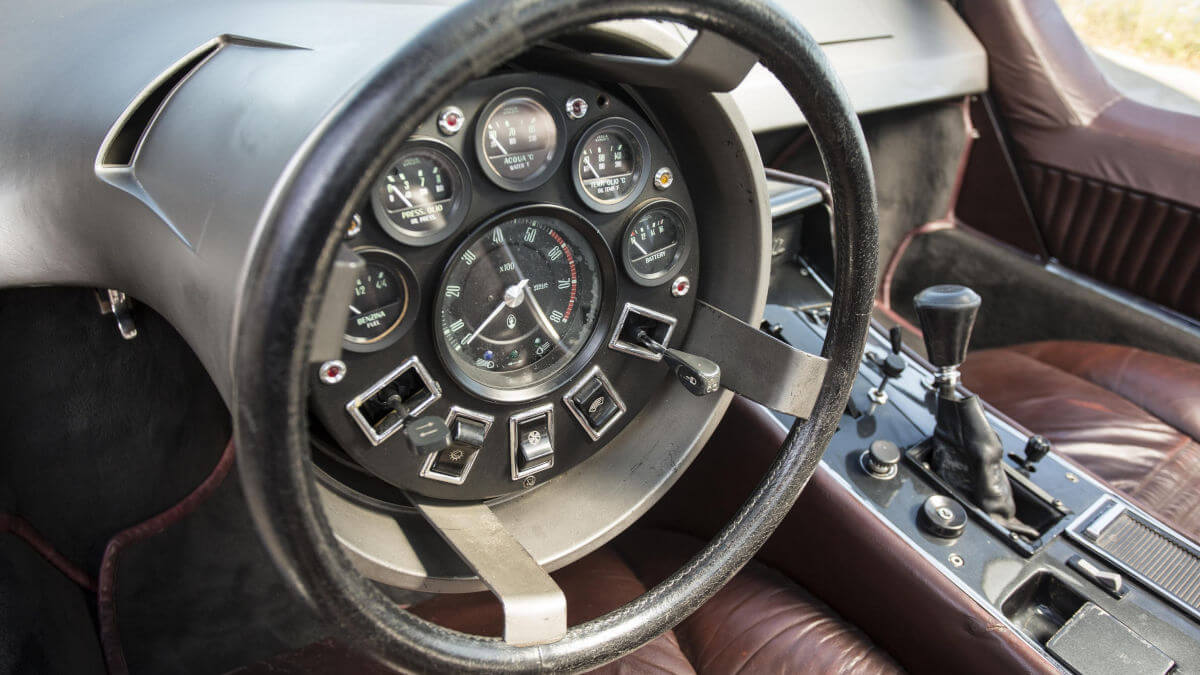
While the Boomerang never went into series production, its basic shape served as a source of inspiration for many manufacturers. However, this didn’t apply to the unusual interior. Apart from the gear lever and a few other switches and buttons, Italdesign moved all the controls to a round surface in the middle of the steering wheel. There was also a large rev counter and five other displays. However, the driver had to drive without a speedometer. A thin steering wheel rim runs around it, which can be used to determine the driving direction of the Boomerang. After various appearances at motor shows, Italdesign sold the one-off to a Spaniard. In 1980, a German Maserati fan bought the car and had it partially restored. In 2002, after a change of ownership, a further restoration of the technical components took place in the UK. During these works, the car also received full road registration. Until 2015, the Boomerang belonged to a Frenchman who had it auctioned by Bonhams. It fetched € 3,335,000.
Images: Maserati, Italdesign, Bonhams