A bull that learned to fly – 60 years of Lamborghini Miura
Geneva, spring 1966. Exhibition halls filled with chrome, cigar smoke, and reverent murmurs. The stands of established manufacturers display Gran Turismos, dignified like gentlemen’s clubs on wheels. Long hoods, lots of leather, lots of tradition. Then suddenly there it is. Flat. Wide. Insolently low.
The Lamborghini Miura
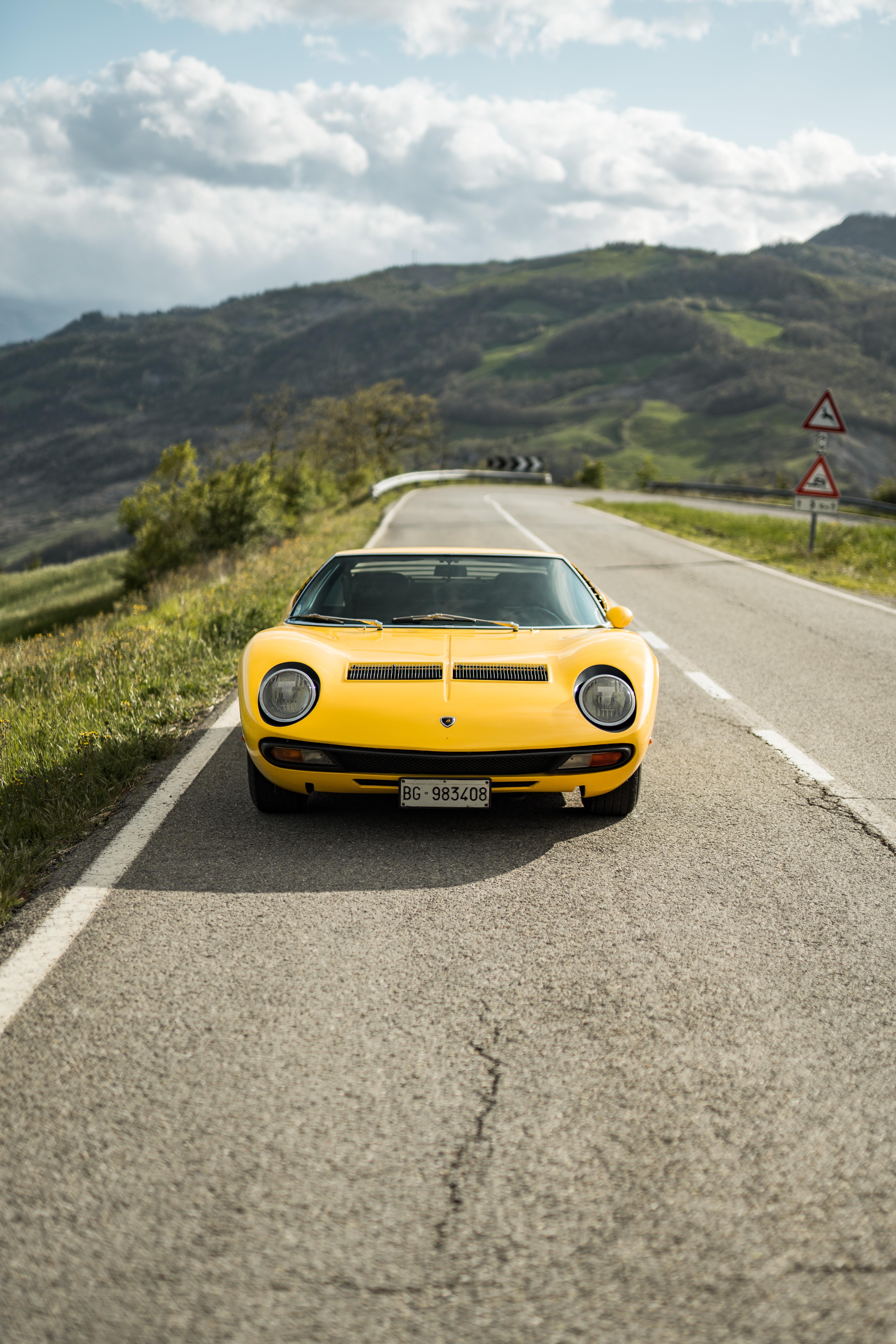
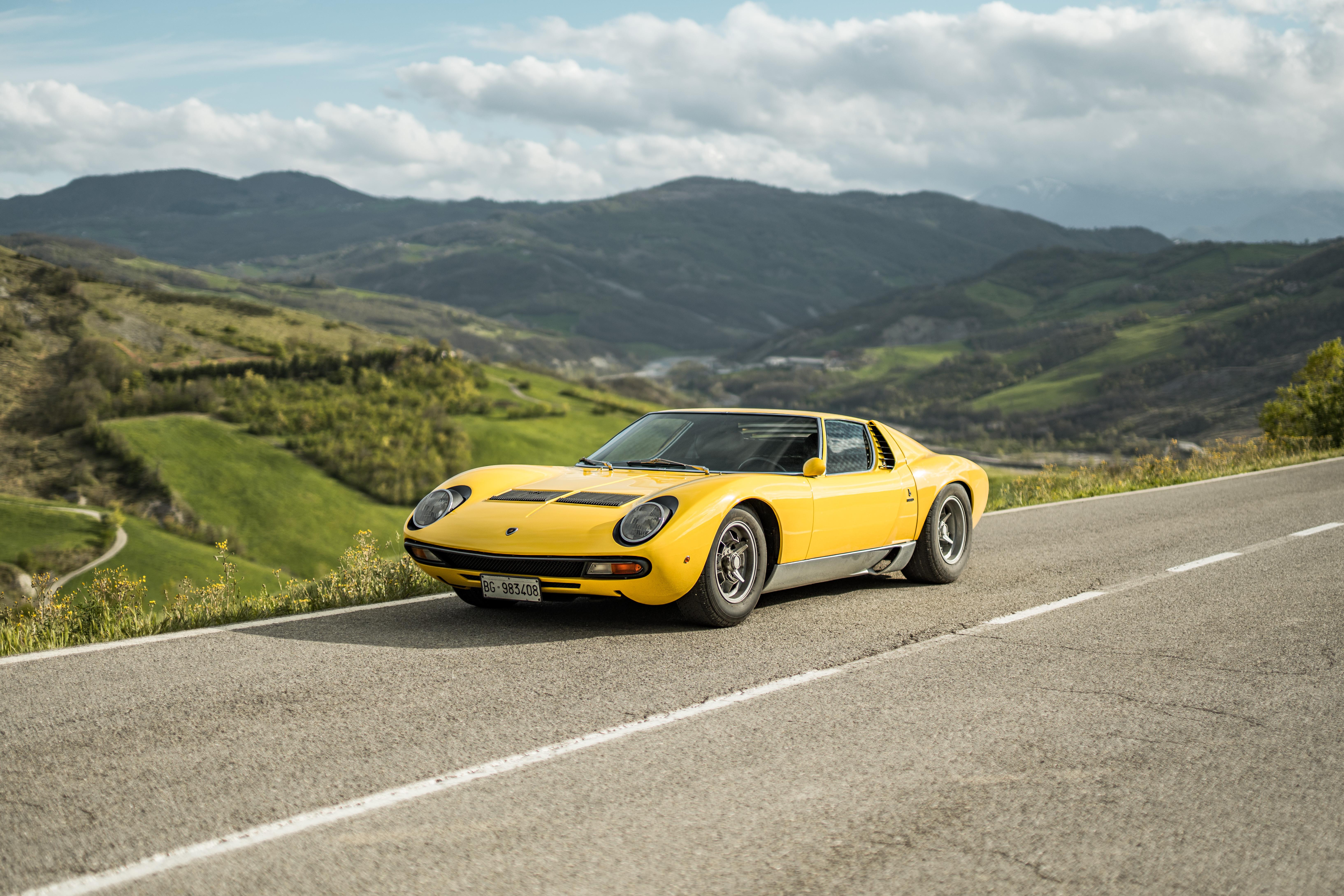
A car that looks as if it were designed for landing on the moon rather than driving to Milan. Some visitors simply stop and stare. Others walk around the car, trying to understand what they are actually seeing. The explanation is simple and revolutionary at the same time. The engine is located behind the seats. Installed transversely. A twelve-cylinder engine in the middle of the car. A concept from racing, suddenly on the road. This changes everything—proportions, weight distribution, posture. The car doesn’t look built, but tense like a muscle.
The young Automobili Lamborghini brand was only a few years old at that time. Its founder, Ferruccio Lamborghini, originally wanted nothing more than to build better Gran Turismos than the competition from Maranello. Fast, comfortable, technically flawless.
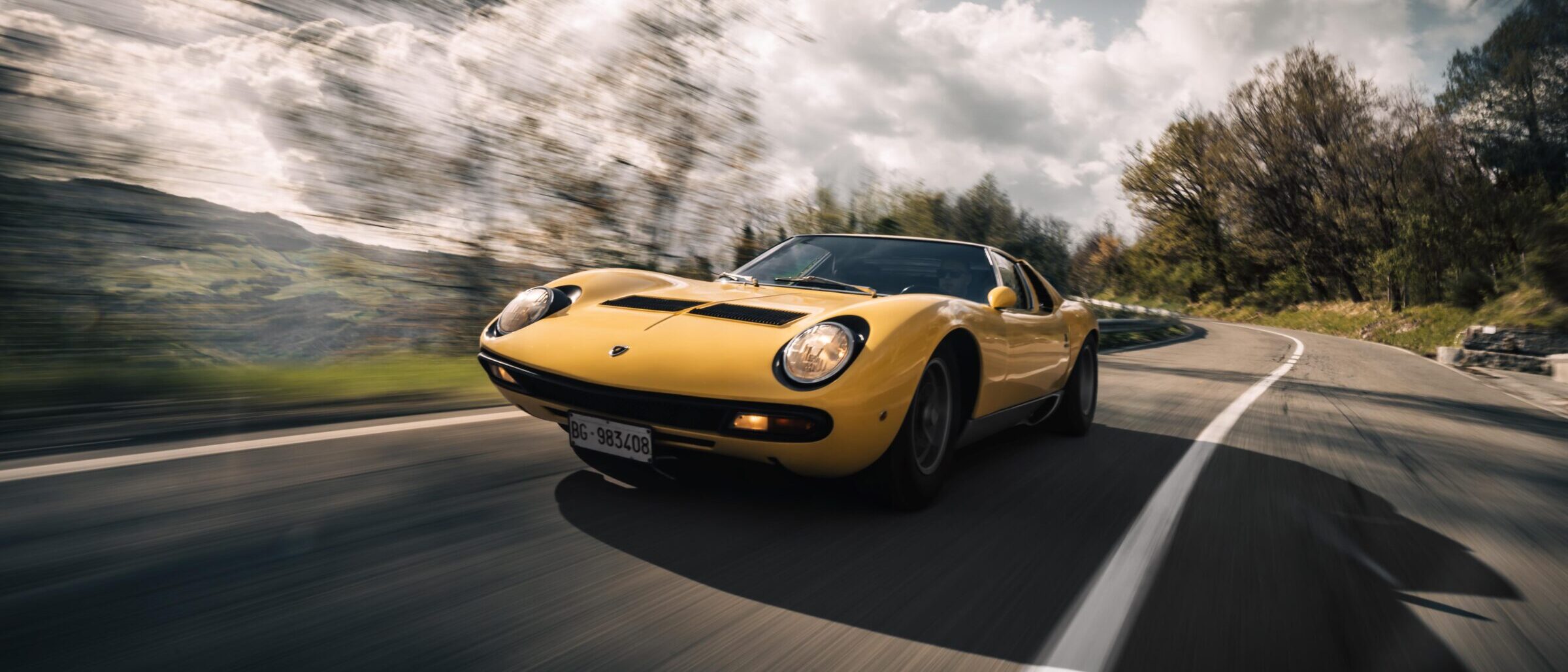
The Miura pays little attention to such modesty. It looks like a provocation. A young designer at Bertone is responsible for this appearance. His name: Marcello Gandini. Gandini draws lines that flow like molten metal. A hood that is barely higher than a knee. Air vents behind the doors. Headlights with eyelashes, as if someone had suddenly decided to give a super sports car eyes.
“Only about 760 units were produced between 1966 and 1973. That was enough to create a legend that is currently valued at between €1.5 million and €3 million.”
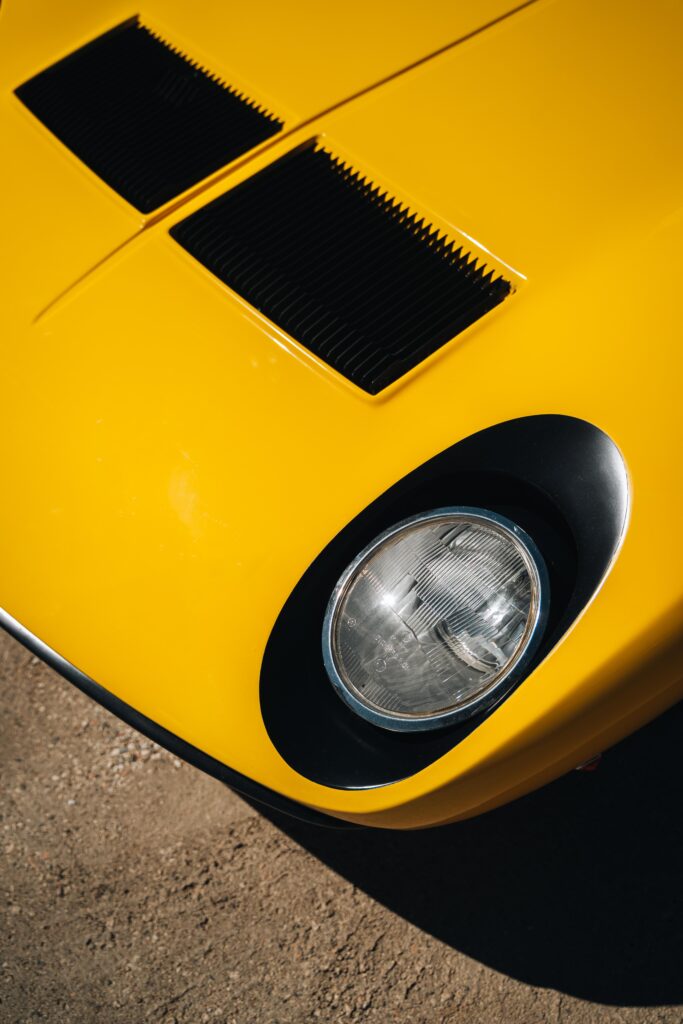
The result is a vehicle that appears both elegant and dangerous. And then there is the engine. A 3.9-liter V12, mounted transversely, directly behind the driver. In early versions, it delivered around 350 hp. Later, in the Lamborghini Miura P400 SV, it delivered almost 385 hp. At a time when many sports cars were still on the road with significantly less power. The data sheet lists a top speed of more than 280 km/h. Values that at the time sounded more like a Le Mans prototype than a production car.
The Miura also changed the perception of speed. Until then, fast cars usually looked like elegant touring cars with a little too much power. The Miura, on the other hand, looked like a predator from the outset. A car that not only achieved speed, but also radiated it. Many later super sports cars followed exactly this principle. Mid-engine, flat silhouette, and dramatic design.
Sixty years later, the world has changed. Cars have become more complex. Electronics, hybridization, digital driving dynamics. But the idea behind the Miura lives on and is often (rightly) referred to as the most beautiful design in automotive history.


Automobili Lamborghini is currently developing a new generation of super sports cars. The Lamborghini Revuelto combines the classic V12 with electric assistance and more than 1,000 hp of system power. The Lamborghini Temerario and the Urus also demonstrate how broad the brand’s spectrum has become.
What is striking here is that this attitude has remained unchanged despite Audi AG.
Lamborghini builds cars that demand and generate attention. Cars that are loud. Cars that spark conversations in parking lots and perform little operas in tunnels. The origin of this attitude can still be found in the brand’s history books. A flat, orange wedge from the 1960s. A car that suddenly decided that a super sports car didn’t have to be well-behaved.
The Lamborghini Miura left the automotive world with a simple idea: if you’re fast, you might as well look spectacular too.
Photos: Lamborghini