Datsun Bluebird
Mid-range vehicles from Japan are often simply commodities. Thousands of them roll over the roads until at some point repairs exceed their current value. It is only decades after the respective production stop that one discovers beautiful design details on some of them and wonders where they have gone. One example is the Bluebird, which Nissan’s predecessor company Datsun produced from 1957. Initially, it was strictly speaking more of a compact-class sedan. Moreover, the Bluebird name was only the highest trim level of the car called 210 and 211. Also, the one-liter four-cylinder powerplant with 34 SAE horsepower didn’t really fit the mid-size class. Datsun had actually developed the 210 and 211 only for the domestic market in Japan. However, starting in 1958, the first examples also officially made their way to the U.S. and other countries. A year later, Datsun changed the number abbreviation for all model derivatives to the name Bluebird.
Second generation became larger
Also in 1959, the Japanese manufacturer presented the larger PL310, which also carried the Bluebird model name from the beginning. It was created in parallel with the smaller and older vehicle. Under the hood now sat a 1.2-liter four-cylinder with 48 SAE horsepower. Power transmission to the rear wheels was provided by a three-speed gearbox. This meant that the larger car actually had one less forward gear than the smaller one, which Datsun justified with the better elasticity compared to the one-liter engine in the 210. In addition to the four-door sedan, a three-door station wagon and a two-door pickup with an open load floor were available from the factory.



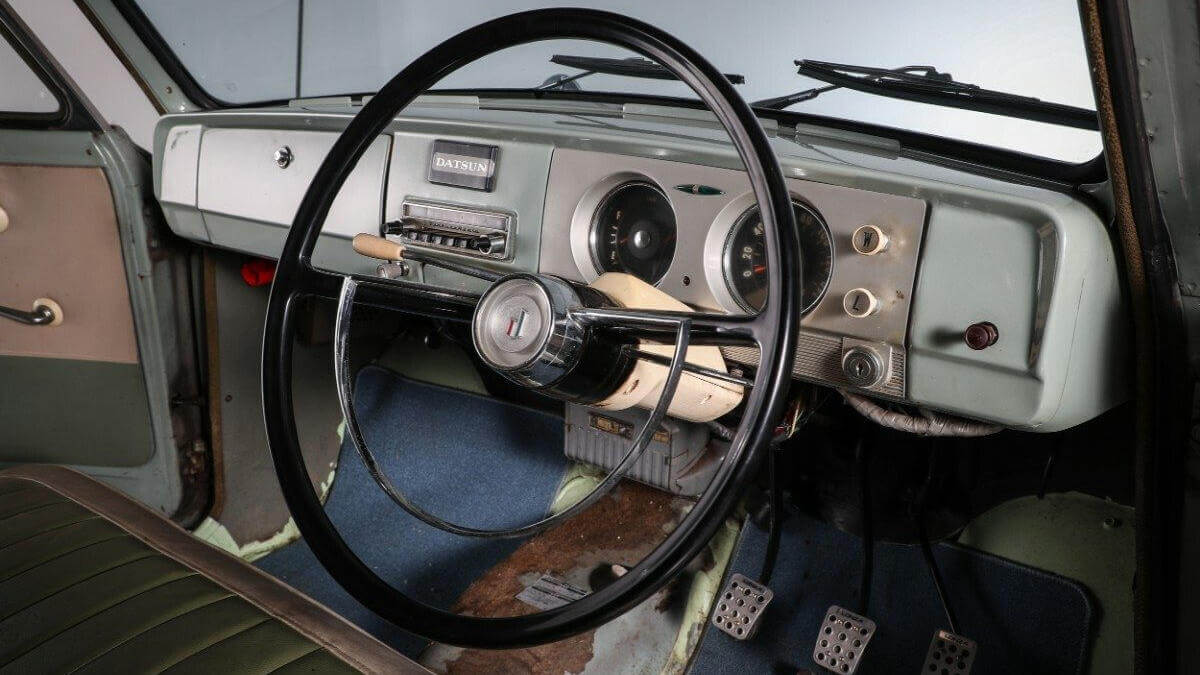
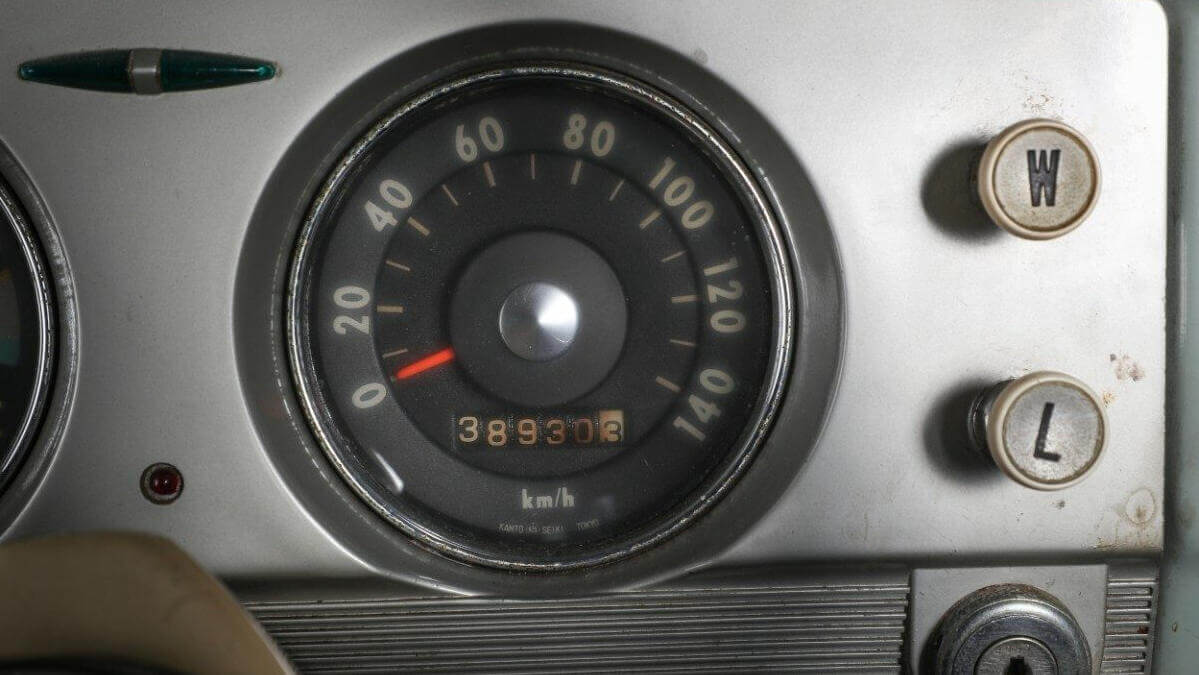

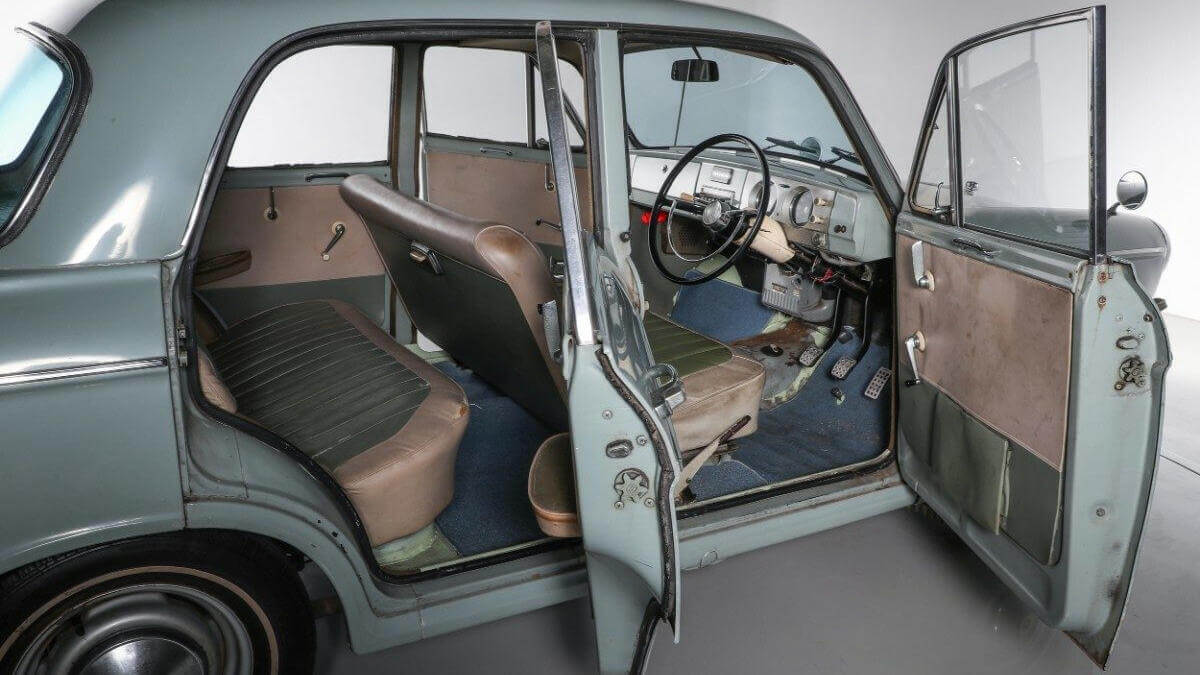
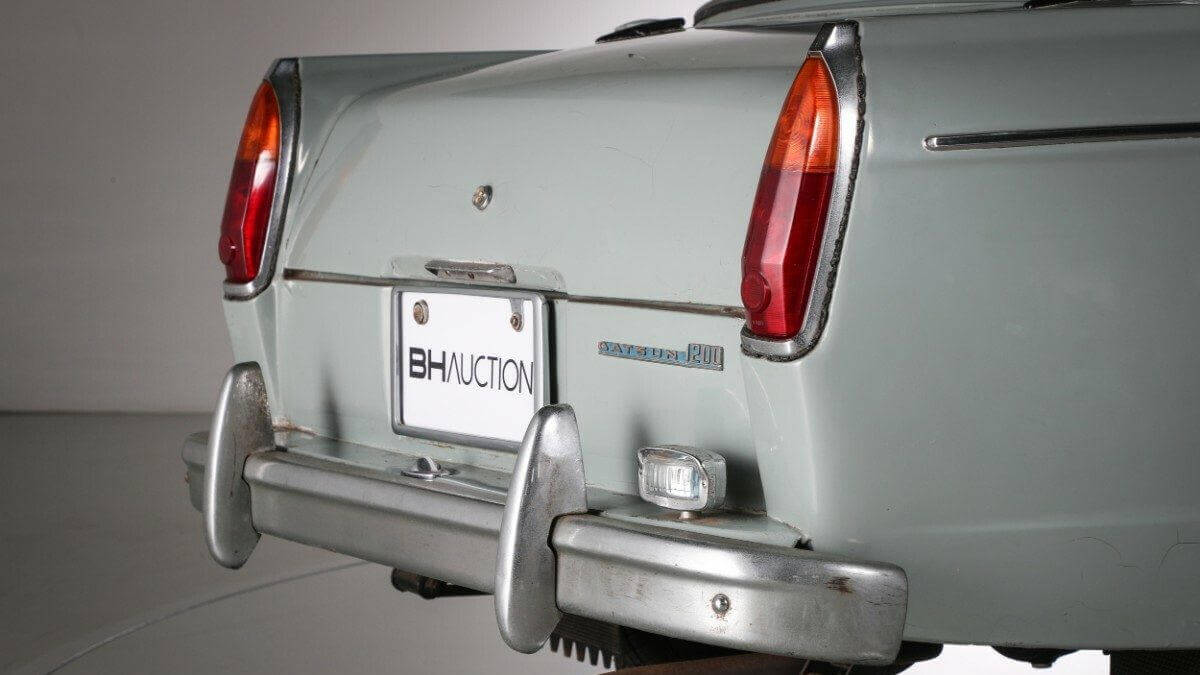
Between Datsun and its Japanese competitor Toyota, there was an internal power struggle for dominance in the mid-size range during this period. Toyota had presented the Corona almost simultaneously, but focused more on good marketing. Datsun, on the other hand, was able to win the first part of the ‘BC war’ until the model change in 1963 with better technology. But Toyota won the second part with better reliabilty, especially in the export markets. In Germany, the Datsun Bluebird only became available from 1973 in the fifth model generation. Due to the withdrawal of the Datsun brand from the export markets at the end of 1983, the model subsequently became the Nissan Bluebird. In the fall of 1990, the Nissan Primera replaced it on many markets. In Japan, the Bluebird remained in the program until 2001.
Early example at BH Auction
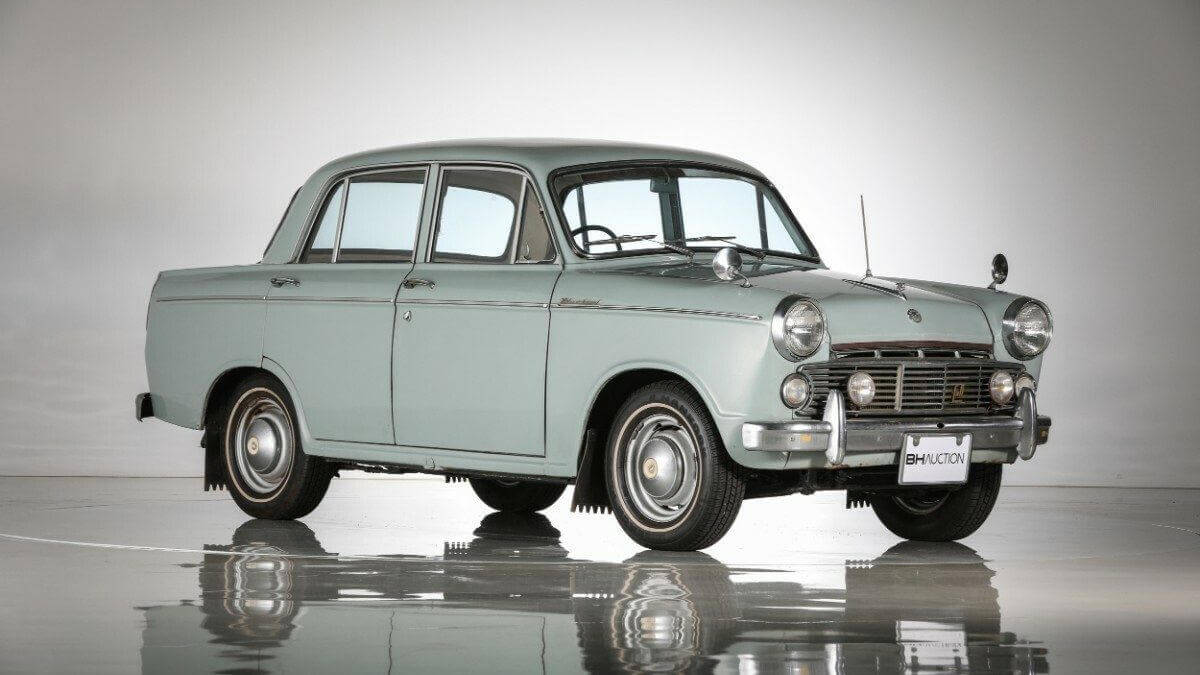
At the Japanese auction house BH Auction, an original vehicle from 1962 is currently on offer. As a minor modification, a previous owner installed the longer taillights of the successor model. Some work may be needed on the underbody and body to fight the rust. The typical shape of the era would have fit well on European roads, but didn’t make it there at the time. Now a European car collector could possibly get his/her hands on it. BH Auctions sells the Bluebird on behalf of a customer and outside of auctions only through the website.
Images: BH Auction