35 Years of the Bugatti EB110 – The Rebirth of a Legend
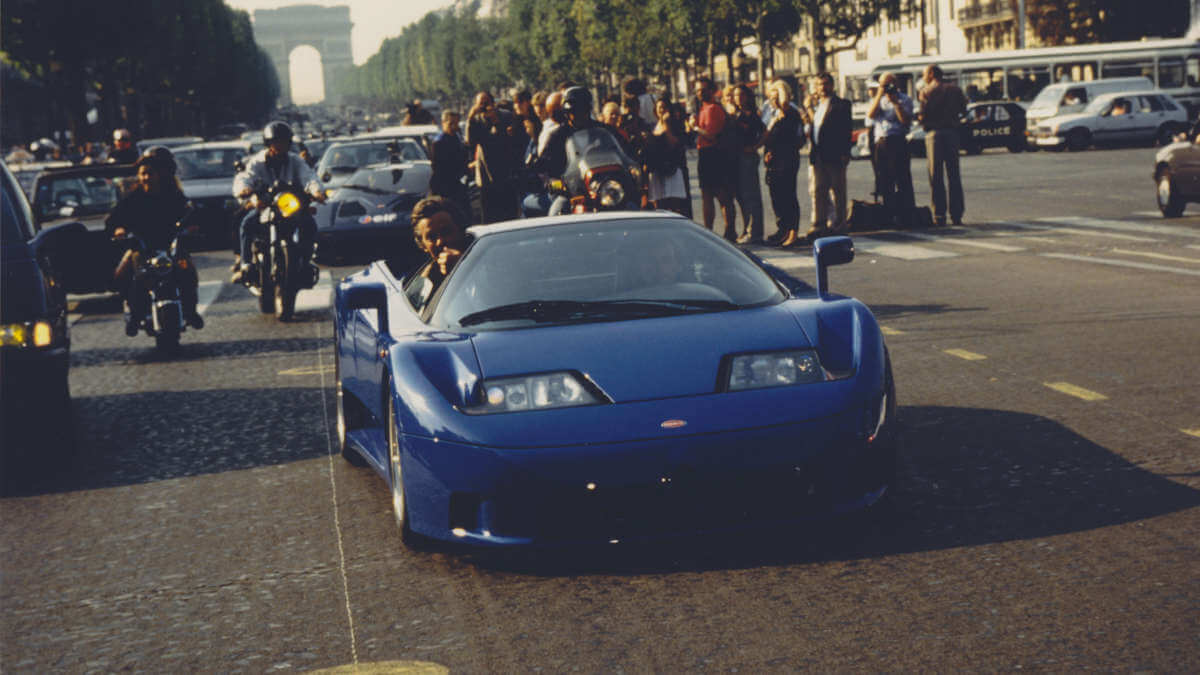
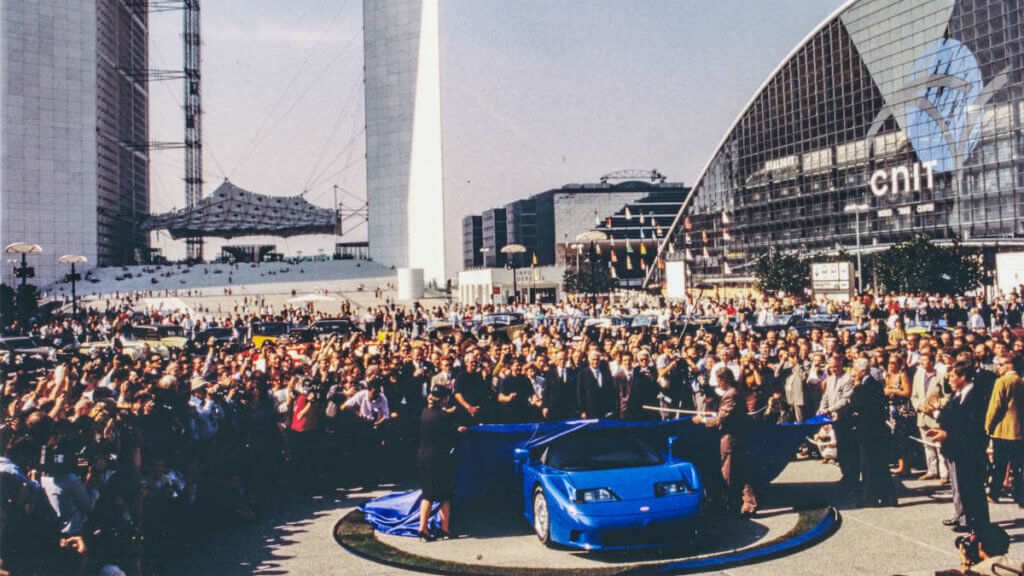
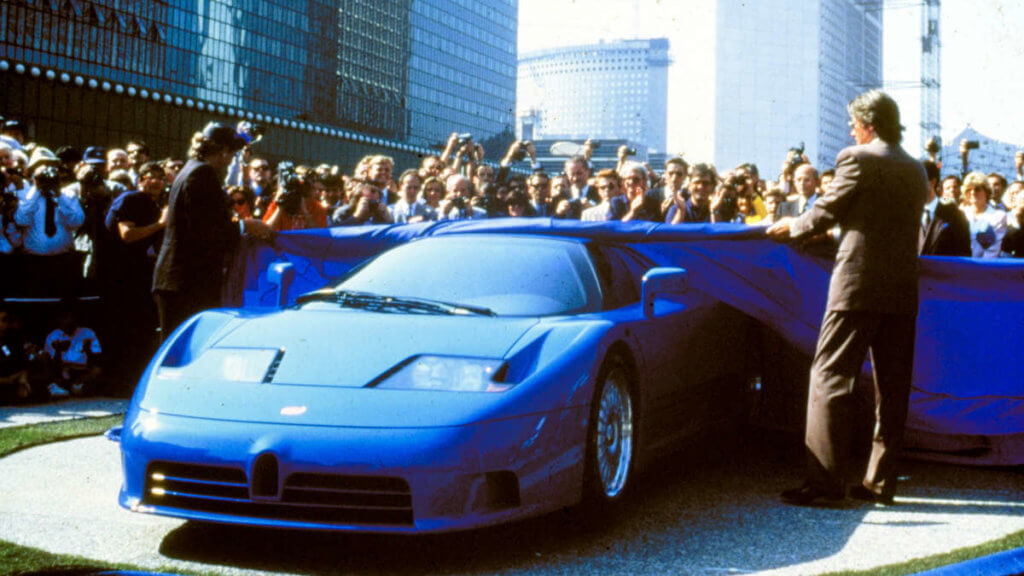
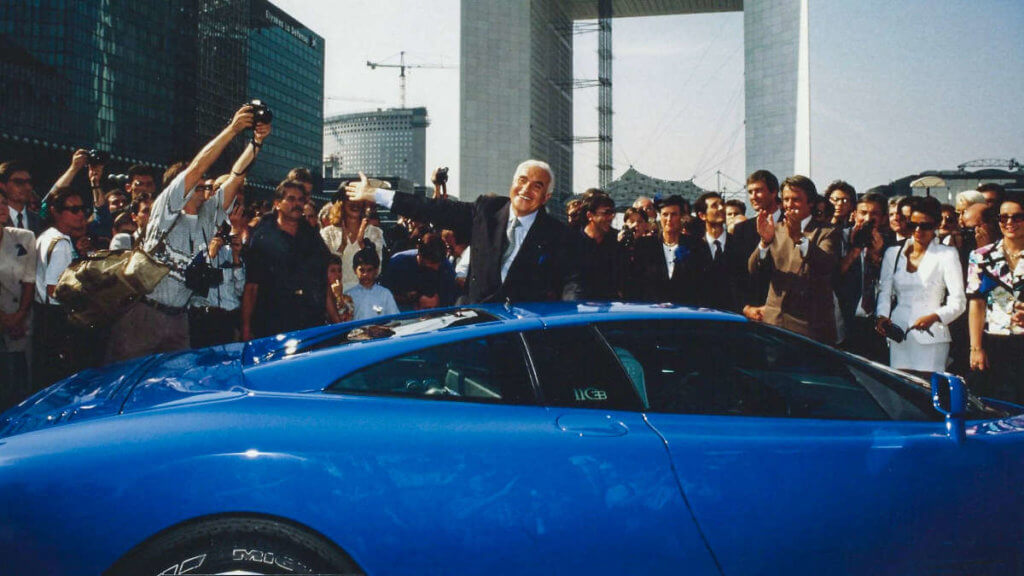
Paris, summer 1991. There is an unusual buzz on the Champs-Élysées. Two low-slung supercars bearing the famous horseshoe emblem on their radiators are cruising down what is arguably France’s most famous boulevard. For most onlookers, this is far more than just the unveiling of a new model—it is the return of a legend. Nearly four decades after the original brand ceased operations, Bugatti is making a spectacular comeback with the EB110.
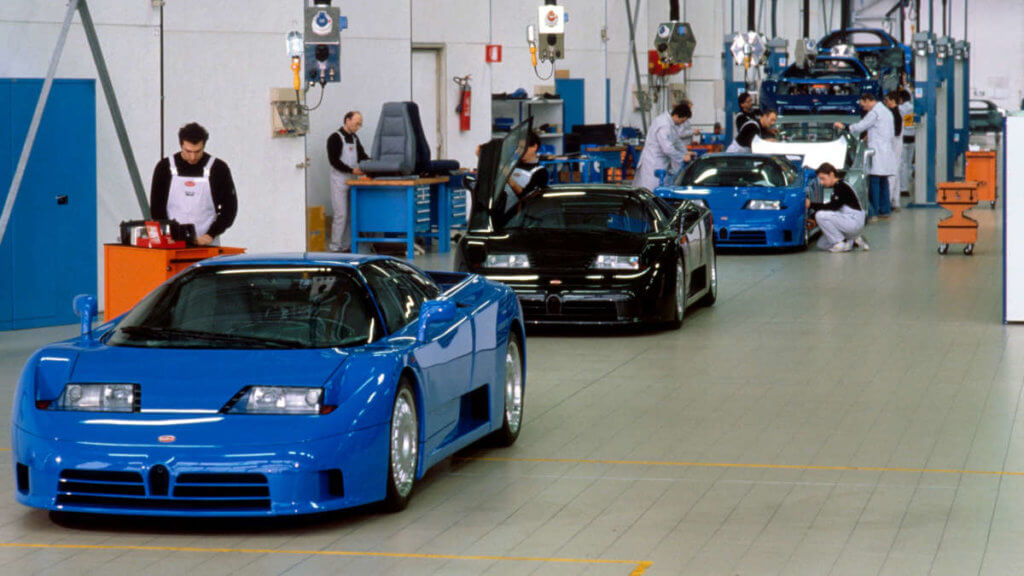
It is no coincidence that this rebirth is taking place on the 110th birthday of company founder Ettore Bugatti. Italian entrepreneur Romano Artioli had already secured the brand rights in the mid-1980s and has since pursued the ambitious goal of restoring Bugatti to the pinnacle of sports car manufacturing. To that end, a completely new factory—the futuristic Fabbrica Blu—was built in Campogalliano, near Modena, Italy. While the buildings were gradually being completed, the new supercar had already undergone a rigorous testing program—from icy test drives at the Arctic Circle to high-speed laps on the Nürburgring Nordschleife.
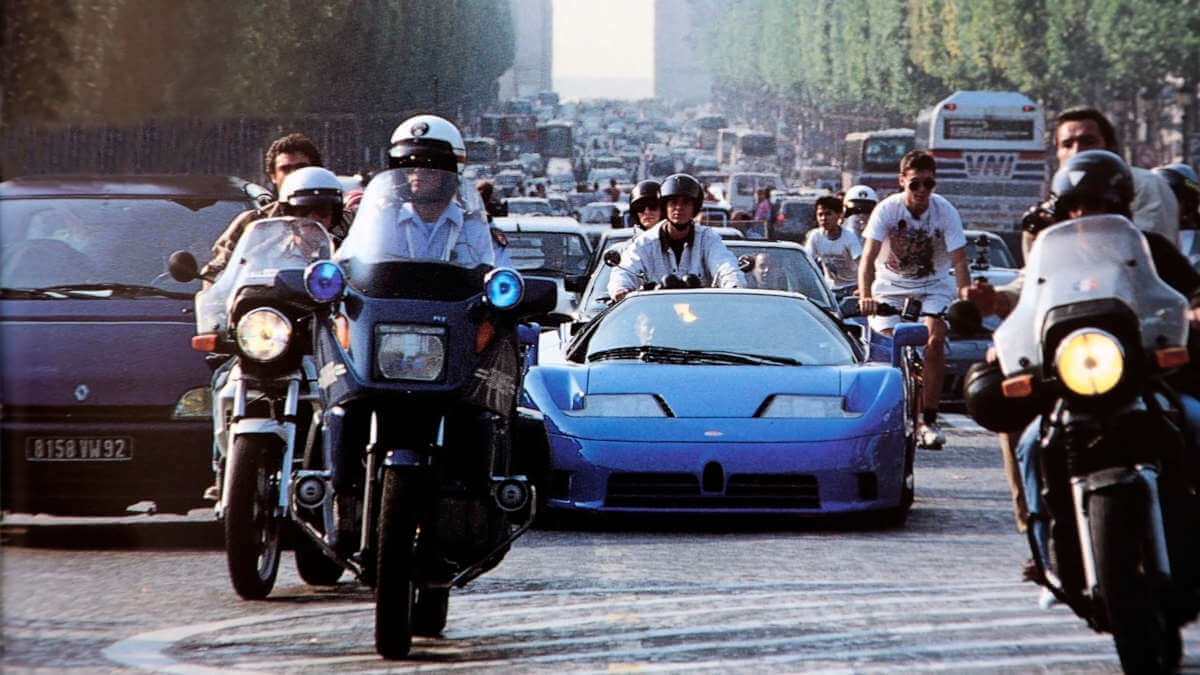
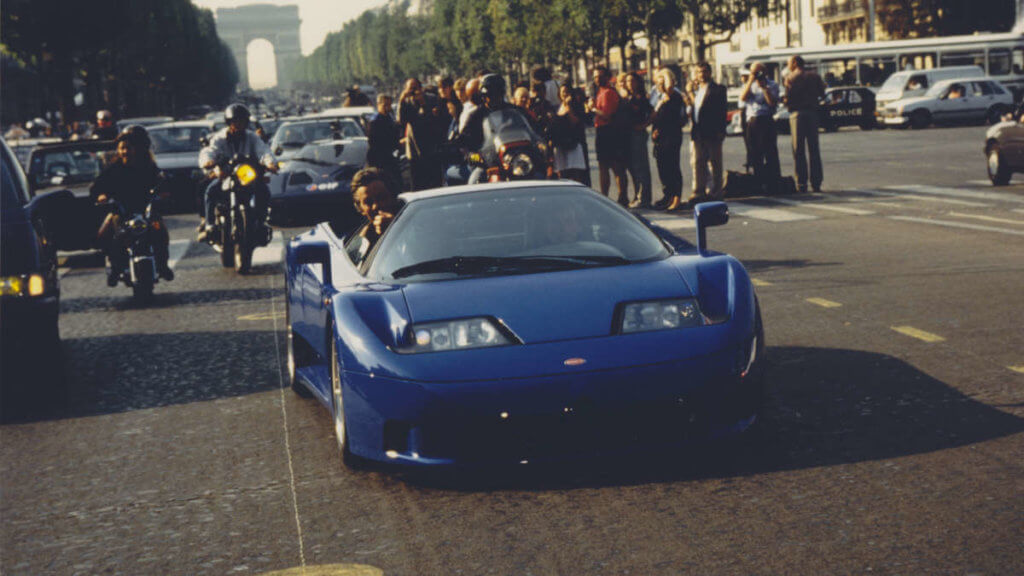
The EB110 was intended not only to bear this name steeped in tradition, but also to carry on Ettore Bugatti’s spirit of innovation. Its design was correspondingly uncompromising. Behind the seats, for the first time in the brand’s history, was a 3.5-liter V12 engine with five valves per cylinder. Four turbochargers helped the engine deliver 560 PS.
Power was transmitted via a manual six-speed transmission to a permanent all-wheel-drive system with a Visco clutch—an extraordinary combination in this vehicle class in the early 1990s. Equally groundbreaking was the carbon-fiber monocoque, which reduced weight while providing enormous torsional rigidity. Added to this were standard 18-inch magnesium wheels and a high-performance braking system from Brembo. From today’s perspective, many of these components may seem like a given. In the early 1990s, however, they were among the most advanced technologies available in a production car.
The fastest of his time.
As early as the 1992 Geneva Motor Show, Bugatti expanded the lineup with the even more uncompromising EB110 Super Sport, or SS for short. Thanks to higher boost pressure, the V12’s output rose to 610 PS, while numerous lightweighting measures reduced the vehicle’s weight by about 150 kilograms.
Its performance figures were equally impressive. It accelerated to 100 km/h in just 3.26 seconds, and its top speed reached up to 351 km/h. This made the EB110 one of the fastest production cars of its era and set new standards in international supercar competition.
The model also made history off the road. In September 1994, an EB110 converted to run on natural gas reached 342.9 km/h on the test track in Ehra-Lessien, setting a new world speed record for vehicles powered by this fuel. Even on ice, the Bugatti demonstrated its extraordinary capabilities, setting another record at 296 km/h. Its motorsports appearances, including at the 24 Hours of Le Mans and in Daytona, however, failed to yield the hoped-for success.
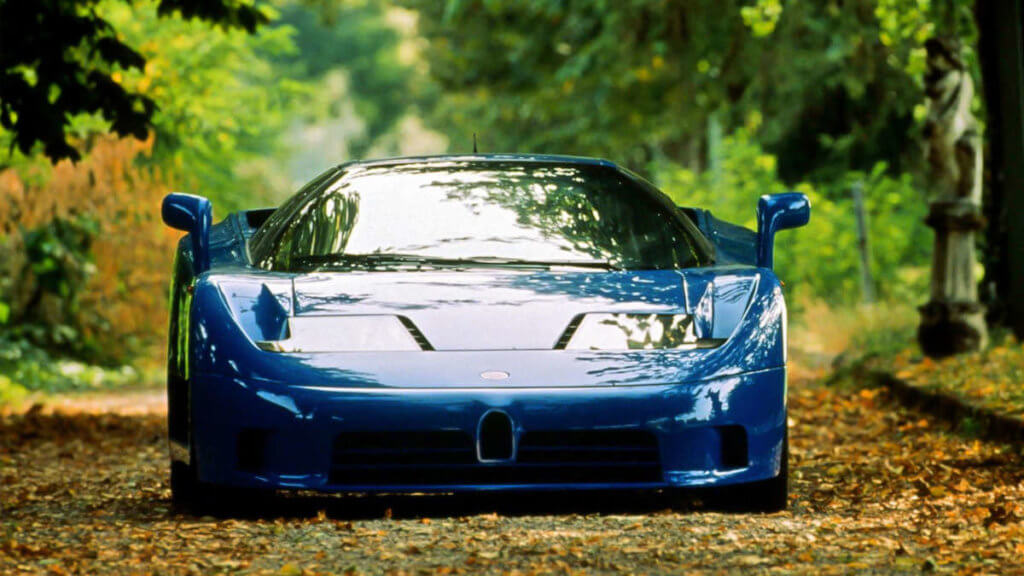
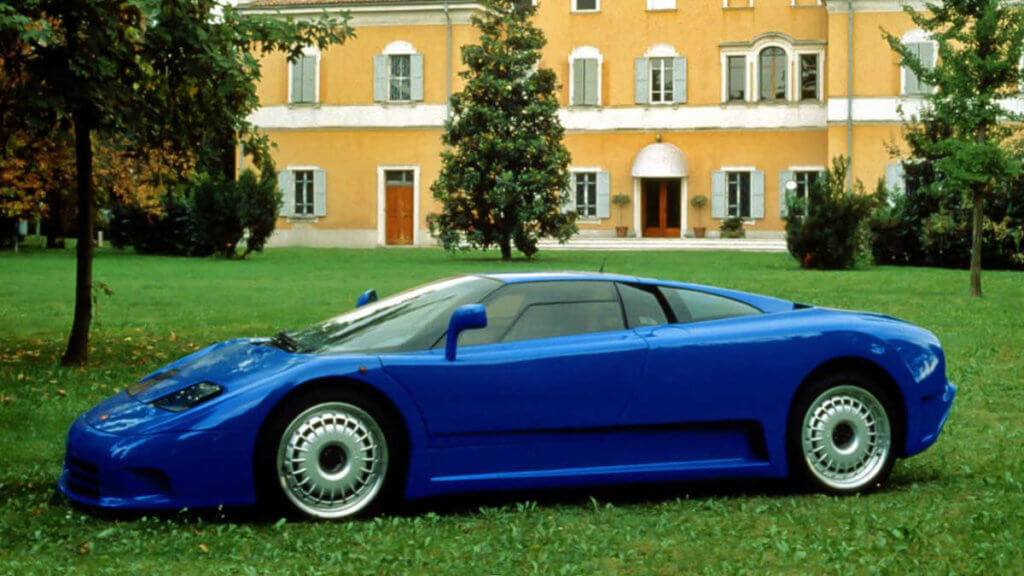
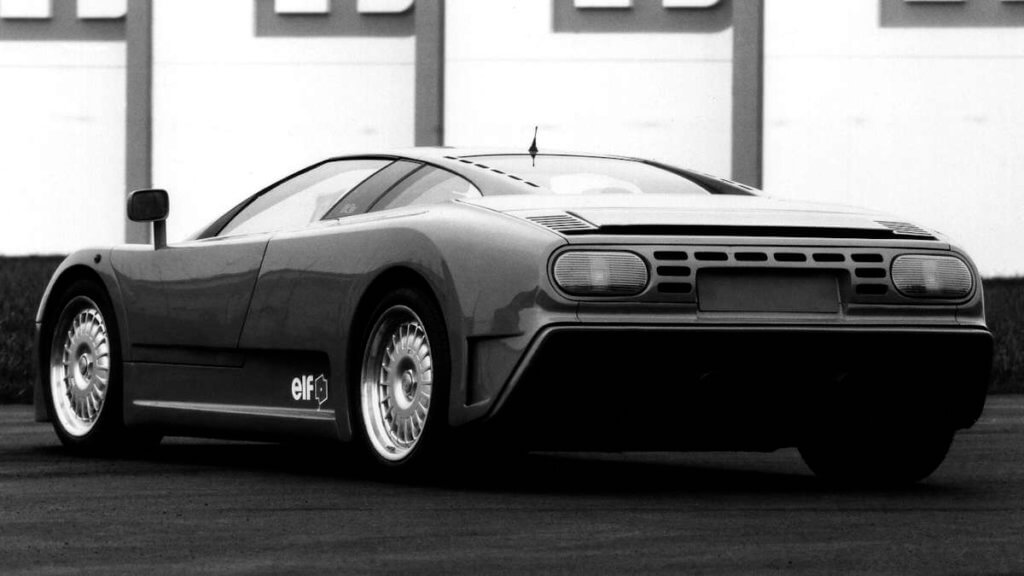
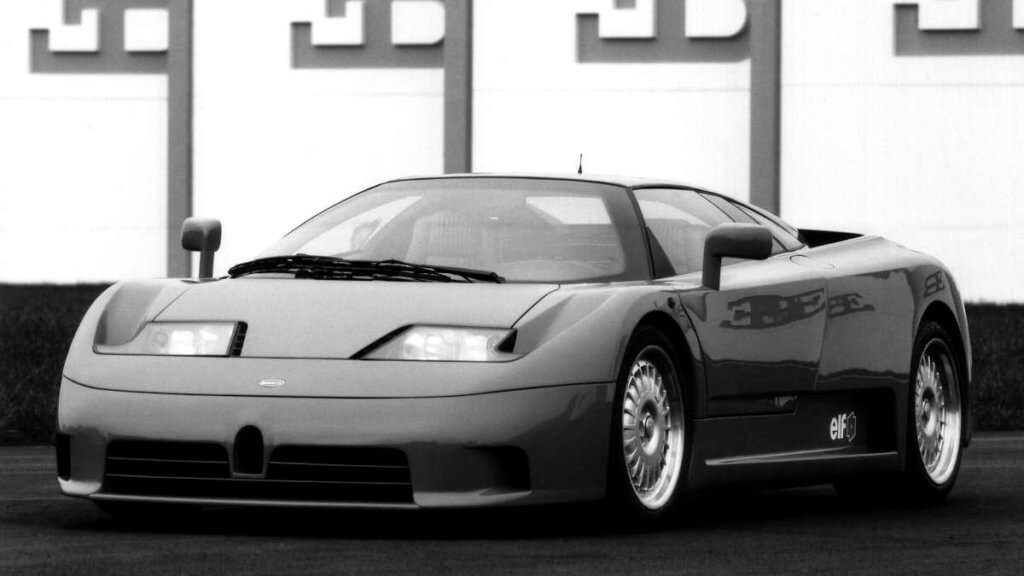
Despite its impressive performance figures, the EB110 was by no means intended to be a spartan race car for the road. Rather, it combined its high-performance technology with a level of comfort that was remarkable for its time. Standard equipment included, among other things, air conditioning, power steering, a high-quality audio system, and central locking. In the GT, electrically adjustable seats upholstered in Poltrona Frau leather ensured comfort on long drives. Trim strips made of precious wood were even available as an option. The distinctive doors, which swung forward and upward, also made it easier to get in and gave the car an unmistakable appearance.
Short construction period, great legend
However, the company’s financial success fell short of high expectations. As early as 1995, Bugatti ran into financial difficulties, forcing it to halt production in Campogalliano. Only about 134 vehicles were built there. Former race car driver Jochen Dauer subsequently took over the remaining chassis and used them to complete about ten more EB110 SS models.
It is precisely this small production run that continues to contribute significantly to the EB110’s legendary status to this day. Over the past decade and a half, the market value of these cars has risen significantly. The first Bugatti of the modern era has long been regarded not only as a technical masterpiece of its time, but also as one of the most coveted supercars of the 1990s—and as the model that impressively brought the storied Bugatti name back to the global automotive stage.