A 16-Cylinder Drive Through Tuscany – Auto Union Lucca
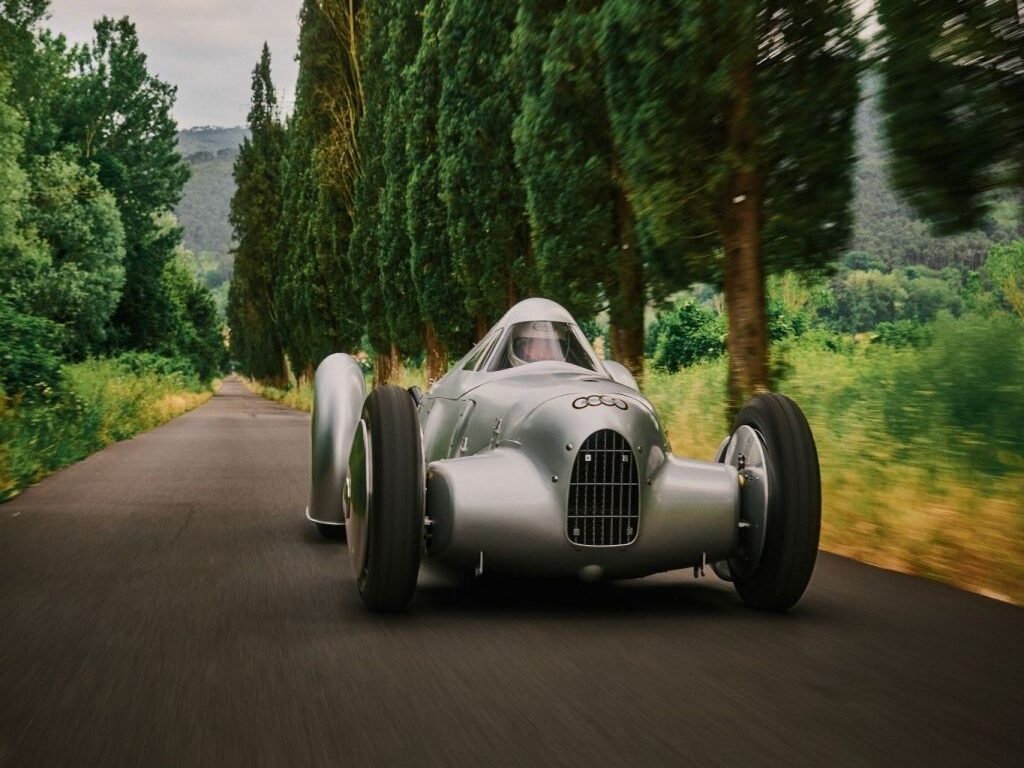
Early one morning in Tuscany, a fine mist hangs over the fields between Pescia and Altopascio. Cypress trees cast long shadows on the asphalt of the old road leading toward Viareggio, while somewhere behind the hills, the sun is already making the bodywork of a silver Monoposto glisten. Then a mechanical roar shatters the silence. A sixteen-cylinder supercharged engine roars to life, dust swirls along the roadside, and for a brief moment, the world seems to consist of nothing but speed.
It is scenes like these that continue to fuel the legend of the early Silver Arrows to this day. In the 1930s, motorsports in Germany became a showcase of technical prowess: Mercedes-Benz versus Auto Union, front-engine versus mid-engine, engineering mastery versus engineering mastery. Names like Bernd Rosemeyer, Hans Stuck, and Rudolf Caracciola became national heroes of an era in which records were set not only on racetracks but also on public roads—closed off for a few minutes of full throttle and the dream of the world’s fastest car.
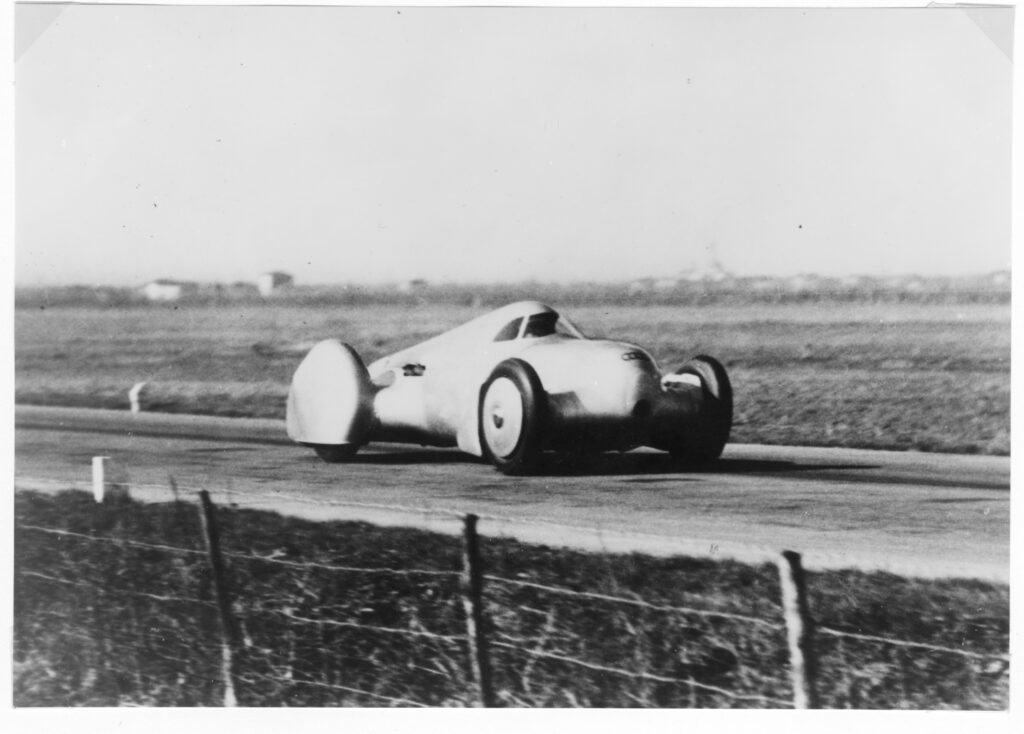
For Auto Union, the area around Lucca was far more than just a backdrop. On the nearly perfectly straight road between Florence and Viareggio, the engineers found ideal conditions for their high-speed tests: smooth asphalt, a wide roadway, and enough run-off space to push the massive streamlined cars to their limits.
Based on the Auto Union Type A, an aerodynamically streamlined record-breaking car with around 375 horsepower was developed at the time—a machine whose shape was determined less by design and more by the need to combat air resistance. Behind the wheel was Hans Stuck, one of the great German race car drivers of his era. During the record runs, the car achieved an average speed of over 320 km/h over the flying mile. Speeds of nearly 327 km/h were even recorded on individual sections of the track. Figures that seemed almost surreal in the mid-1930s.
From then on, the car was considered the fastest road car in the world.
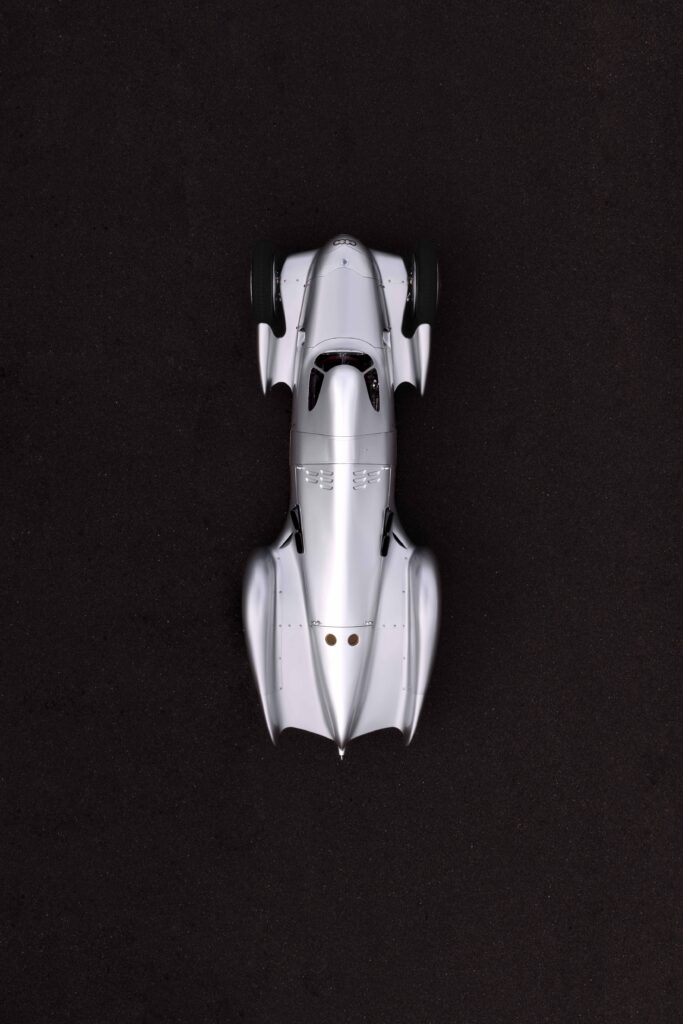
Nearly a century later, this story is making a comeback—not as a museum piece, but as a drivable tribute. With the Auto Union Lucca, Audi is expanding its historic Silver Arrow family with a project that lies somewhere between reconstruction, engineering artistry, and a rolling tribute to the past.
The vehicle was created in collaboration with the British restoration specialists at Crosthwaite & Gardiner. The project was based on historical photographs, archival materials, and technical documents from the pre-war era. Numerous components had to be completely remade by hand using traditional craftsmanship and with remarkable attention to detail. At the center, however, remains the heart of the project: a massive 6.0–liter supercharged V16 engine producing 520 hp. Its mere presence stands in stark contrast to today’s automotive world—raw, mechanical, and uncompromisingly analog. No hybrid management, no digital driving modes, no synthetic engine sound. Instead, sixteen cylinders, mechanical supercharging, and a sound that evokes aircraft technology more than modern racing.
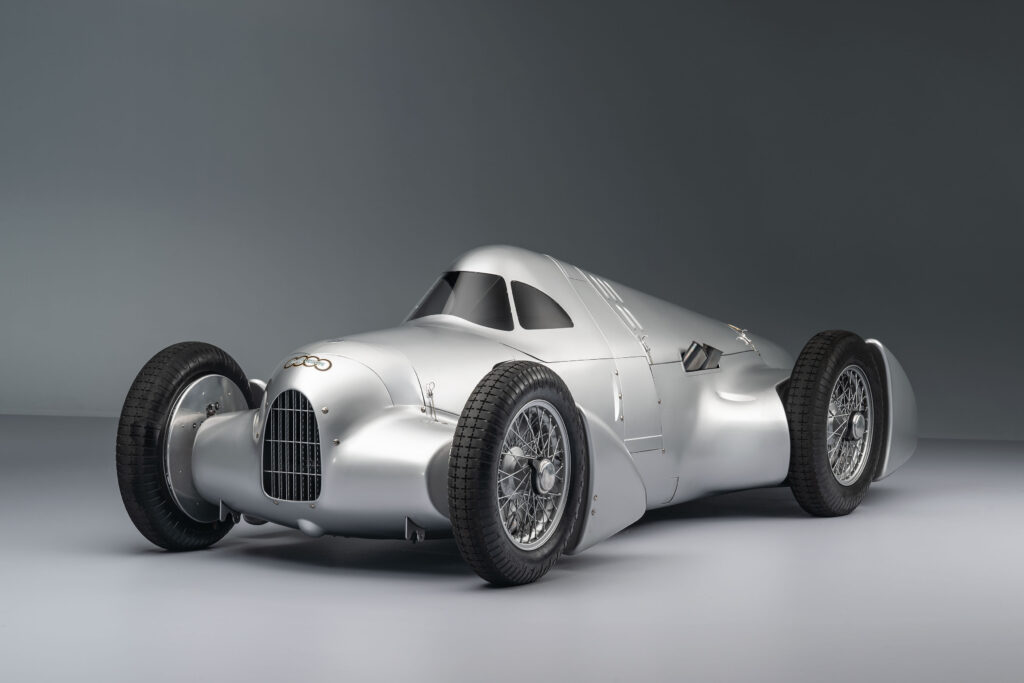
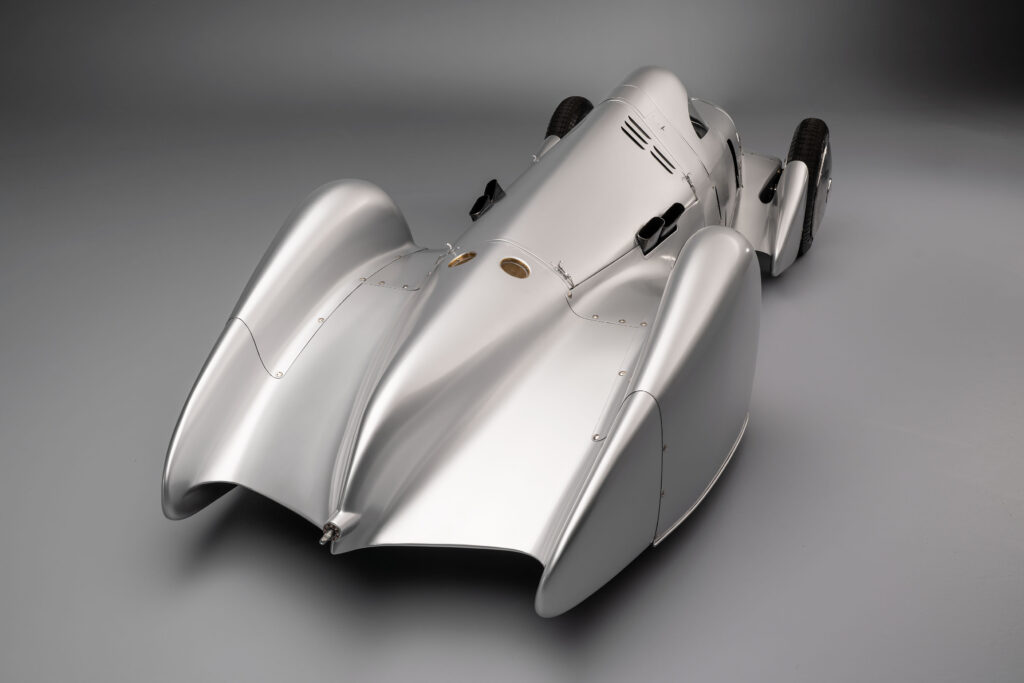
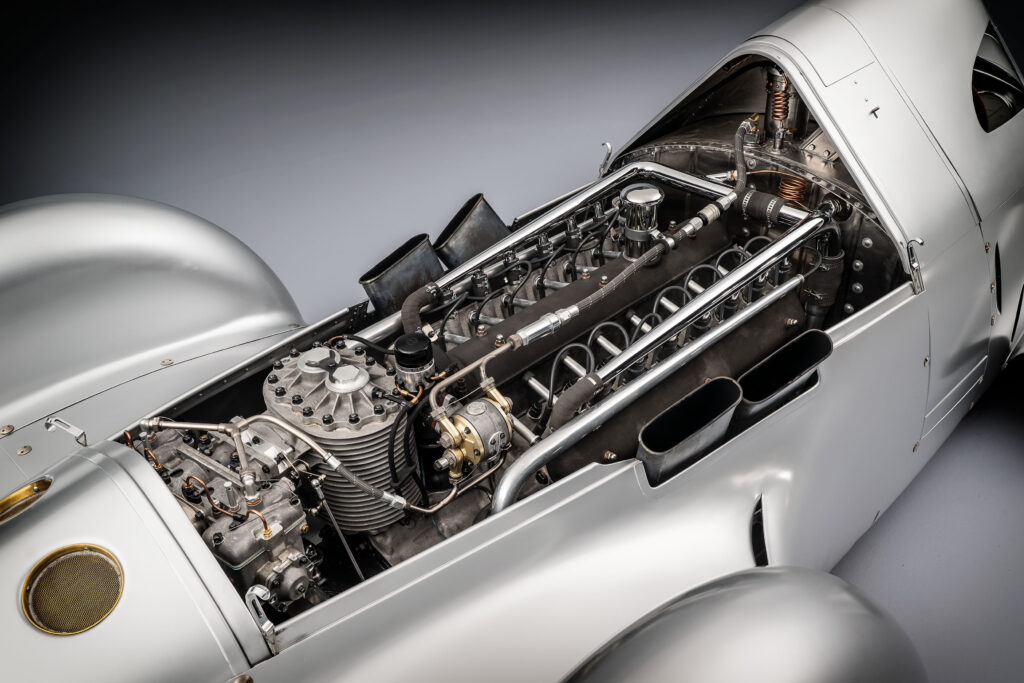
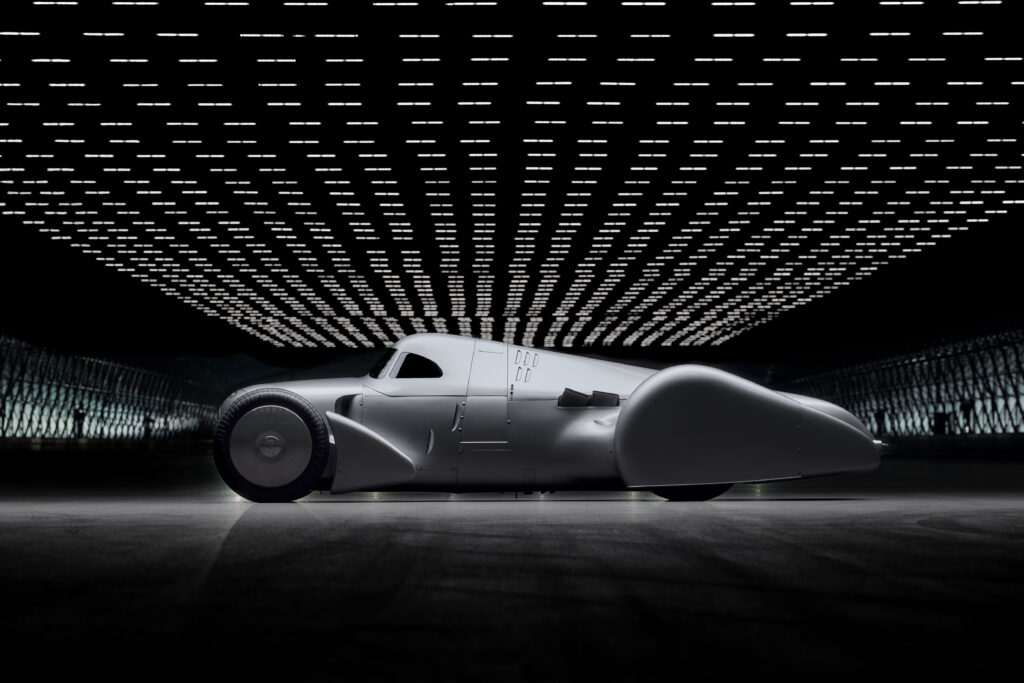
The fact that the Auto Union Lucca isn’t tucked away behind glass but is actually driven makes it all the more fascinating. Its first public appearance at the Goodwood Festival of Speed is therefore likely to feel less like a presentation and more like a journey back in time. When the silver streamlined car races up the Goodwood hill, it’s not just a car being showcased—it’s an era being brought back to life, an era when speed still held an air of adventure.
The Auto Union Lucca is therefore far more than just a historical reconstruction. It is a testament to an era when engineers worked with slide rules, race car drivers had to demonstrate heroism, and records were set on country roads. And perhaps that is precisely why it reminds us of why the early Silver Arrows have lost none of their fascination to this day.