60 Years of Škoda Felicia
It is March 1, 1959. The annual spring fair (Frühjahrsmesse) in Leipzig in the GDR, where exhibitors from West and East show their products, opens their doors. Among those exhibitors is also Škoda from Czechoslovakia, on whose stand the new convertible Felicia can be seen for the first time. A few days later, the 2+2 seater also became a crowd pleaser at the Geneva Motor Show. Not only a few visitors of those trade fairs signed preliminary contracts to order a Felicia. One month after the world premiere in Leipzig, there were even three examples on a Škoda stand at the New York International Auto Show. There, the brand hoped for additional sales opportunities, especially since European convertibles were a big sales success in the US back in those days.
The basis for the Felicia was the Škoda 450 Cabriolet, whose name derived from the number of cylinders (four) and the amount of horsepower (50). However, the Felicia received in addition to a modified body also numerous technical improvements compared to the predecessor, of which only 1,010 copies were built in total. Thus, the front axle now hung on spiral instead of transversely mounted leaf springs, while bigger rubber blocks helped to feel significantly less vibration from the central tube chassis in the bodywork. Asymmetrically cut headlights ensured more visibility at night. Over the heads of the passengers sat either the standard soft top or an optional fiberglass hardtop, which weighed in at only 27 kilograms. So while we already are on the subject of weight: The Felicia weighs only 930 kilograms, ready to drive, and has a payload of 300 kilograms with a boot volume of 320 liters – enough for a long weekend trip for two.
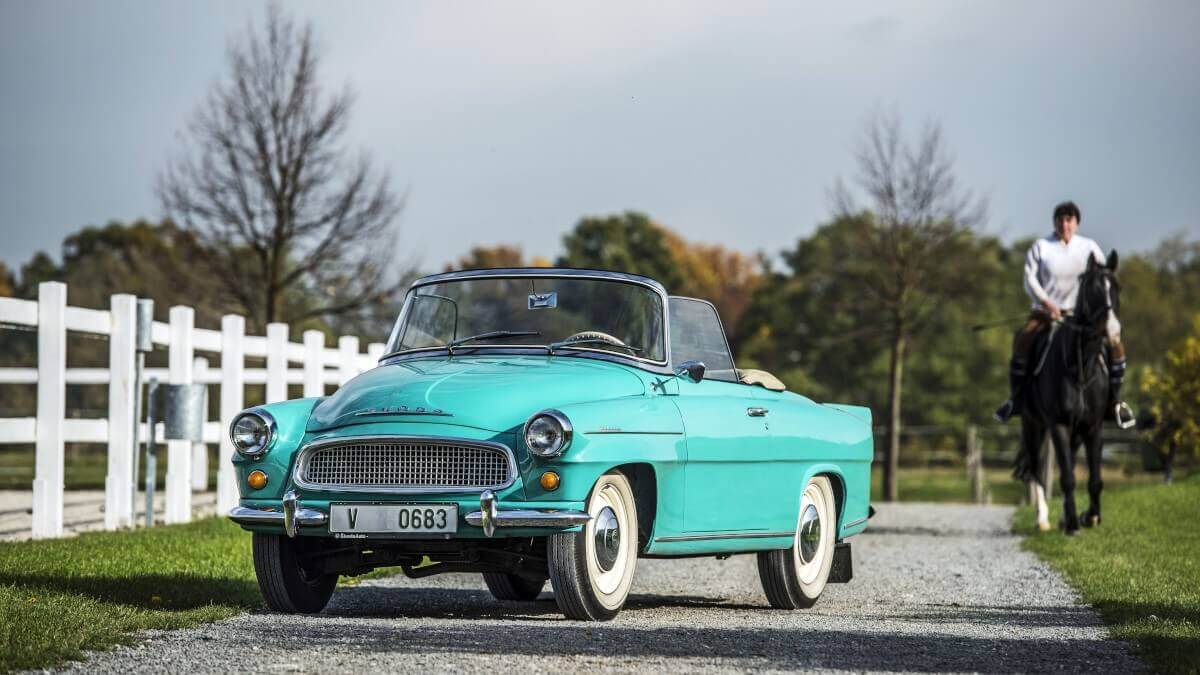

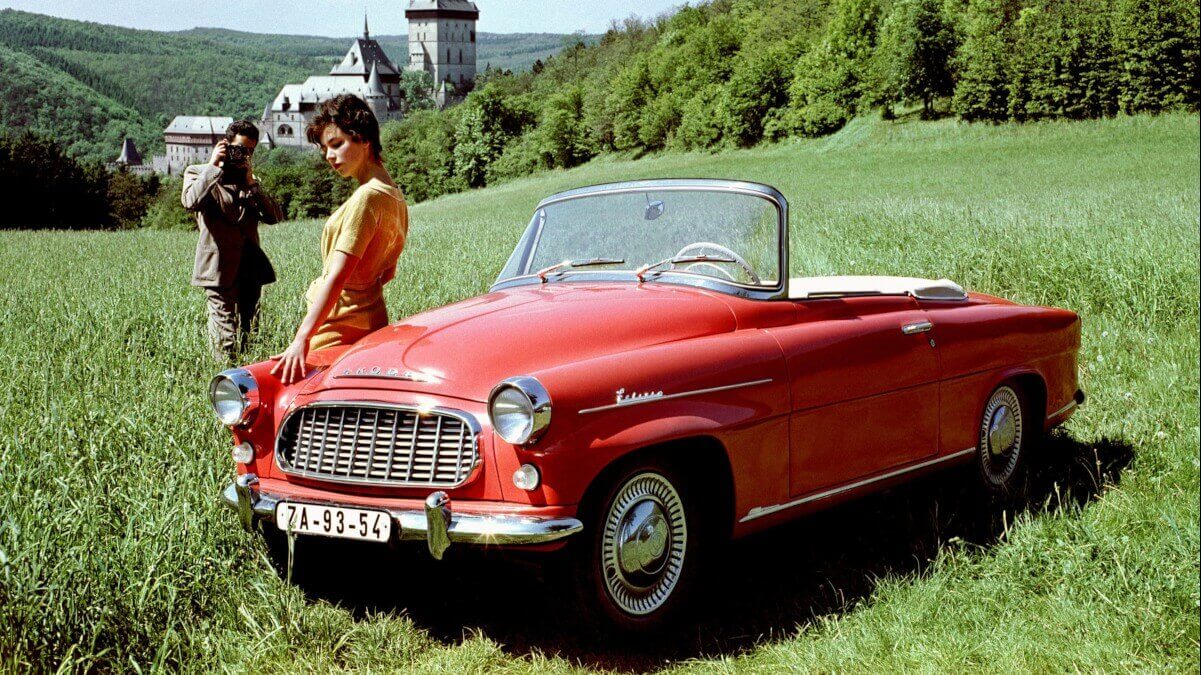


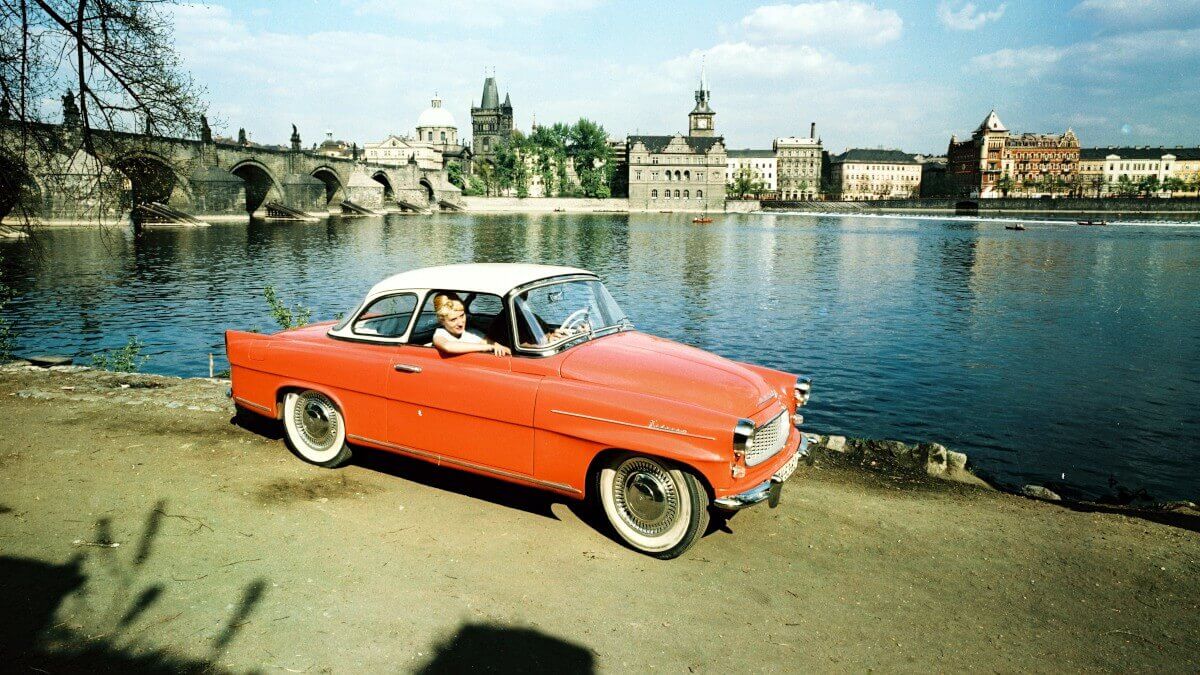

As a drivetrain Škoda mounted a 1.1-liter four-cylinder engine with 50 hp and 74.5 newtonmeters of torque. Thus, the beautifully shaped convertible reaches a topspeed of 130 kph (80.7 mph) and has an average consumption of about nine liters per 100 km. Two years after the debut, a small facelift took place, with the shifter changing its position from the steering wheel column to the center tunnel and the engine power going up by 2 hp, since the engine now also run on the better 70-octane fuel, which was available in many countries. In addition, the facelift brought a modified grille, front seats with reclining function, a dashboard made from polytex and covered in black leatherette as well as hinged rear side windows in the hardtop. In 1962, the Felicia Super supplemented the model range. Its 1.2-liter four-cylinder engine developed 55 hp and a maximum torque of 82 newtonmeters. The topspeed also slightly rose to 135 kph (83.8 mph).
The balanced design combined with perfectly good performance helped Škoda to find customers for the Felicia not only in the Soviet bloc, but also in many western countries. Directly from the start it was successful, as in 1959 three times as many Felicia were produced in parallel to the Octavia Combi in the Kvasiny plant, then there ever were of the 450 Cabriolet. Of these, nearly 70 percent went into export. In the following years, some copies of the Felicia were shown at more exotic car shows, for example in Johannesburg or Mexico City. In Canada, hockey professional Maurice ‘Rocket’ Richard (1921-2000) used a Felicia Cabriolet to drive to training sessions and games of the Montreal Canadiens. As team captain, he managed to score 50 goals in 50 NHL games. After 14,863 copies of the Felicia and Felicia Super, Škoda changed the production lines to the new rear-engined 1000 MB in 1964. Today, the last convertible with front engine and rear-wheel drive is one of the most sought-after Škoda classic cars and achieves high prices among enthusiasts.
Images: Škoda, Archive