Porsche Boxster Bergspyder
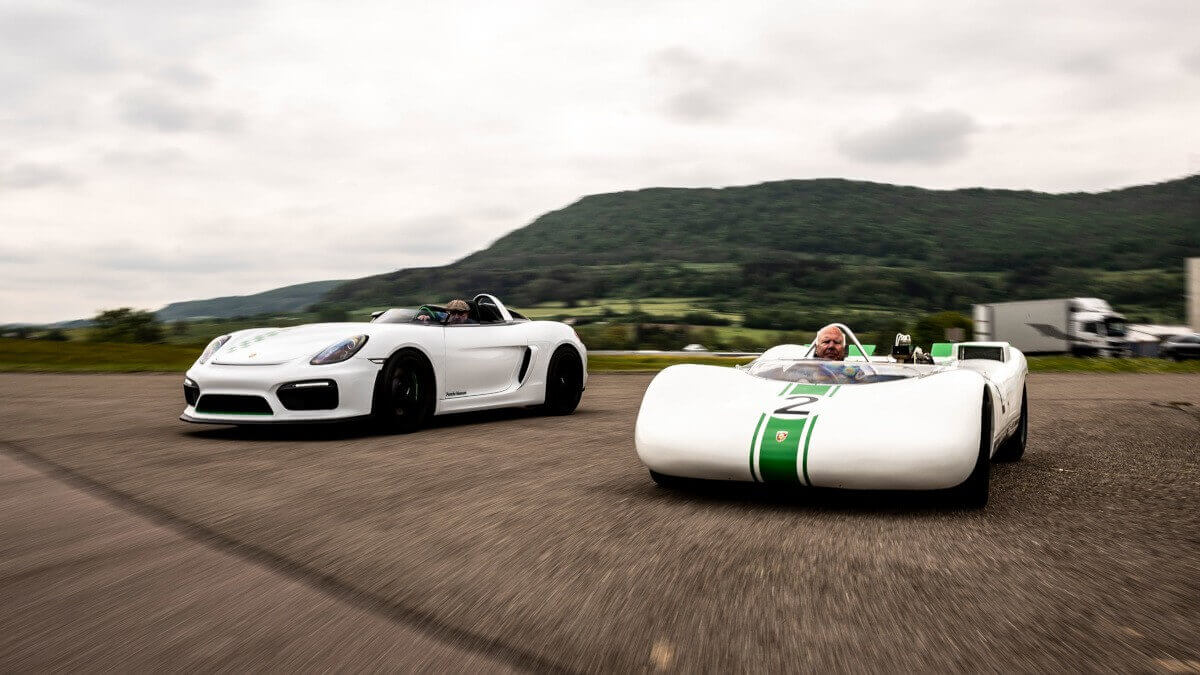
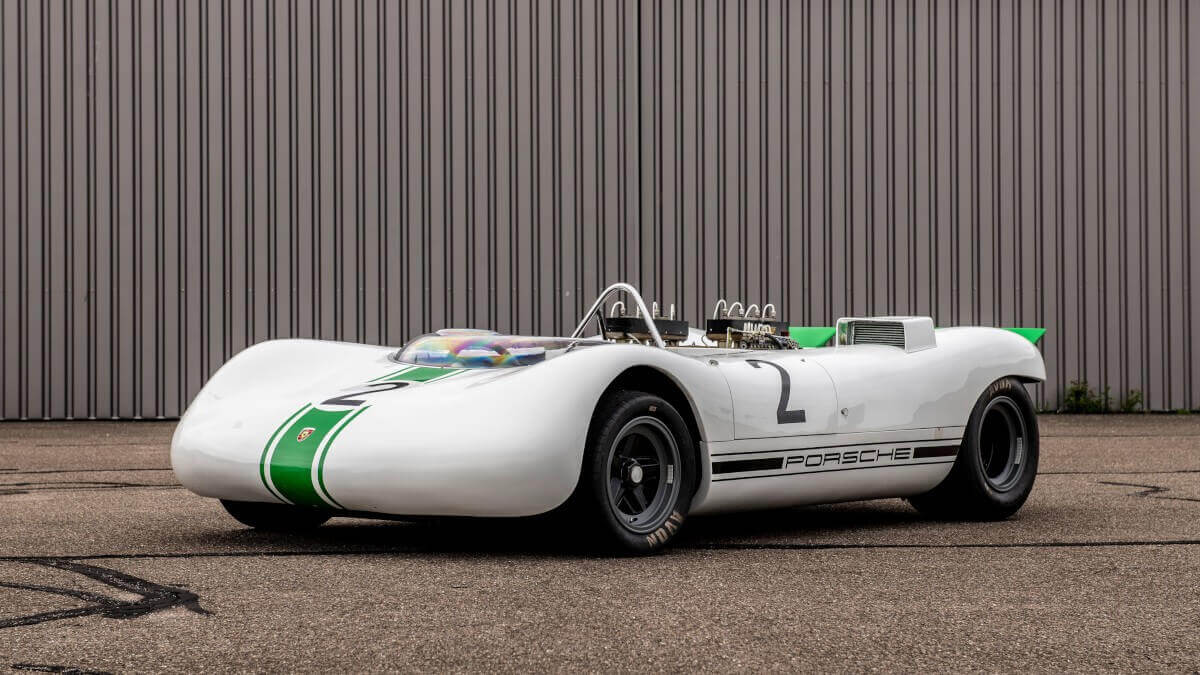
In the 1960s, Porsche not only participated in the Sports Car World Championship, but also sent the factory to races of the European Hillclimb Championship. With vehicles of the types 904 Carrera GTS, 906 Carrera 6, 907, 908 and 910 they achieved various good results. In 1966 and 1967 they even won the championship title. To try to get this for the third time in a row, the racing department developed the most radical and lightest racing car in the brand history for 1969 under the acronym 909 Bergspyder (Mountain Spyder). Under then head of developments Ferdinand Piëch, the focus was placed on consistent lightweight construction. They achieved a dry weight of only 375 kilograms thanks to an aluminium tubular frame and the plastic body parts screwed onto it. Including all the liquids needed for the hillclimb races, the 909 Bergspyder came to only 430 kilograms of weight. These were powered by a two-liter eight-cylinder boxer engine with 275 hp. Only two units of this vehicle were produced, which were used in only two races of the European Hillclimb Championship. Today they are part of the vehicle collection of the Porsche Museum in Stuttgart Zuffenhausen.
In 2015, a project group of Porsches engineers at their test facilities in Weissach remembered this lightweight racecar. Just days before, they had been commissioned by the board to develop a weight-reduced and significantly sportier version of the mid-engined Boxster (model series 981). The legendary racecar quickly established the name of the new study and its color scheme: 981 Boxster Bergspyder, painted in white with green details. While the bodyshell remained nearly untouched, they mounted doors without outer door handles as well as a cover made of artificial leather with wind deflector in front of the driver’s seat and an integrated rollbar instead of windscreen and fabric top. There is no space for a passenger. Instead that place is used as another luggage compartment, for example for a racing helmet, and is accessible via the passenger door. In a planned second development step, the cover over the interior would have been replaced by an individually designed carbon fiber part.
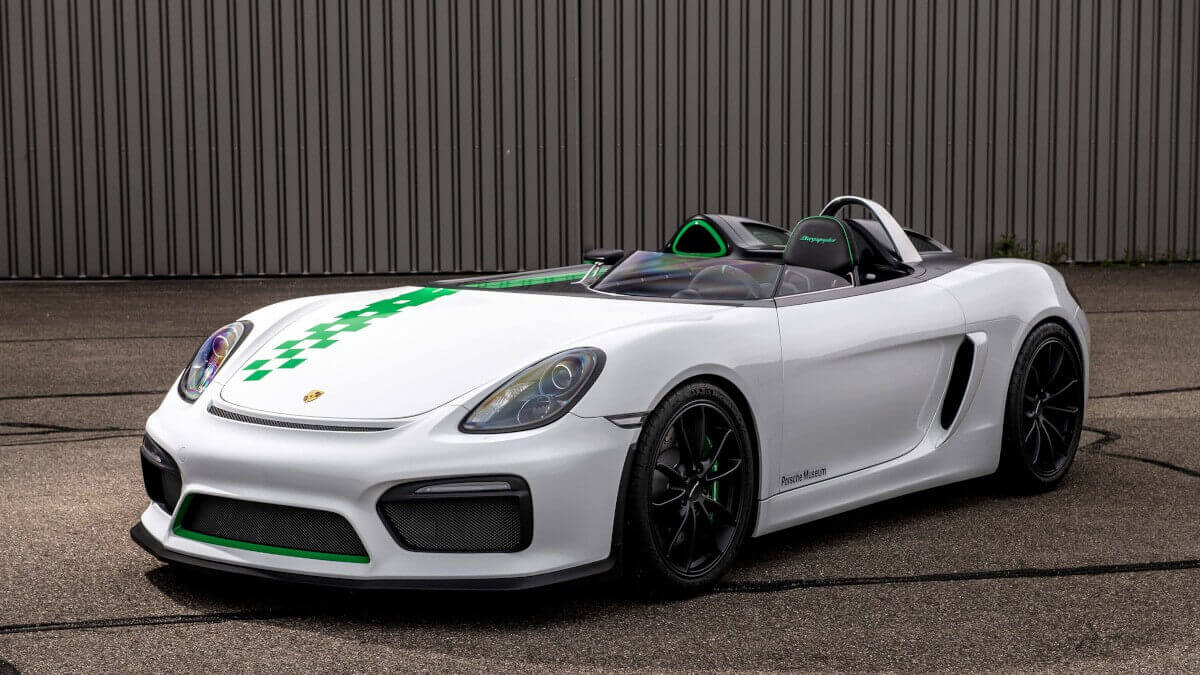
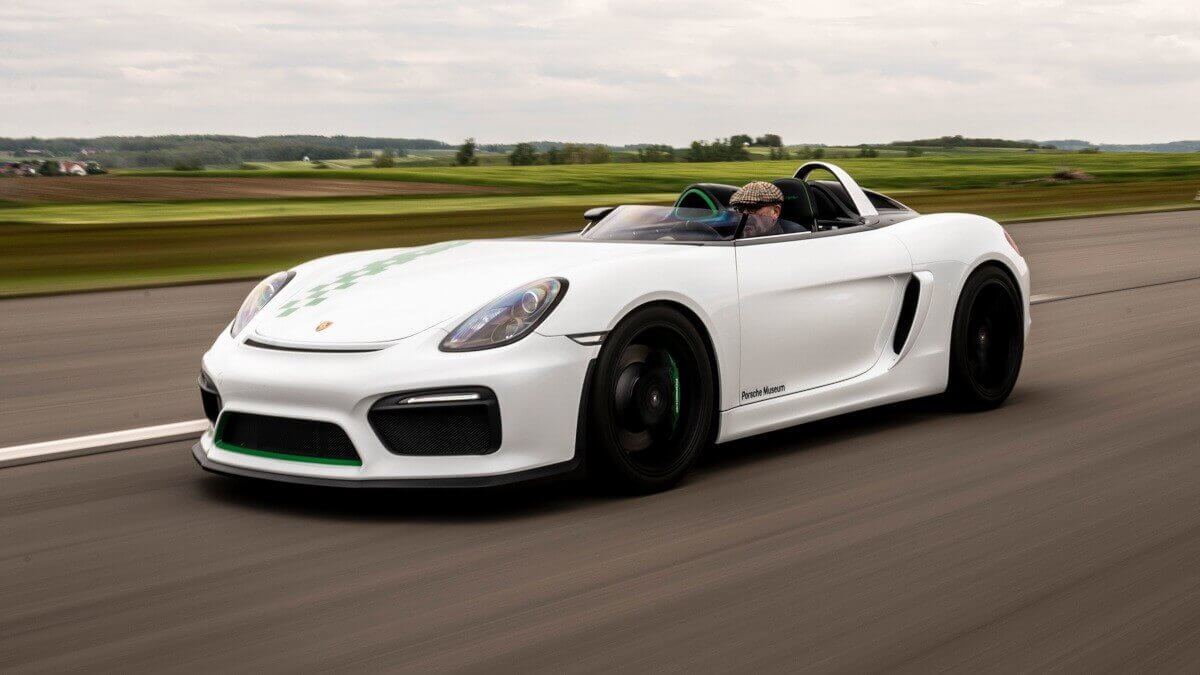

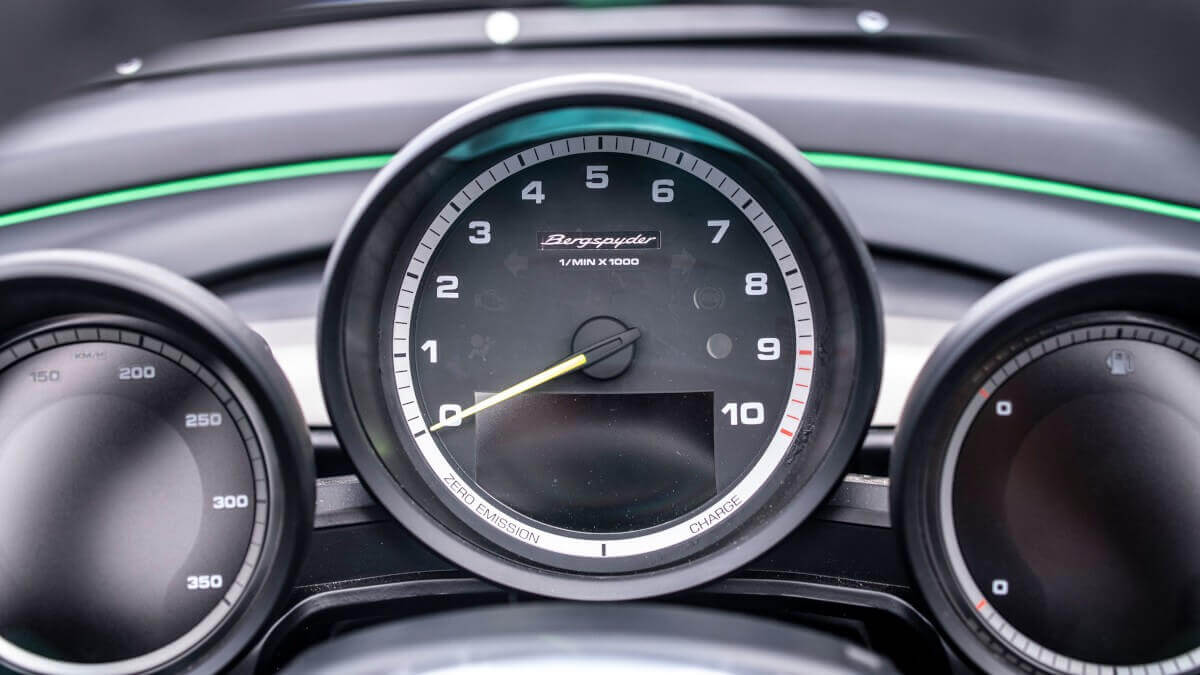
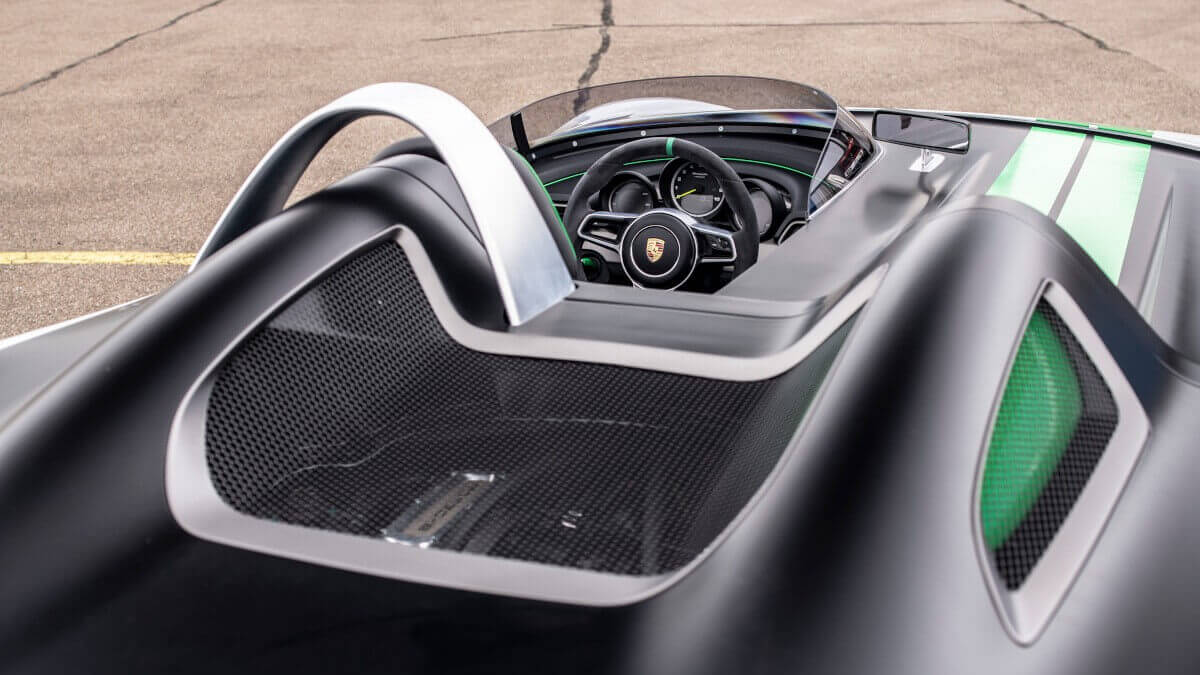


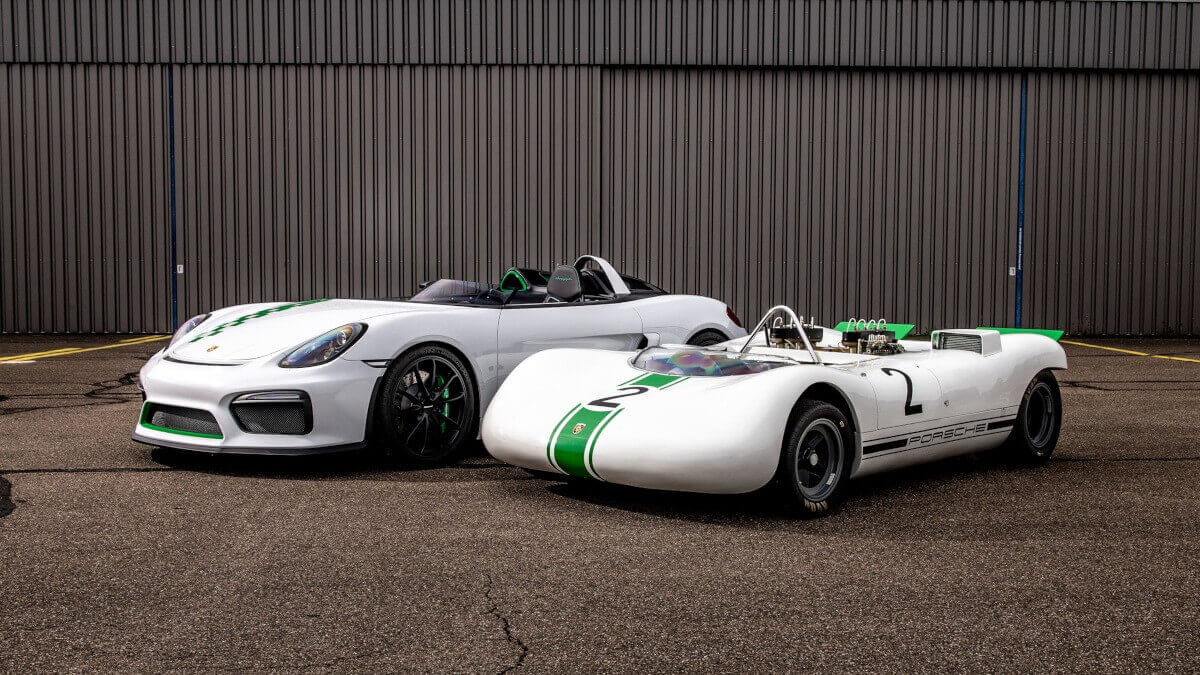

Carbon fiber was used as the material for the front and rear hood. Another new component is the dashboard, which was equipped with some parts of the hybrid hypercar 918 Spyder and specially designed for the single-seater. For the driver’s seat, they also used a part of the larger model brother, since its carbon sports seat was already designed for consistent lightweight construction. As also the insulation material in the entire vehicle was reduced to a minimum, the curb weight of the finished prototype of the 981 Boxster Bergspyder is just 1,099 kilograms. Directly behind the driver is the 3.8-liter six-cylinder boxer engine from the Cayman GT4 with 289 kW/393 hp, resulting in a power-to-weight ratio of exactly 2.8 kilograms per horsepower.
The completed car underwent detailed driving tests on the in-house test track in Weissach. However, there were big question marks behind a possible street legalization in international markets. But if there isn’t the possibility to get a license plate for the car, sales are kept within narrow limits and the development of the special parts is too expensive. Thus, they finally decided against pursuing the project and the prototype remained unique. As part of this year’s hillclimb race at the Gaisberg, where once the 909 Bergspyder was raced, Porsche showed the one-off car for the first time in public last weekend.
Images: Porsche