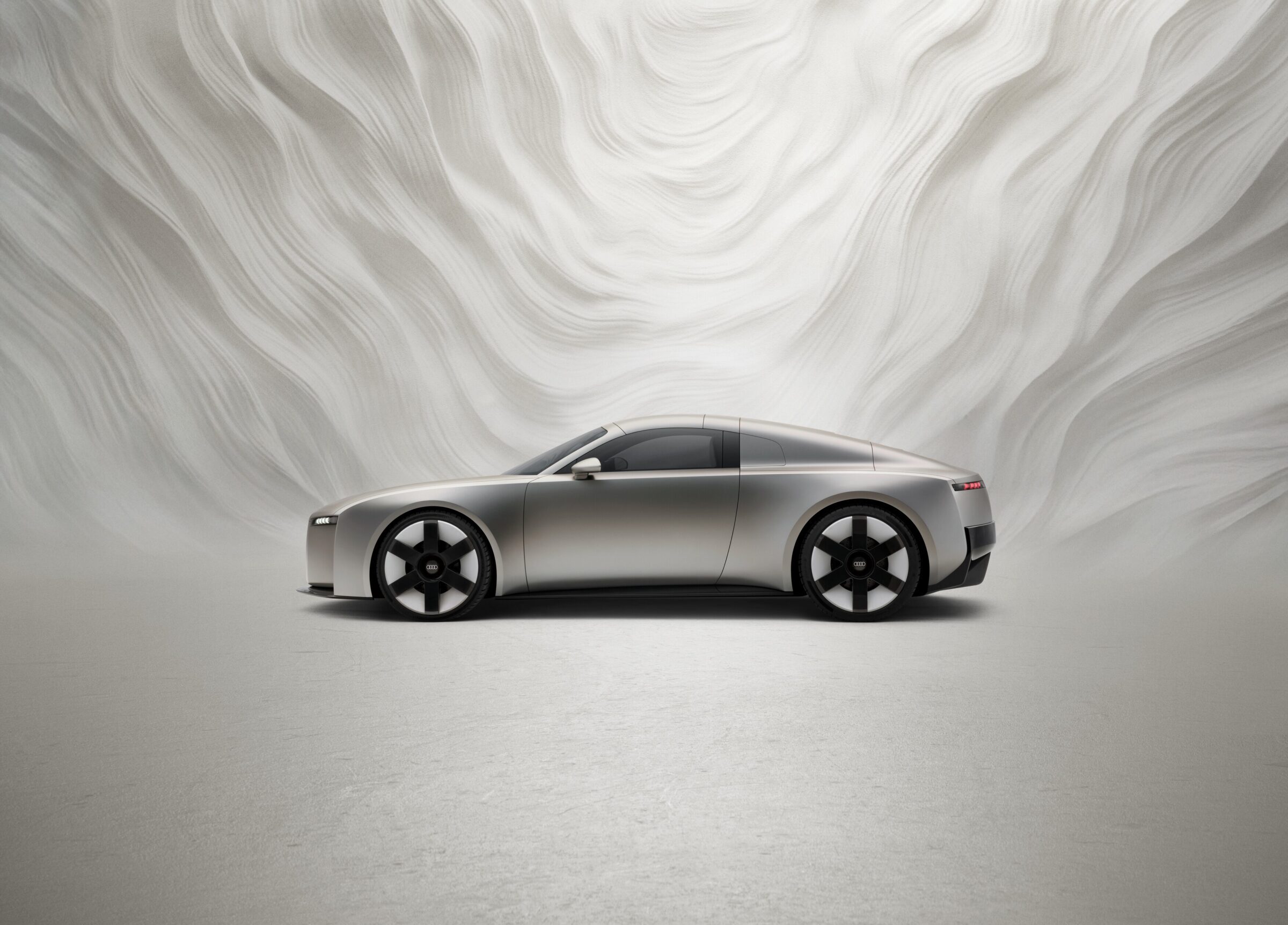
Clarity as an attitude – Audi’s new Concept C and the question of what is essential
When an automobile manufacturer presents a new design concept, communication often moves within a familiar field of tension: between pathos and technical precision, between promise and reality. With the ‘Concept C,’ Audi has now provided a glimpse into its own future in Milan – and at the same time attempted to formulate its design philosophy as a guiding principle for the entire company.
The core message is clarity. Chief Creative Officer Massimo Frascella calls it ‘radical simplicity,’ while the company refers to it as ‘strive for clarity.’ Given the excessive complexity of modern vehicles and digitalisation down to the last pixel, this return to simplicity seems almost like a counterpoint to the developments of recent years. But can the desire for simplicity really be applied to the reality of the automobile?
Between Bauhaus and
business case

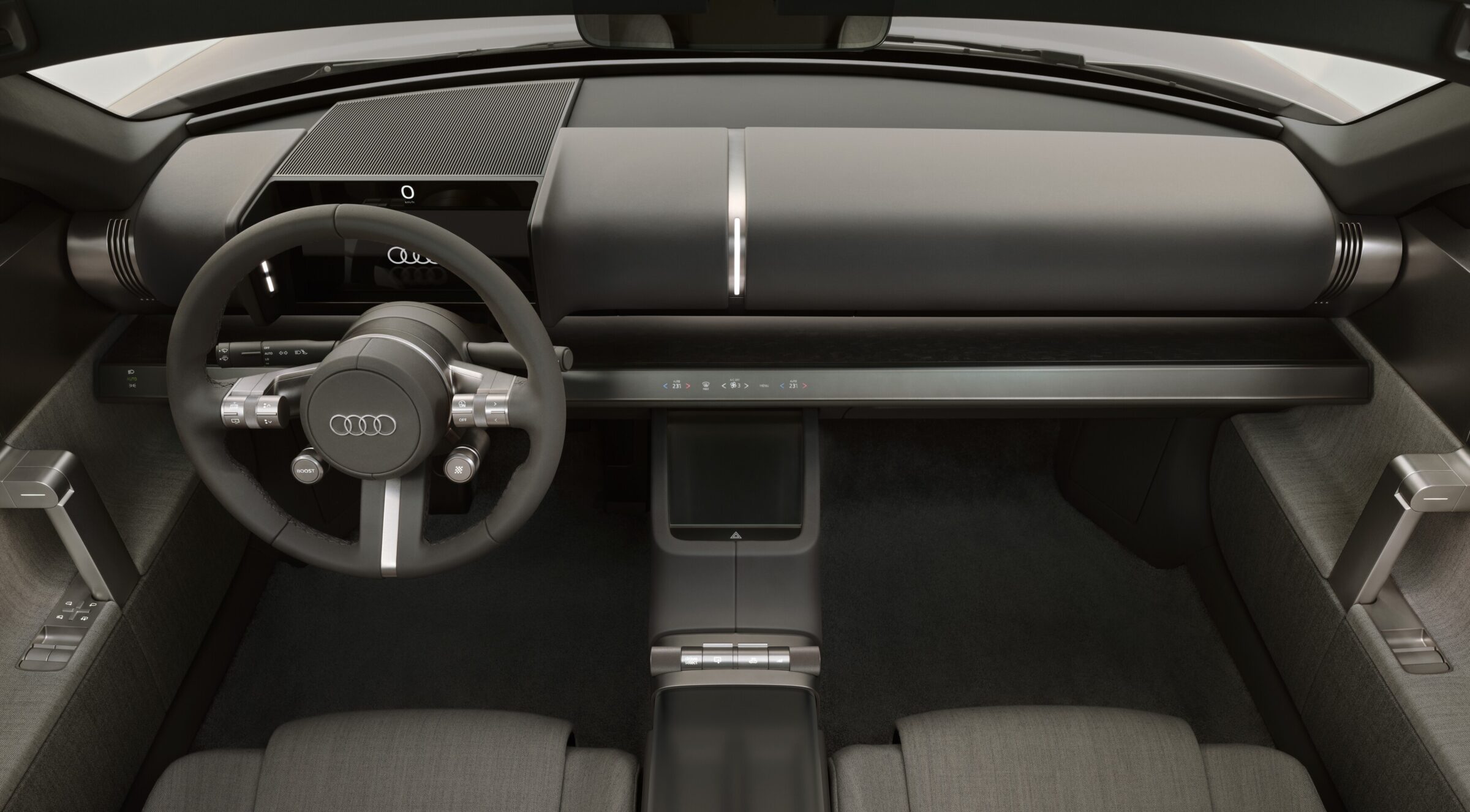
Formally, the Concept C is reminiscent of old Bauhaus ideals: clear geometry, no superfluous decoration, an aesthetic of reduction. The so-called ‘vertical frame’, inspired by the Auto Union Type C, forms the visual centrepiece. Audi has applied a similar logic to the interior: fewer distractions, fewer overlays, but targeted use of intelligent technologies.
But Bauhaus was never just a style, it was also a social idea. It was about the democratisation of design, about the unity of function and form. This is precisely where the concept becomes exciting – and at the same time contradictory: can a premium manufacturer, whose models often require five-figure surcharges for options, credibly refer to the Bauhaus? Or does ‘radical simplicity’ ultimately remain an aesthetic gesture in the high-price segment?


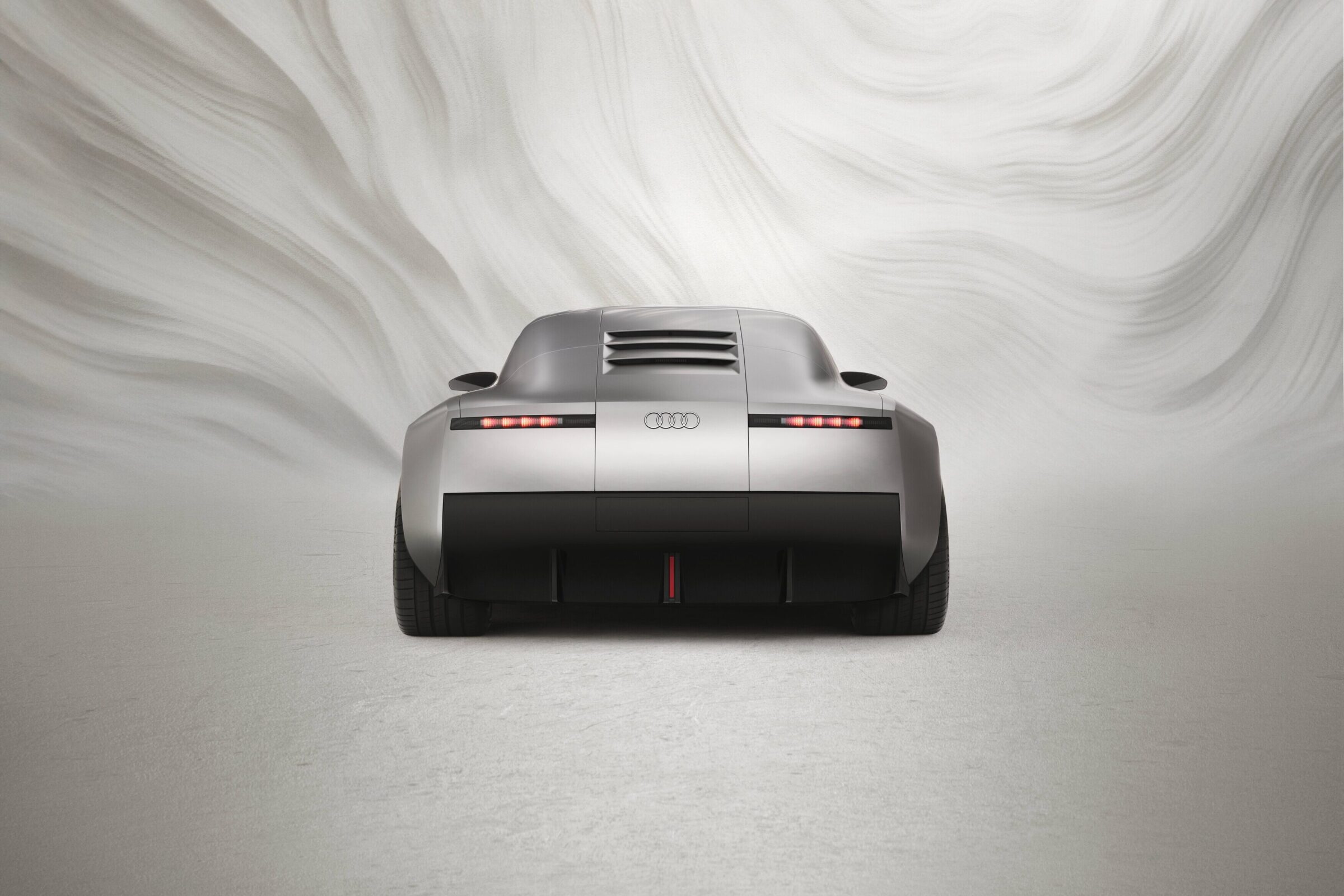
Audi is not stopping at design. CEO Gernot Döllner describes “clarity” as an attitude that will shape all areas of the company in the future – from the product range to the organisation. This makes the Concept C a symbol of a larger transformation: a reduction to the essentials in order to create space for innovation.
‘We want to use our design philosophy to strengthen our brand so that it arouses desire and develops cultural relevance.’ – CCO Massimo Frascella
From a philosophical point of view, this idea sounds almost stoic. In a world characterised by acceleration, fragmentation and information overload, clarity is becoming a luxury. But can this be achieved in a product that is itself becoming increasingly complex – from assistance systems and hybrid drives to networked software architectures?
Perhaps it is precisely this tension that makes Audi’s new approach so appealing. After all, the car as a symbol of our time is a paradox in itself: it should be sustainable, yet powerful; minimalist in design, yet technologically advanced; emotionally desirable, yet rationally efficient. The Concept C shows that Audi is aware of these contradictions – and is trying to give them a form that promises visual clarity. It remains to be seen whether this approach will be reflected in the everyday use of future production models.
One thing is certain: with the Concept C, Audi not only wants to give a glimpse of future vehicles, but also claim cultural relevance. It’s about more than cars – it’s about an attitude, perhaps even a kind of design ethic.
But just as the Renaissance, to which Audi alludes in Milan, was not only an era of great masters but also a time of profound upheaval, Audi’s return to clarity could be less of an end point and more of a starting point.
Photos: AUDI AG