Triumph TE-1 Prototype
It’s not just in the automotive sector that engineers are poundering drive solutions of the future; there are also corresponding considerations in motorcycles. Triumph sought a competent partner for this in Williams Advanced Engineering (WAE). They were joined by Integral Powertrain and WMG from the University of Warwick. The goal was to develop an all-electric motorcycle with innovatively integrated technology. WAE developed particularly lightweight batteries and the electric drive for this purpose. To achieve the low weight, the battery modules and cells had to be re-specified and rebalanced. However, this alone is not enough, as the batteries also have to be cooled. It also needs power converters, a charging port and a control unit. In the end, the package received pretty carbon covers. WAE specifies 15 kWh as the battery capacity. It only takes around 20 minutes to charge the empty battery to 80 percent on a fast charger.

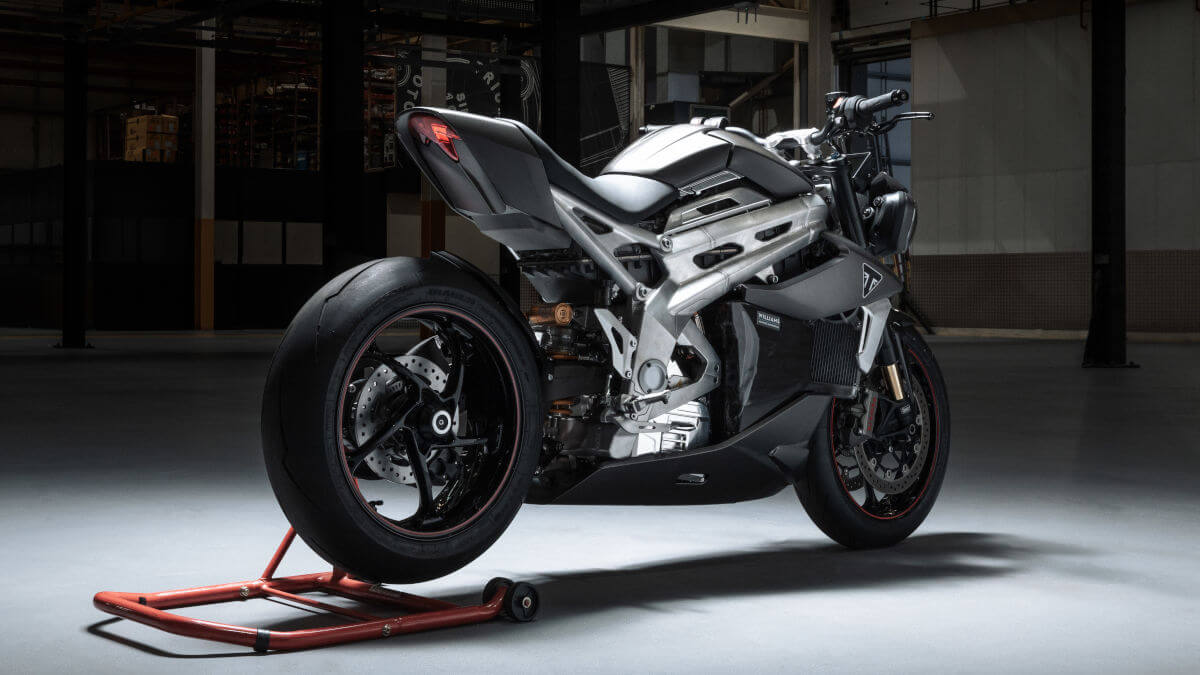
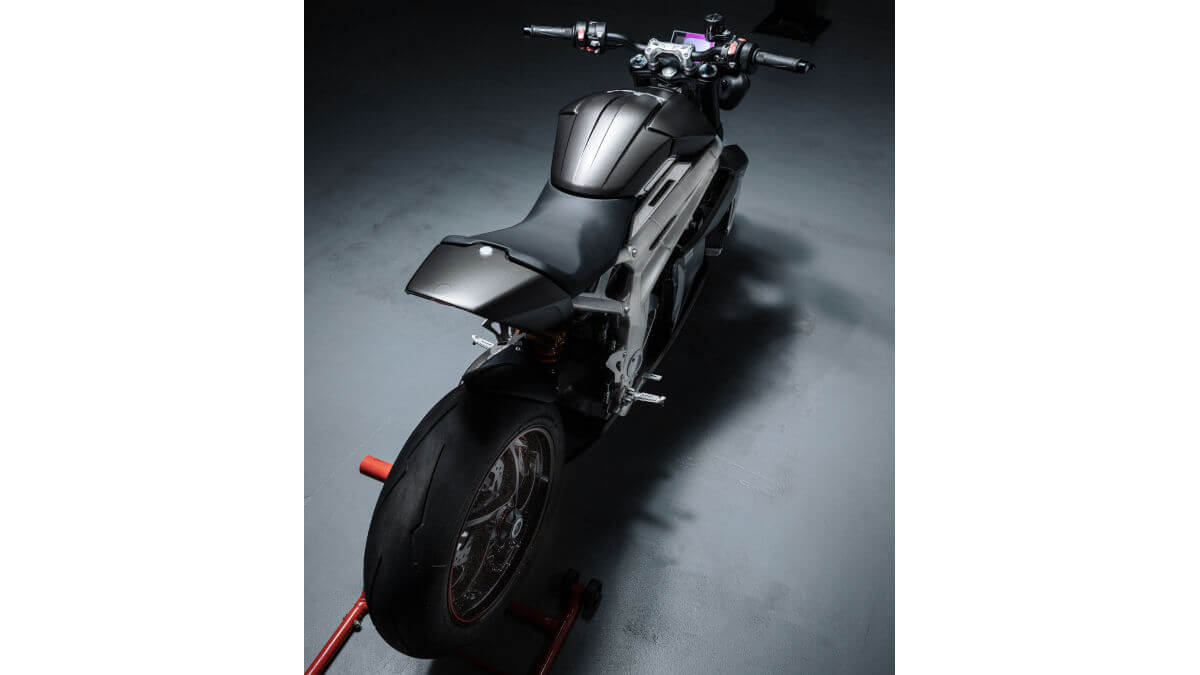
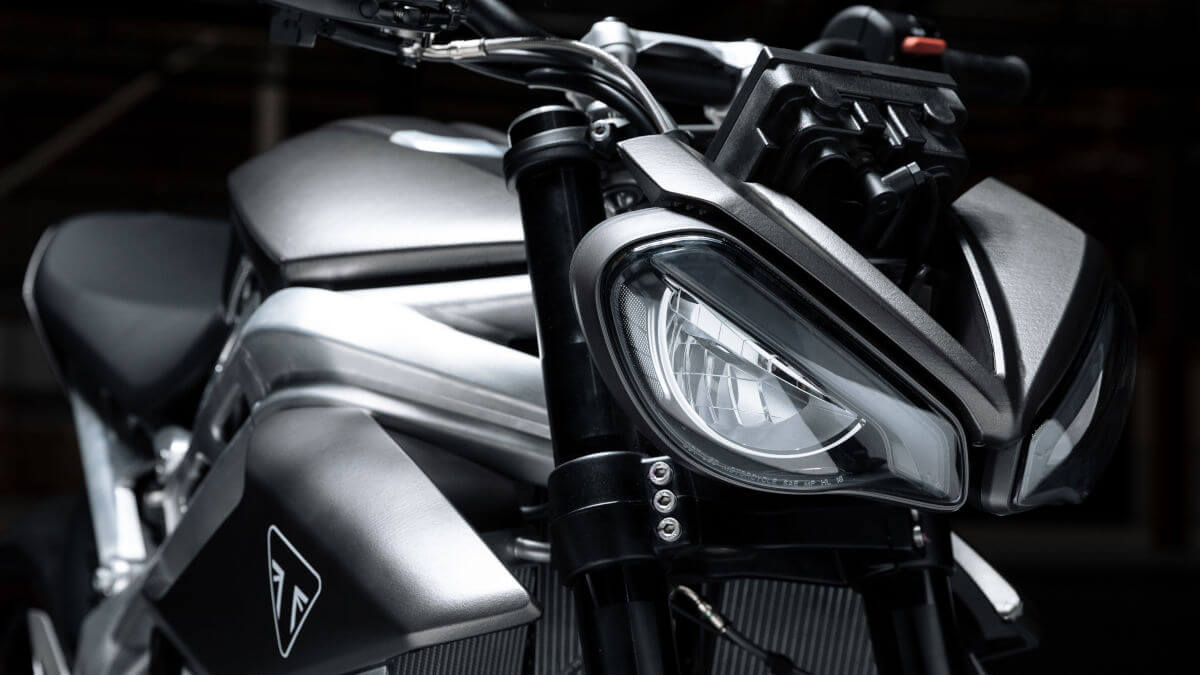


The drive package has 90 kW of continuous power, which can be increased to 170 kW peak power. Of this, 80 kW of power arrives at the rear wheel. For fast acceleration maneuvers, the value increases to 130 kW. The presentation of the first drivable prototype now marks the end of the collaboration phase. Triumph will now conduct the following test phase on their own. The main aim here is to try out the complete package under everyday conditions. The most important thing here is to look for any errors in the software and drivetrain. In addition to runs on the company’s own test track, the TE-1 will also be strapped onto their indoor rolling road simulator. The test phase is scheduled to be completed as early as this summer. After that, the TE-1 will receive its final design and be shown at events. It hasn’t yet been announced when Triumph’s first all-electric motorcycle will hit the market.
Images: Triumph, Williams Advanced Engineering