Nissan 100NX
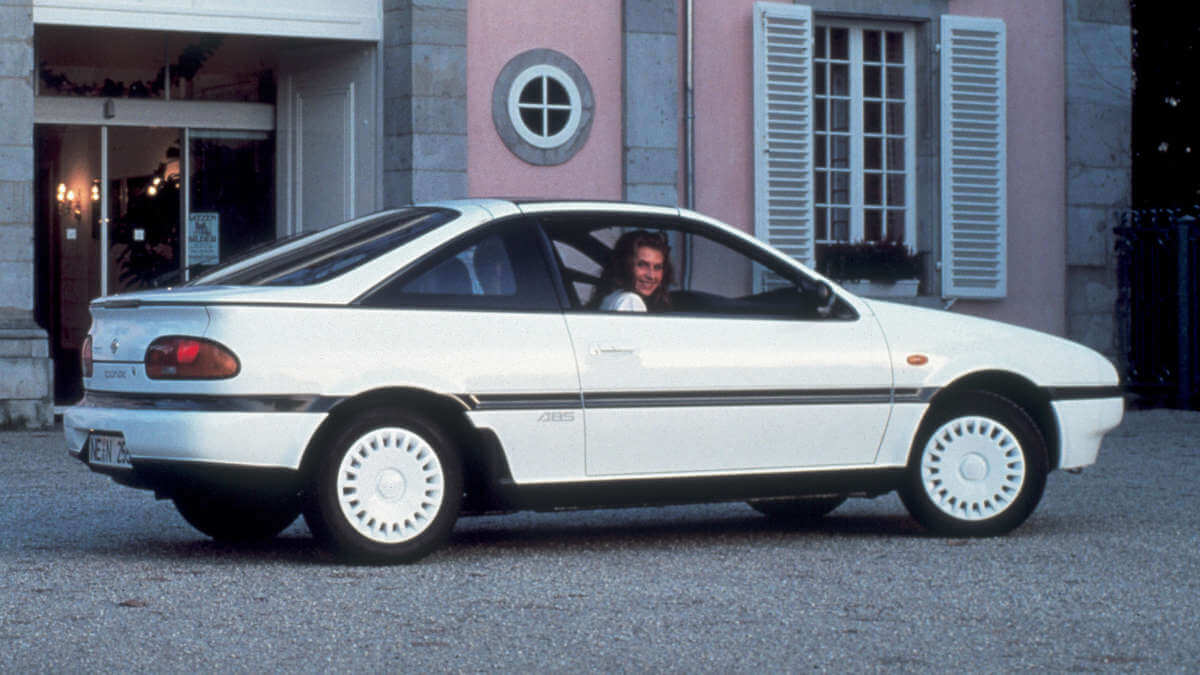
In the early 1990s, Japanese automakers in particular tried out new areas of activity to appeal to new groups of buyers. Nissan was one of them and presented the 100NX in 1990 as a sporty coupé below the 240SX and the 300ZX. The basis was the rather unsporty Sunny of the N14 series. Accordingly, the NX had front-wheel drive and relatively small four-cylinder engines. However, Nissan wasn’t interested in much power or overwhelming driving dynamics. It was more a matter of appealing to young people who would otherwise probably not have bought a car from the brand. This was tried with the unusual design in combination with the T-top targa roof with two removable glass roof sections. As an entry-level model, the NX was to lead the way over the SX to the ZX. At the same time, there was to be a special driving experience, especially in summer, when the frameless side windows and the roof were opened.
Sporty looks with fresh air pleasure
At that time, such a concept was only available in the compact car class in the form of the Toyota MR2, albeit at a higher price. Honda followed two years later with the CRX del Sol. The Nissan also featured an eye-catching design with almond-shaped lights and a long hatchback. The headlights were recessed deep into the front end, while the turn signals placed below them sat flush in the bumper. Even deeper, an air intake stretched almost across the entire width, with fog lamps recessed into the outside. From the lower half of the headlights, a plastic strip extended once around the vehicle, which was finished in black or body color depending on the equipment. On the large tailgate, which included the rear window, sat a small spoiler lip on some versions. From a small facelift in May 1993, the trim was always painted in body color. In addition, the 100NX SR (Steel Roof) with a fixed roof appeared in November of the same year.



No sales success
At the world premiere of the 100NX in the fall of 1990, two carburetor engines were still available. As an entry-level engine, Nissan offered a 1.5-liter four-cylinder with 69 kW/94 hp in Japan. In other markets, it was a 1.6 with 66 kW/90 hp. Above this, the top engine in Japan was a 1.8-liter with 103 kW/140 hp and multipoint injection. From June 1991, the 100NX 2.0 GTi with 105 kW/143 hp was available worldwide. As part of the facelift in 1993, Nissan replaced the carbureted engine with a 1.6-liter four-cylinder injection engine with identical power. The 100NX SR came up to 75 kW/102 hp with a larger intake manifold and adjusted engine software. Since the car failed to achieve the sales figures Nissan had expected, production ended in October 1995 without replacement. At least in Germany, the 100NX has reached the absolute bottom of used car prices in the meantime. Drivable cars are already available at around € 1,000, while excellent condition cars hardly arrive € 10,000.
Images: Nissan