Mercedes-Benz 320 Cabriolet by Wendler
Do you know the coachbuilder Wendler from Reutlingen/Germany? It is best known for the construction of the light metal bodies for the Porsche 550 Spyder. However, the company was founded in 1840 by the wheelwright Erhard Wendler. Until the 1920s, they only made carriages. The hired designer Helmut Schwandner then suggested a change to car bodyworks for chassis delivered to the company by interested customers. Up to World War 2, just about 300 different bodies were built. After the war, the general interest in new designs, especially the so-called pontoon bodyworks, grew and Wendler developed their own coachbuilt bodies for pre-war chassis. In addition, they created convertible conversions, for example based on the Volkswagen Beetle or Gutbrod Superior. Shortly after the big Porsche order for the 550 Spyder they shifted their main business field on body repairs, later on classic car restorations and the special construction of armed limousines. In 2000, their parent company slid into bankruptcy and thus also led to the closure of Wendler a few years later.
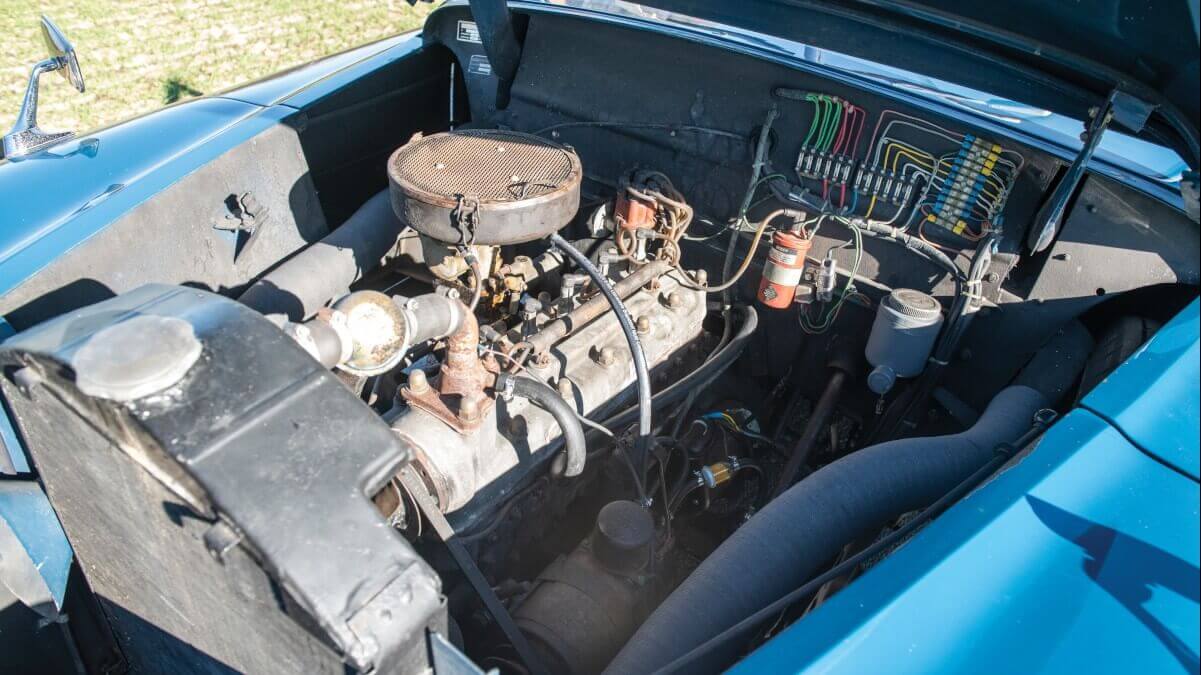
Between 1937 and 1942 Mercedes-Benz produced the type W142, commonly known as 320. The chassis came from the predecessor 290 (W18) with transverse leaf spring and coil springs on the front rigid axle and a pendulum rigid axle at the rear. Two different wheelbases and various different factory bodyworks as well as naked chassis were available to the customers. Under the hood sat the eponymous, 3.2-liter inline six-cylinder engine with 57 kW/78 hp and 218 newtonmeters of torque. A four-speed transmission transmits the power to the rear wheels. Depending on the body shape Mercedes-Benz promised a topspeed of 126 kph (78 mph). All in all, around 5,000 copies of the Mercedes-Benz 320 were made by the time of the war-related production stop.
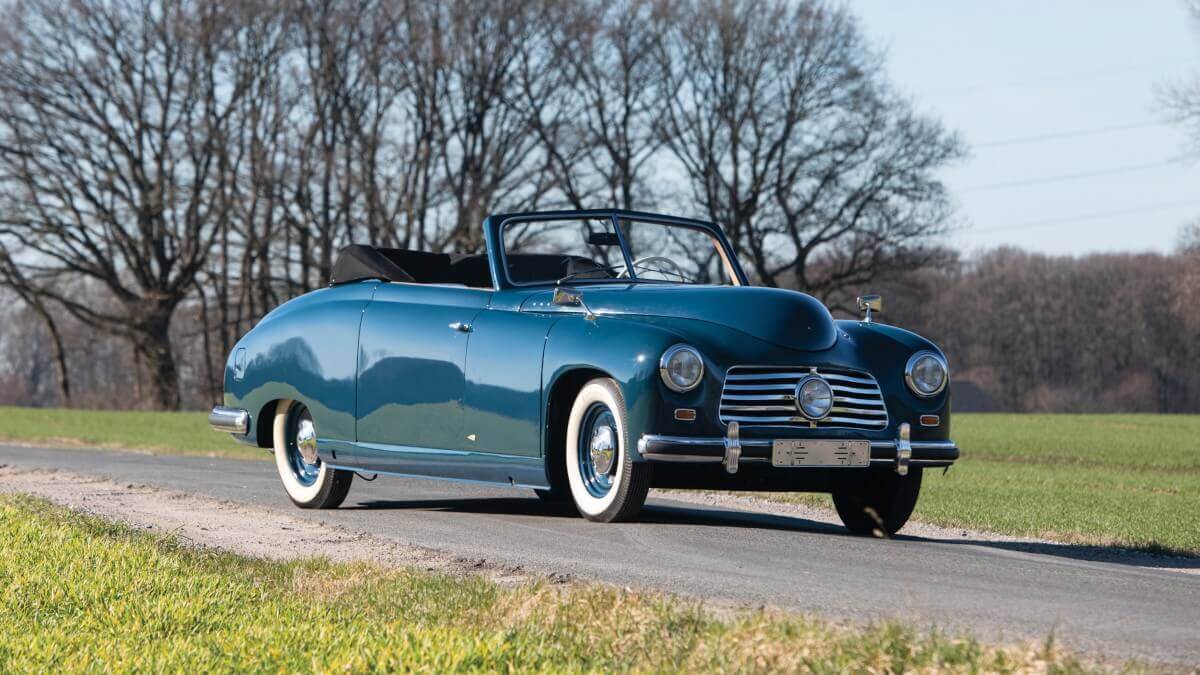
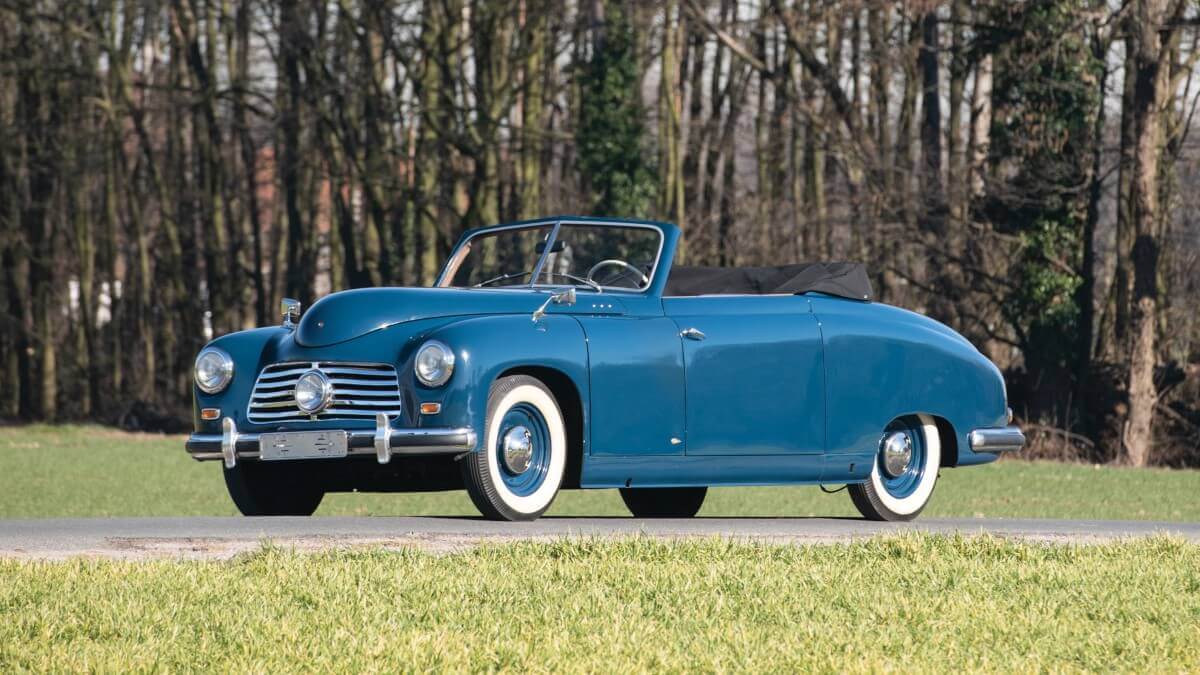
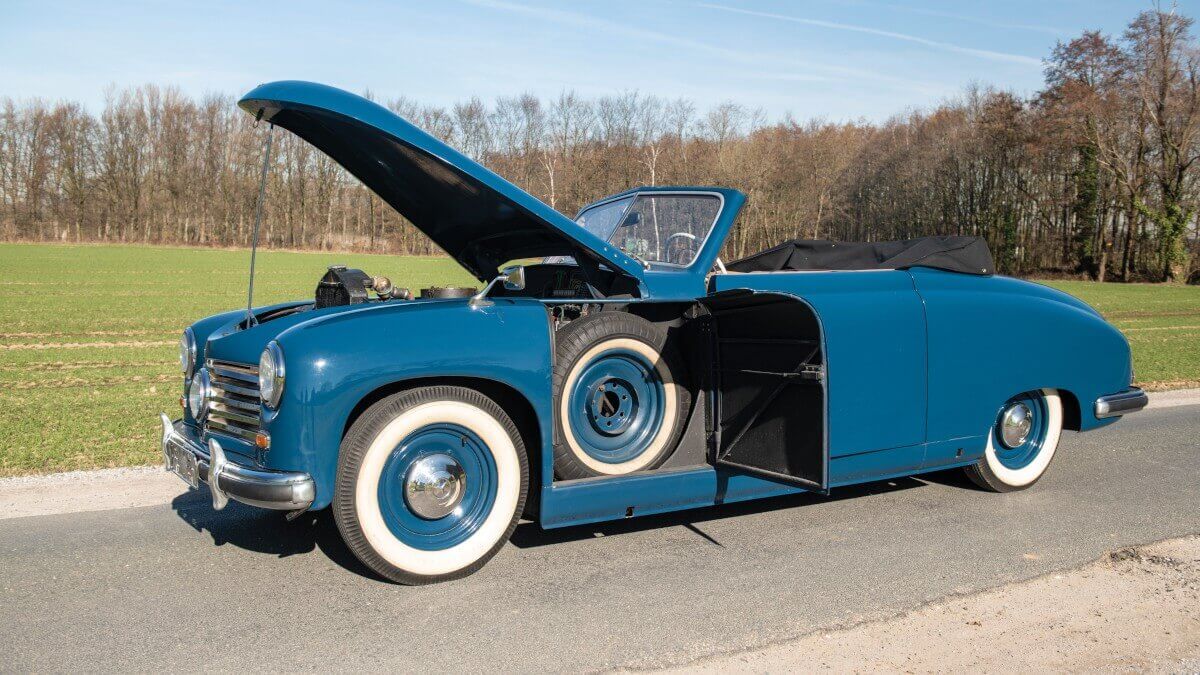
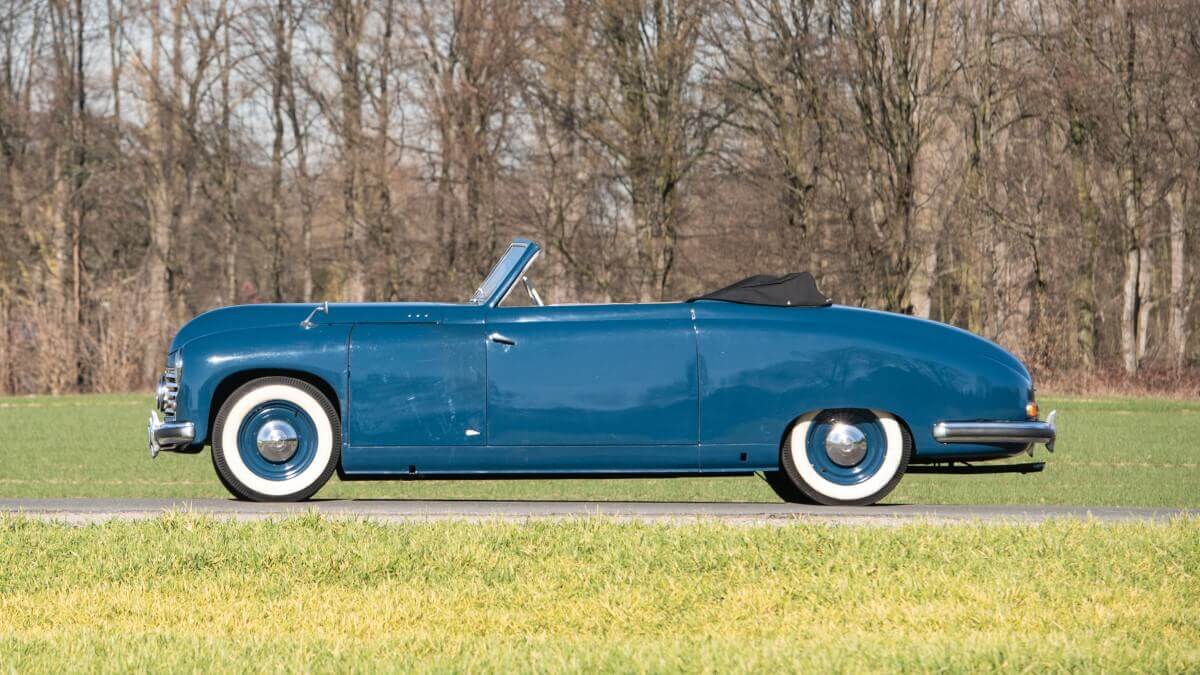

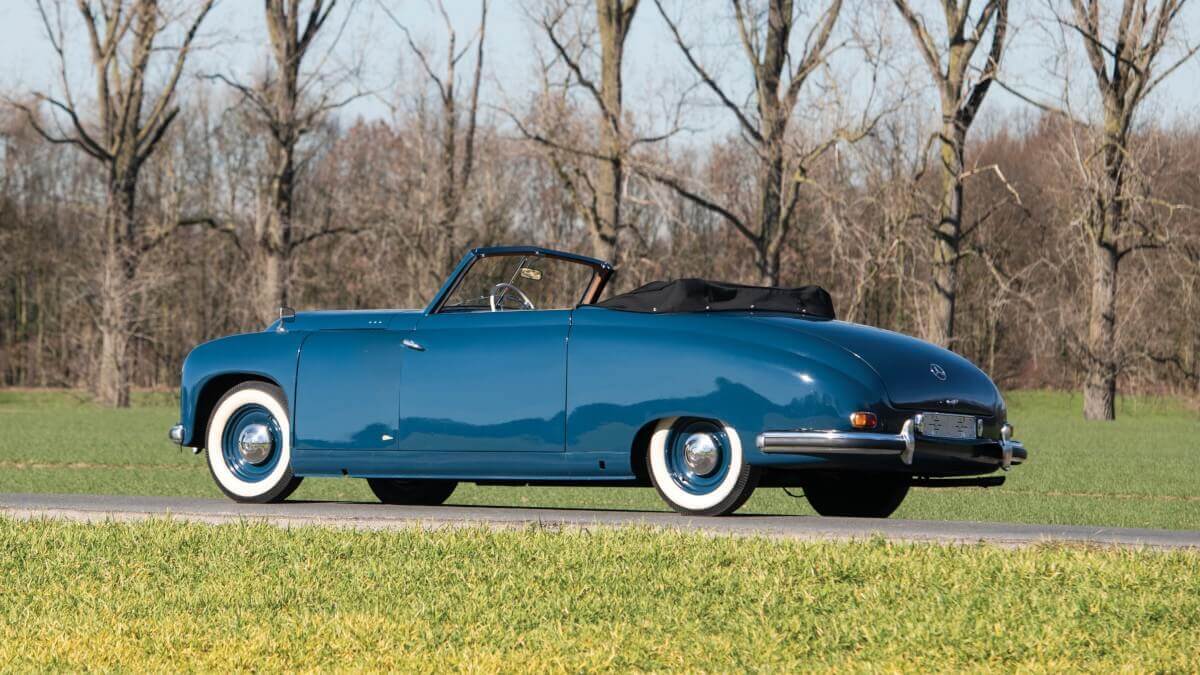

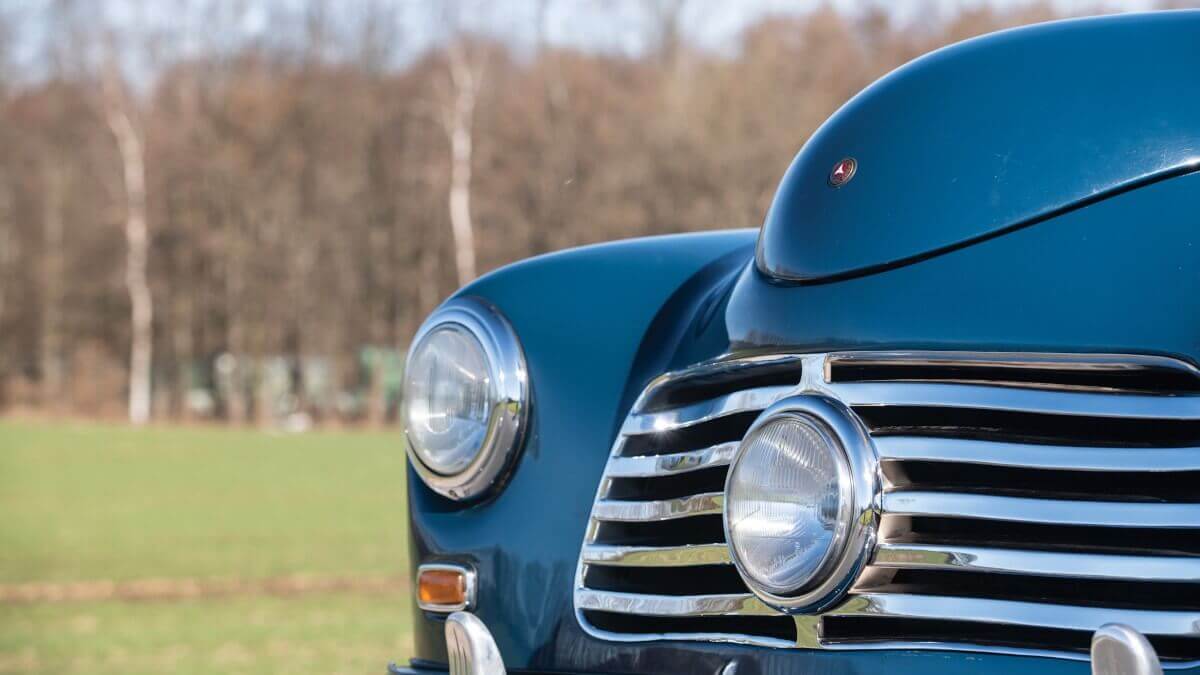


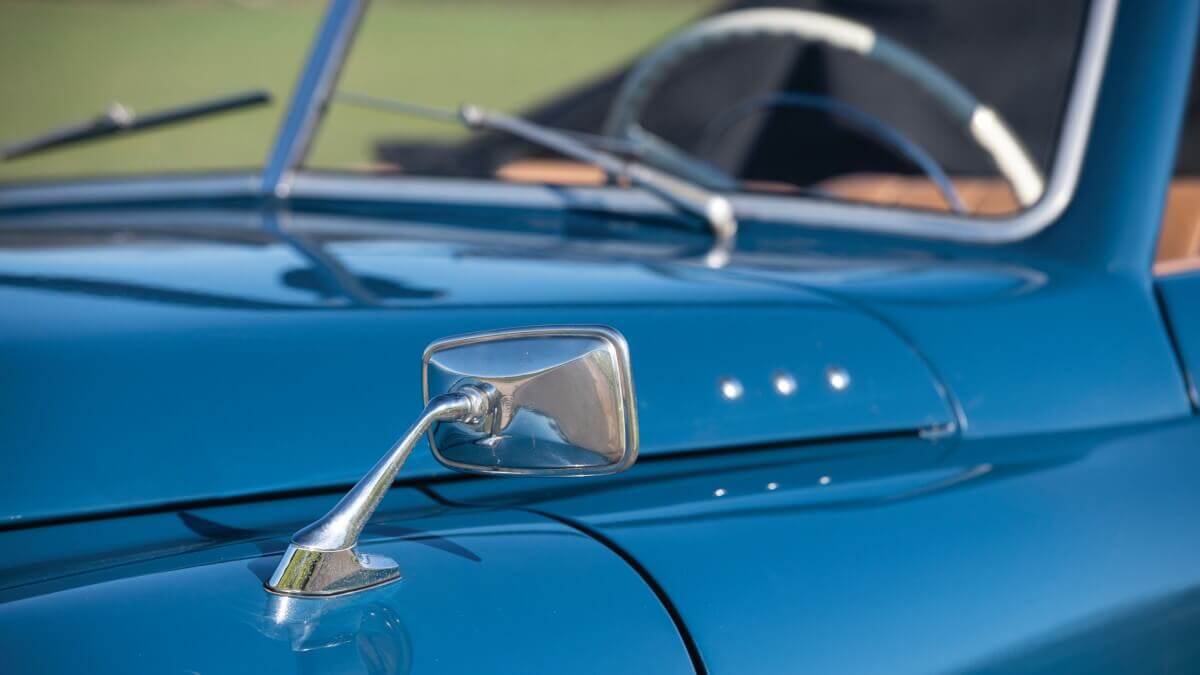
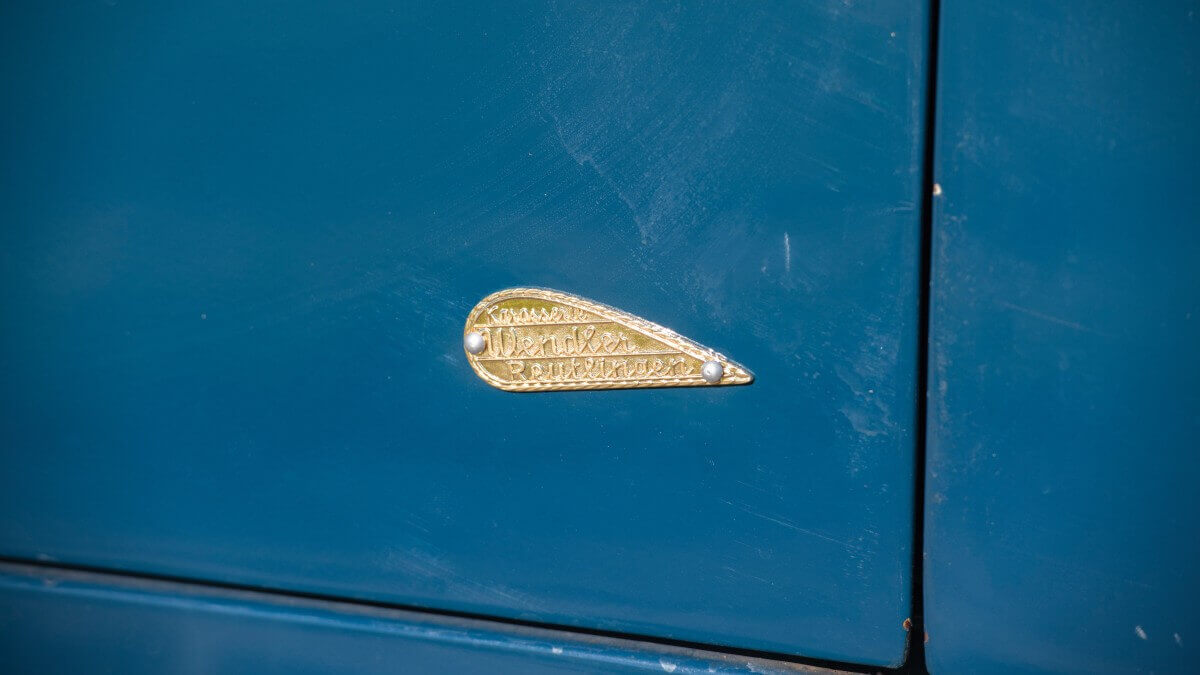


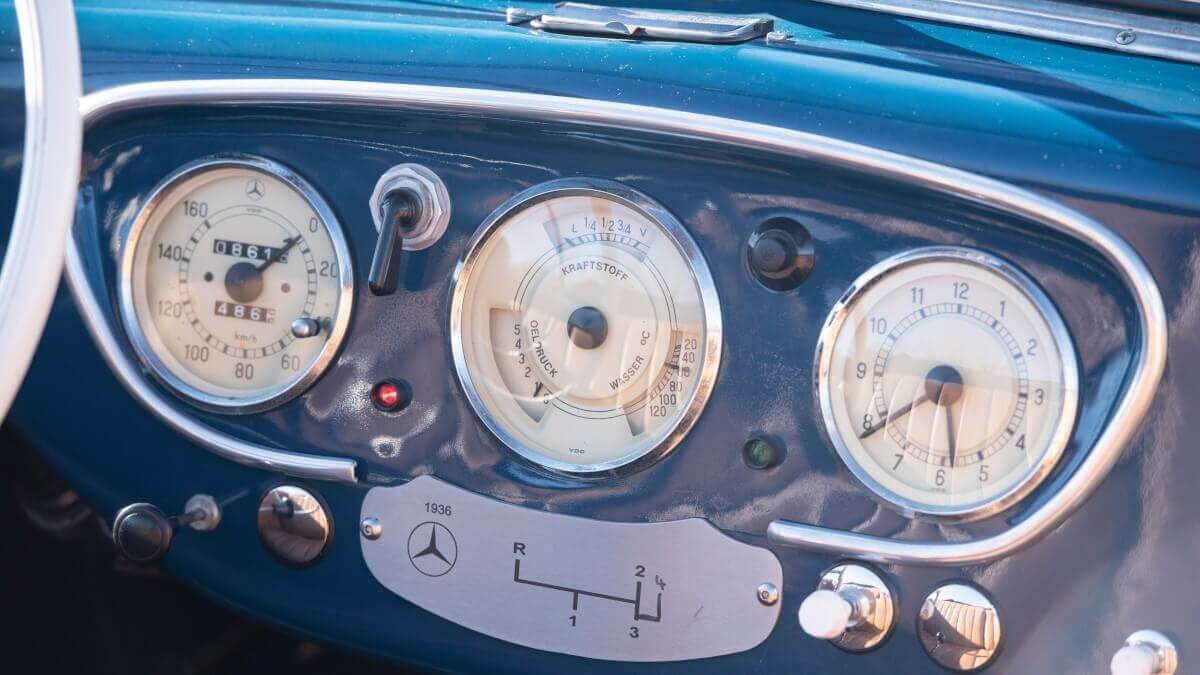
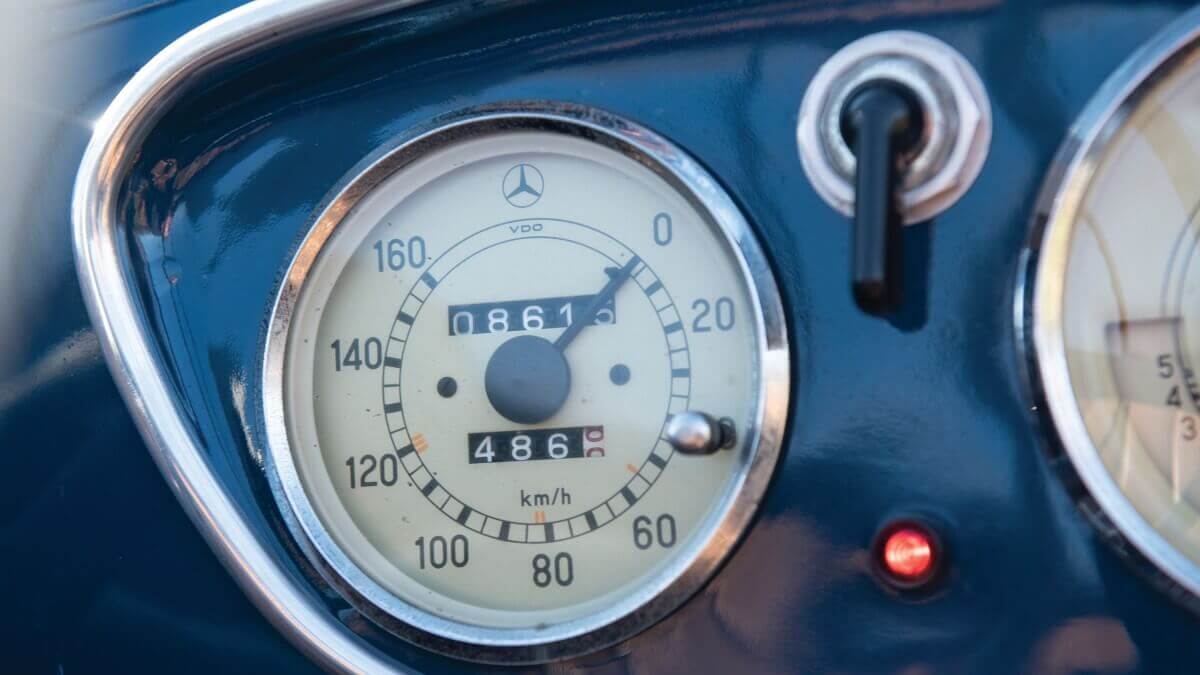


So much for the prehistory. As described, after World War 2 some pontoon bodies were made at Wendler for pre-war chassis. Presumably there were only four convertibles among them and one of which was placed on the chassis of a 1937 Mercedes-Benz 320. On the request of its customer thereby a nicely formed vehicle developed, which maintained rear-hinged ‘suicide doors’ next to the at that time modern pontoon forms with integrated fenders and without lateral footboards. Between doors and front wheels, Wendler put the spare wheels behind cleverly concealed flaps. A close-cut fabric top also makes the car appear sporty when closed. In the wide radiator grille an additional headlight found its place, while the famous brand logo of the brand from Stuttgart at the front only appears as a small emblem on the hood. At the rear the three-pronged star is a little larger and chromed.
Exactly this one-off was used for an article in a 1950s edition of the trade magazine ‘Das Auto’ as well as it was shown on the Wendler stand at the Reutlingen Auto Salon. Subsequently, only two owners are listed in the vehicle papers. In the 1980s, a five-year restoration took place in Augsburg/Germany. The current owner bought the car in 1994 and used it regularly. Now, the Mercedes-Benz 320 with Cabriolet bodywork by Wendler is to be shown at the Techno Classica in Essen.
Images: RM Sotheby’s, Dirk de Jager