Maserati 8CTF Boyle Special
Since May 30, 1911 every year a motorsports event takes place in the USA whose fame is on a level with the Grand Prix of Monaco in Formula 1 or the 24 Hours of Le Mans for sports cars. Of course, we are talking about the 500 Miles of Indianapolis. Once it took place on a paved oval with four banked corners. After World War 2 it got a complete layer of tarmac, but as a reminder a strip across the main straight was left out: The start and finish line shows the bricks of yesteryear and received the name ‘Yard of Bricks’. In addition, since 1936, the winners traditionally drink a sip of milk after the race. Directly to the launch of the race, European manufacturers also came across the pond to compete in the 500 miles (or 200 laps). Peugeot won in 1913, 1916 and 1919, a Delage in 1914 and a Mercedes in 1915. However, in the following 20 years the Indy 500 remained a race event with winners only from the US.
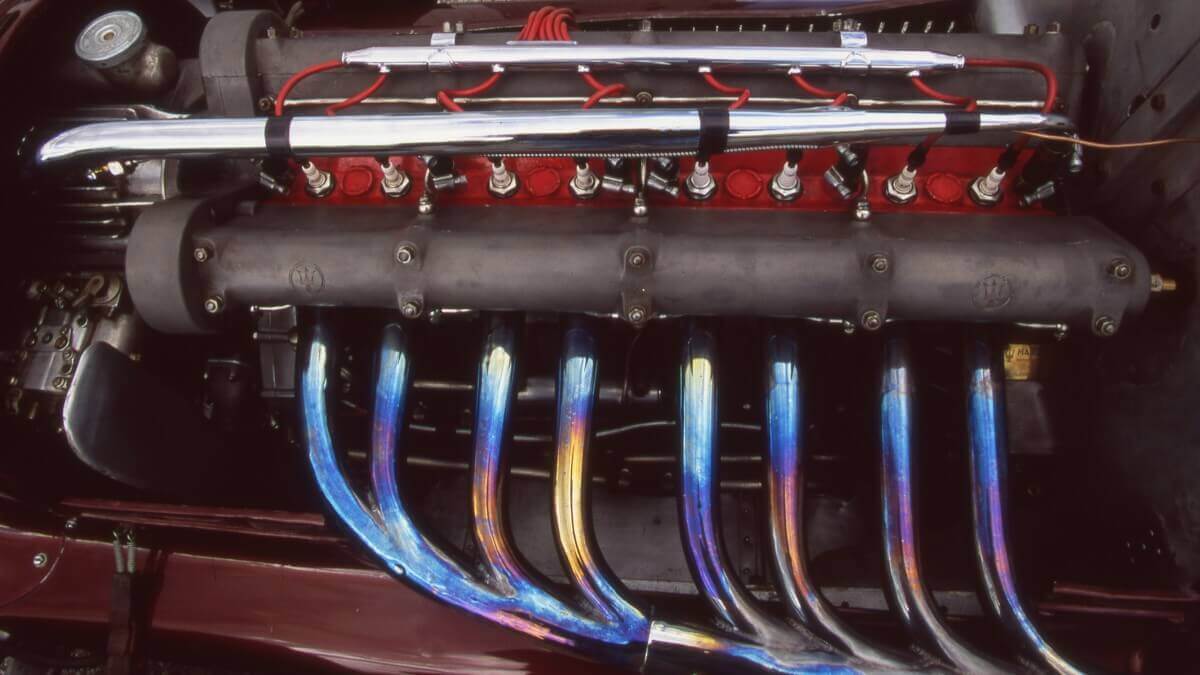
Already in the early 1930s Alfieri Maserati was invited by some race organizers in the USA to bring over his race cars for some events. In 1937, the Maserati brothers sold their company to the Orsi family, but remained in senior positions within the company and were able to focus on the development of new racing vehicles through the cash injection. They benefited from the fact that the international motorsports authorities announced new regulations for monoposto race cars for 1938, which limited the displacement of supercharged engines to three liters. Based on these new rules, Ernesto Maserati developed the 8CTF with a chassis consisting of two steel section bar rails and cross members. In front there is an inline eight-cylinder engine whose cylinders are grouped in two pairs of four and casted in a monoblock with the cylinder head. This resulted in the name of the car: 8 Cilindri Testa Fissa (8 cylinder fixed head). Two carburetors and two large-volume superchargers, as well as the two valves per cylinder in a 90°V arrangement, driven by two overhead camshafts, helped the engine in its original configuration to 350 hp from 2,991 cubic centimeters. From 1939 the power increased to 365 hp.


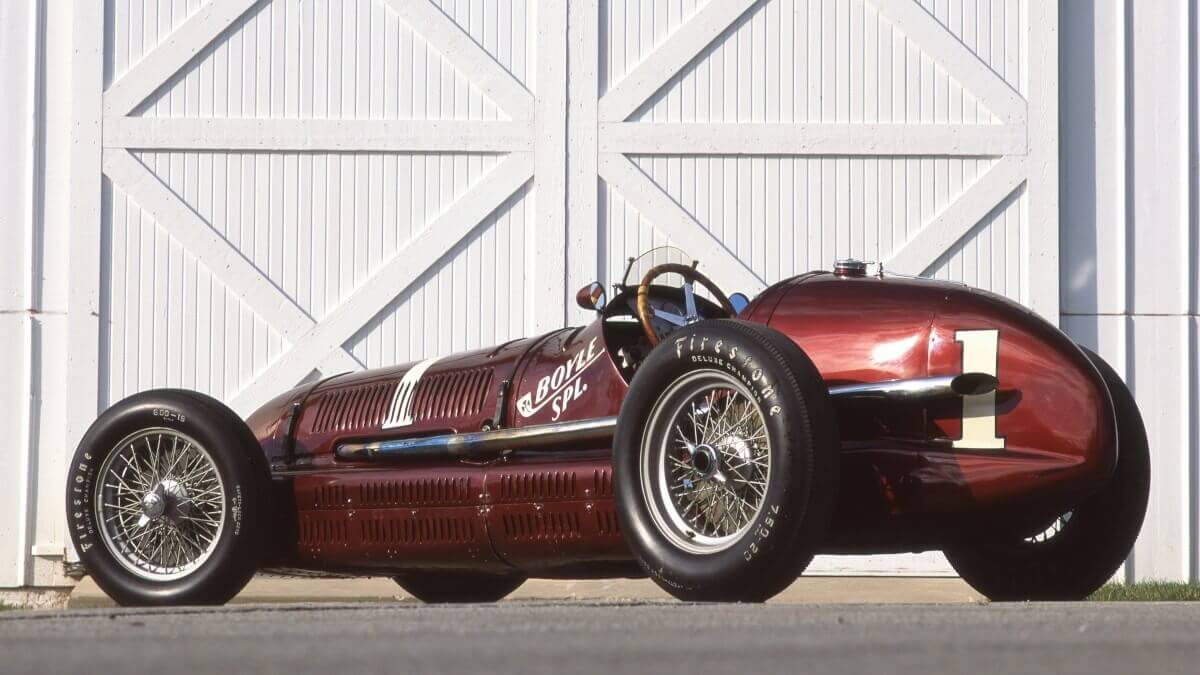

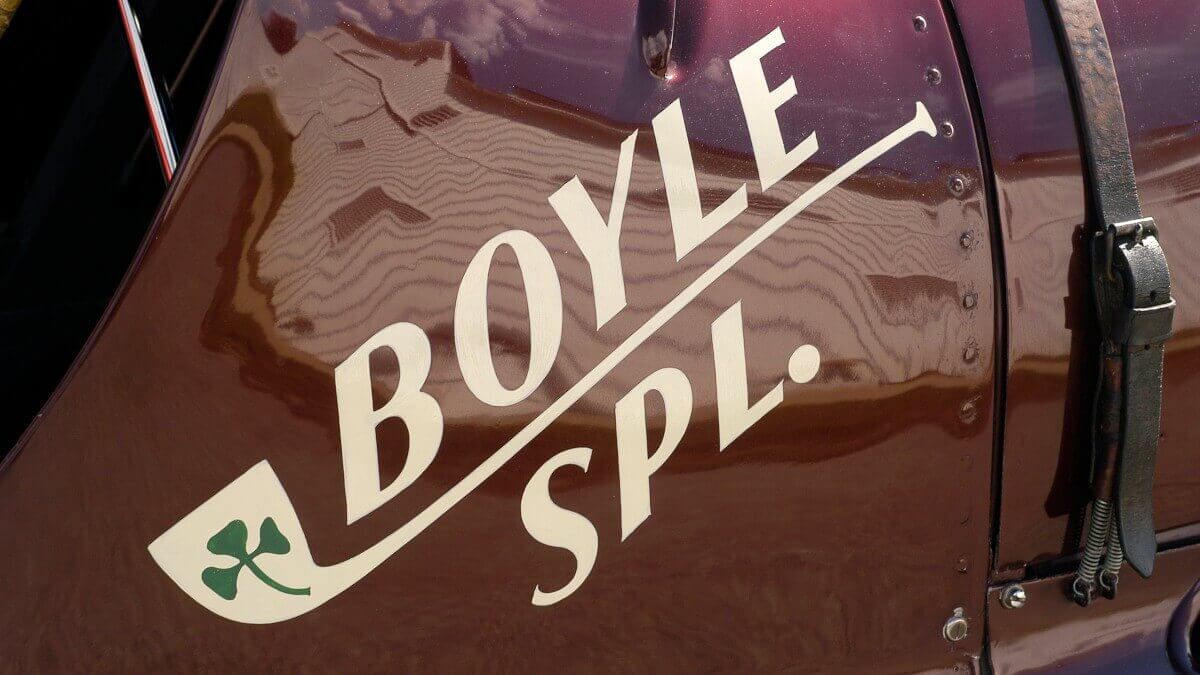

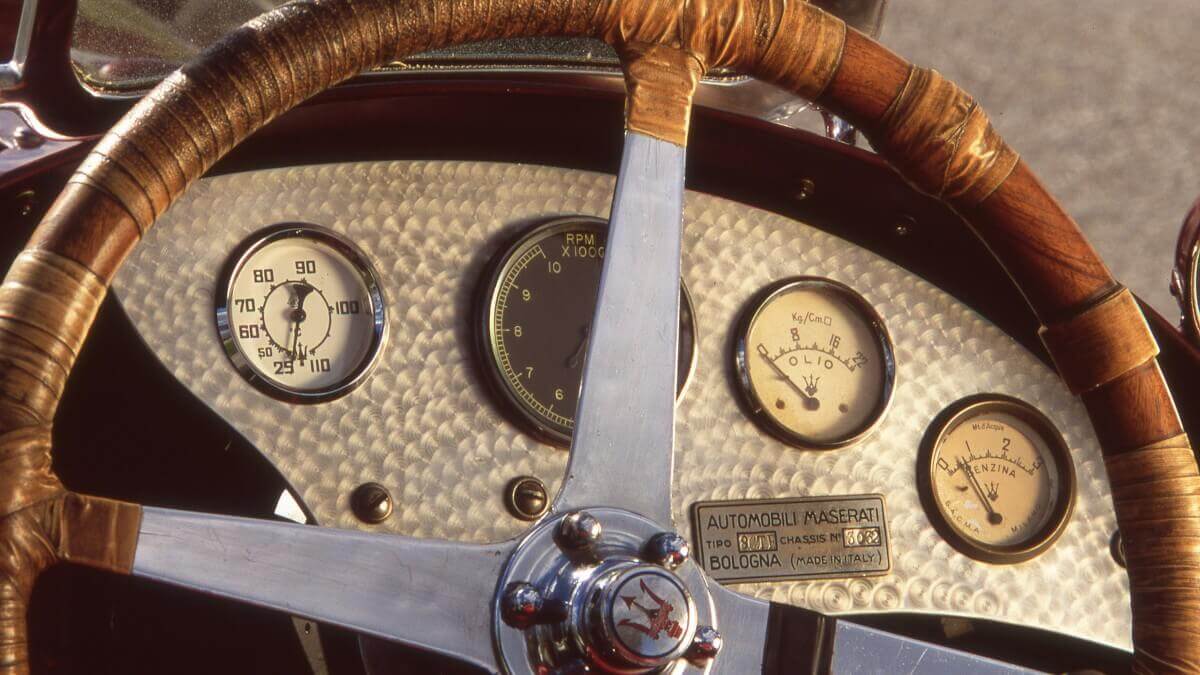

During the year 1938, the Maserati 8CTF impressively demonstrated its performance at various racing events. For example, Count Carlo Felice Trossi led the Tripoli Grand Prix for several laps and took pole position in the Coppa Ciano, while Luigi ‘Gigi’ Villoresi set the fastest lap at the Coppa Acerbo. These successes led to various new orders for the Maserati 8CTF, including one from the Chicago-based racing team Boyle Racing Headquarters of Irishman Michael Joseph ‘Mike’ Boyle. He had planned to win the Indy 500 race with his own team. In the past few years he already raced several race cars from brands like Summers, Cooper or Smith for this purpose. For the 500 Miles of Indianapolis in 1939, the Maserati 8CTF received bigger wheels with Firestone tires after it arrived in the US. It also was resprayed in the amaranth color of the Boyle racing team. For the race, the car was named as ‘Boyle Special’ with the driver Warren Wilbur Shaw. Shaw took part in a total of 13 Indy 500 races and already had scored three third places and a victory before he took his place behind the steering wheel of the Maserati.
The qualifying session ended with the third starting position for Warren Wilbur Shaw with an average speed of 129 mph. In the race he had a tough battle with Louis Meyer in a Stevens-Winfield any Jimmy Snyder in an Adam-Sparks. Of the 200 laps, Shaw led ultimately 51, especially the final and crucial lap. Thus, he achieved his second overall victory with an average speed of 115 mph after a race time of four hours and 20 minutes. For Maserati, this success meant even more orders, resulting in three more 8CTF for the Indy 500 in 1940 next to the car of the Boyle team. Warren Wilbur Shaw won again, underscoring the potential of the Italian racing car. In the post-war era some 8CTF in typical US liveries could be seen at various oval races. It was not until 1950 that the racing career of this monoposto ended, when Bill Vulcanich failed to qualify for the Indy 500. The former winning car from 1939 and 1940 is now partially restored shown as a permanent loan in the Indianapolis Speedway Museum.
Images: Maserati, John Lamm