50 Years of Porsche 917
Today Porsche is known not only for fast road sports cars, but also for various race victories all over the world. Among them are now 19 overall victories at the prestigious 24 Hours of Le Mans in France. Hard to imagine that there was a time before these successes. However, it took a full 22 years from the founding of the company until the first Porsche crossed the finish line at the race circuit near the Sarthe as a leader. The factory team already started with very early versions of the 356 in Le Mans in 1951. As with later vehicles such as the 550 Spyder, the 718 RSK, the RS60 and the RS61 as well as with early offshoots of the 911 they could only start in smaller displacement classes and had no chance to gain the overall victory. Only when a certain Mr Ferdinand Piëch, grandson of company founder Ferdinand Porsche, arrived at Porsche and took over the racing department, he could lead the team in a new direction: he wanted them to build a car capable of competing with the big names and finally gain the overall victory in Le Mans.
It all started with the first Porsche plastic racecar, the 904 Carrera GTS, which was still using mainly four and six cylinder engines (only a few works cars came with eight cylinders as well) and started in the smaller classes as well, but it delivered many insights Porsche could use for later plastic racecars like the 906 Carrera 6, 907, 908, 909 Bergspyder and 910. And although the 908 and 910 achieved various successes, Piëch pushed the boundaries even further to develop a real competitor for the new big prototype class for the sports car world championship from 1968 with up to five liters of displacement. According to regulations of the FIA, 25 identical racecars had to be built to start in this category, which had been interpreted rather casually by competitors such as Ferrari or Matra in previous years. They showed five to ten vehicles to the FIA officers and explained that the remaining copies were already in a container shipped to America, to reach there in time for the first races – only that these containers never arrived anywhere as they didn’t exist in the first place. However, Piëch didn’t want to do so with Porsche and also probably he liked to make a clear statement to all competitors. Although Porsche wasn’t by no means as well positioned financially, as one might to think today, they built all 25 copies of the Porsche 917 and parked them in front of the factory at the end of April 1969 for the homologation process. This picture went around the world. Even if some parts of the rumors are true, that some of those cars back then still used wooden brake calipers and only had one gear in the transmission, this was a feat that nobody had expected from Porsche. A month earlier, in March 1969, the 917 with chassis number 001 debuted at the Geneva Motor Show.





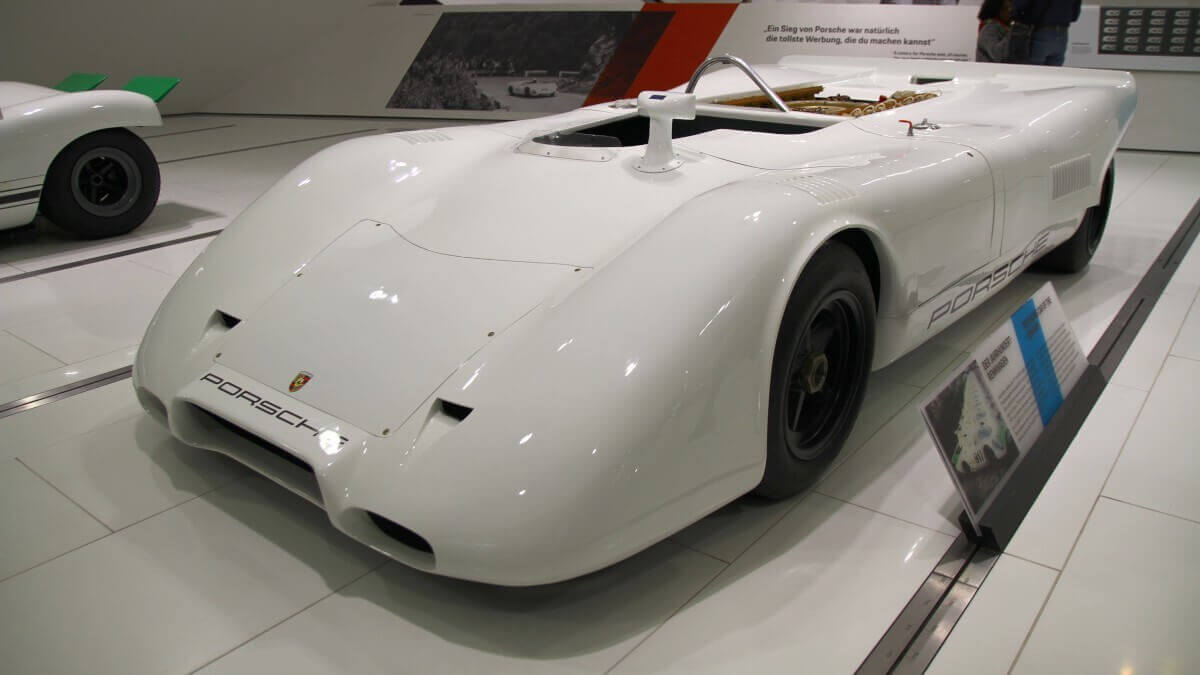
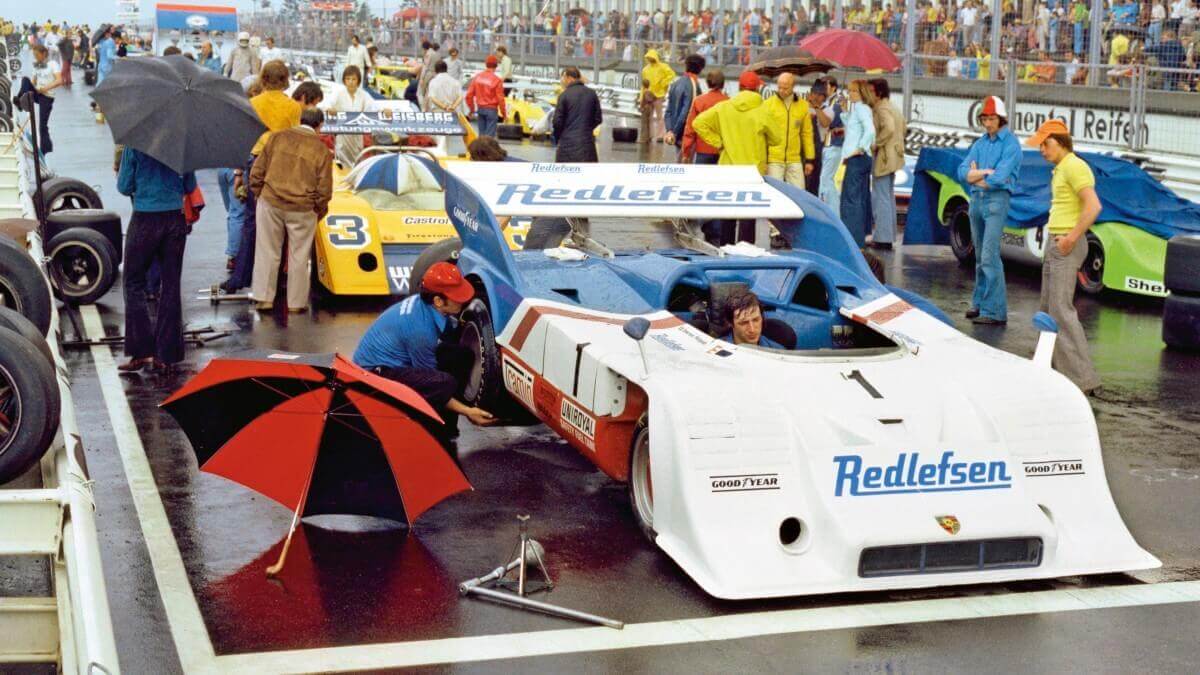


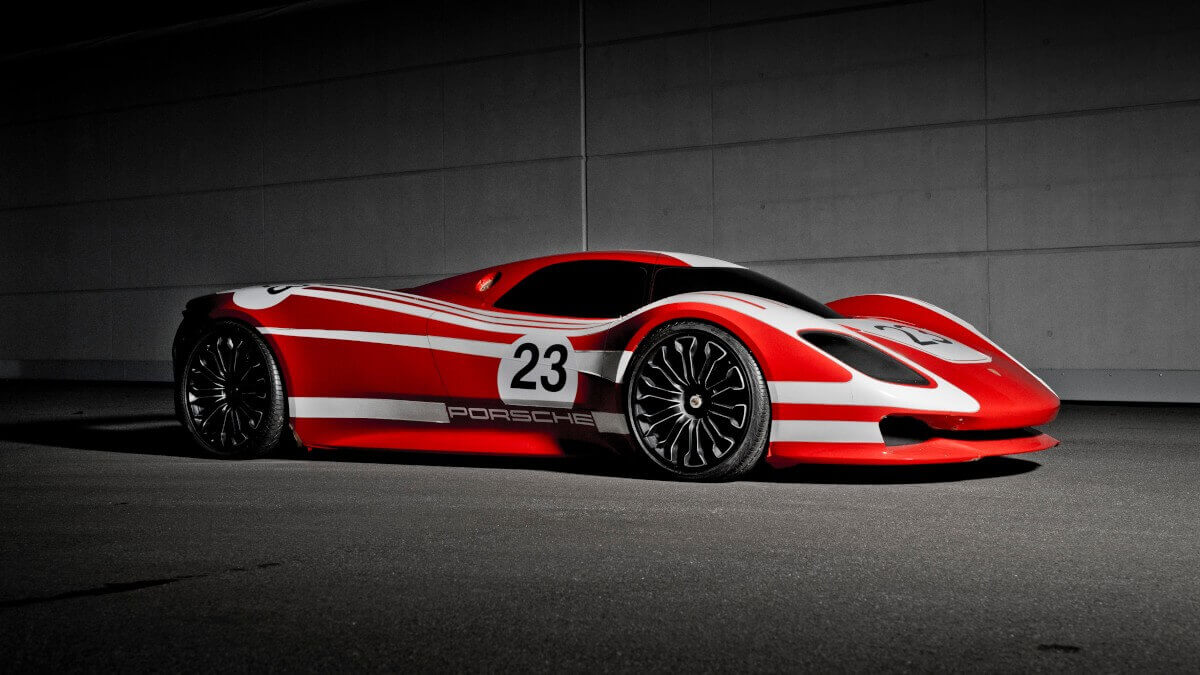

A pretty mixed first race season followed in 1969. The new 917 was anything but mature and proved to be extremely difficult to drive. As a result, the sales opportunities for the fleet of racing cars were kept within narrow limits, as competing vehicles were more successful and at the same time easier to drive. Some 917 crashed more or less spectacular, unfortunately with one driver being killed in Le Mans. John Woolfe from the UK was one of the very first customers to use a 917. Coming from grid position 21, he catapulted his car with a good start into the top ten, before he came onto the grass next to the track at Maison Blanche with two wheels, slid and crashed into the barriers at high speed. At that time they still used the classic ‘Le Mans Start’ with the drivers running across the track, climbing into their cars and then starting. Because of that it was normal that some drivers only strapped in during the first few laps. So Woolfe wasn’t strapped in at all when the accident happened, was thrown out of the car and died next to the wreck. Not only a few factory race drivers back then preferred the 908 over the 917 – at least in the first year 1969.
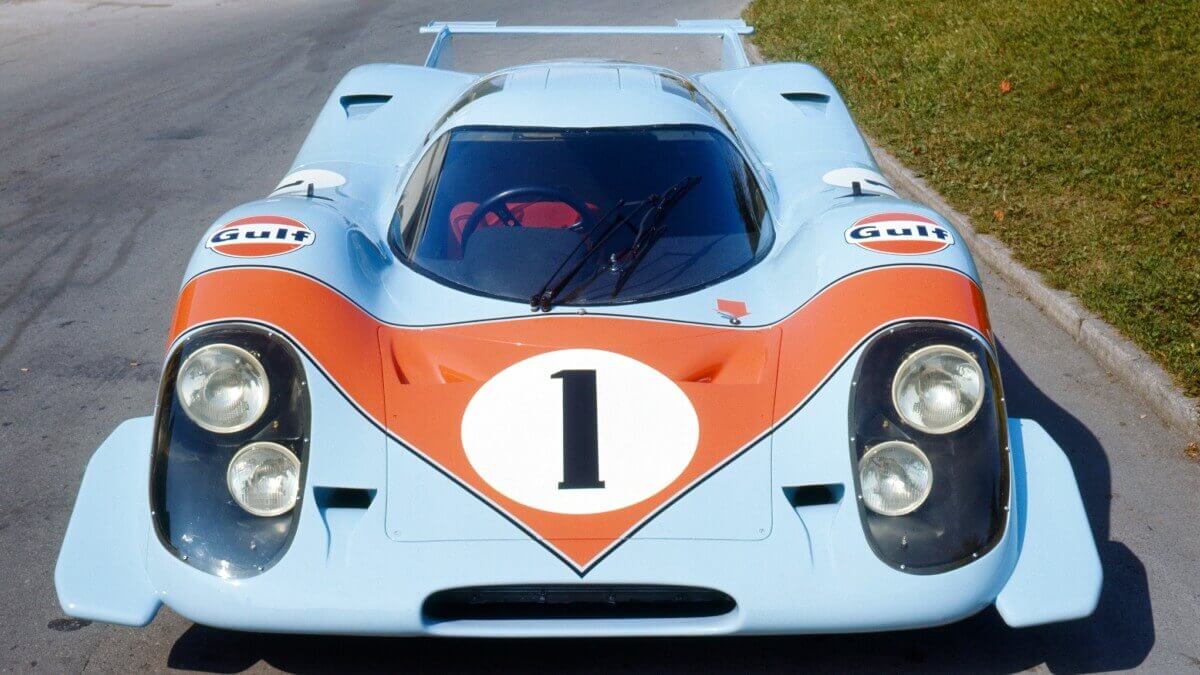
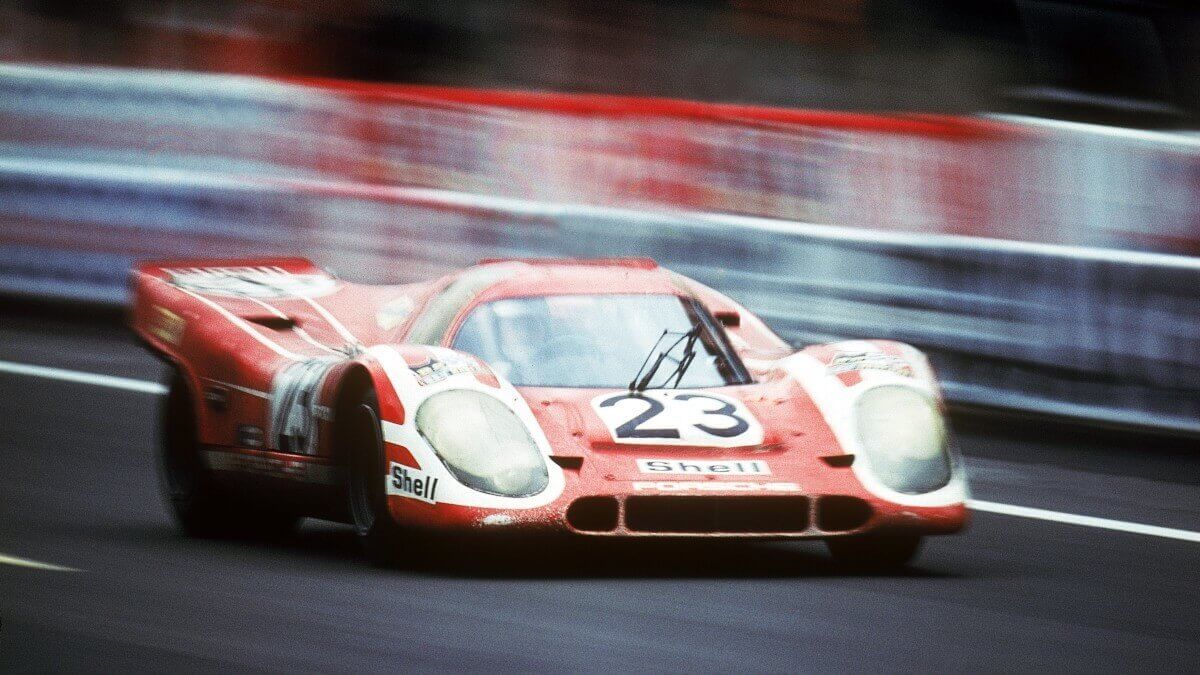
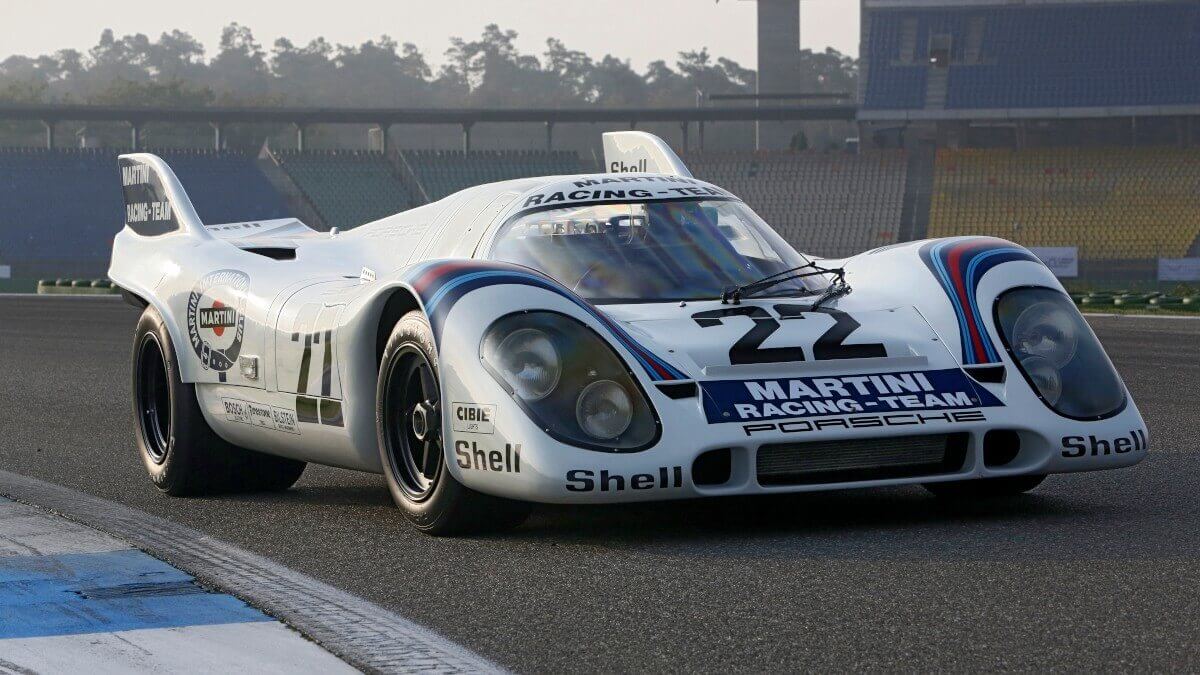
In collaboration with the racing team of John Wyer, who brought the now famous Gulf design into the motorsport, Porsche developed the 917 further in the winter break 1969/70 and finally came up with the idea of a short tail body with a steeply sloping tail end. For this purpose, they removed the rear area of a 917 with a saw without further ado. The resulting 917 K accounted for the previous plexiglass cover over the engine, allowing the fan wheel between the cylinders to breathe freely. With such a short tail vehicle Richard Attwood and Hans Herrmann finally won the French endurance race. This was followed in 1971 by another overall victory by Gijs van Lennep and Helmut Marko, who drove a 917 K with experimental magnesium frame. At the same time, both the factory team and some privateers also used the re-developed 917 LH long tail cars, which reached speeds up to 396 kph (246 mph) at the Hunaudières straight in Le Mans – at that time still without chicanes – but had some disadvantages in the cornering combinations. Both in 1970 and 1971, Porsche also won the Sports Car World Championship. From 1972, the five-liter rules no longer were used for the World Championship, which is why Porsche reoriented their efforts to the Interseries and the CanAm Championship. This resulted in the 917/10, the prototype 917/16 Spyder with a 16 cylinder boxer engine and finally the turbocharged 917/30, which was successfully used until 1975. However, the last race for a 917 aside from historical motorsport was the 1000 Kilometers of Brands Hatch in 1981, when the German racing team Kremer used a 917 K Coupé built from spare parts and fitted with a 4.5-liter engine.

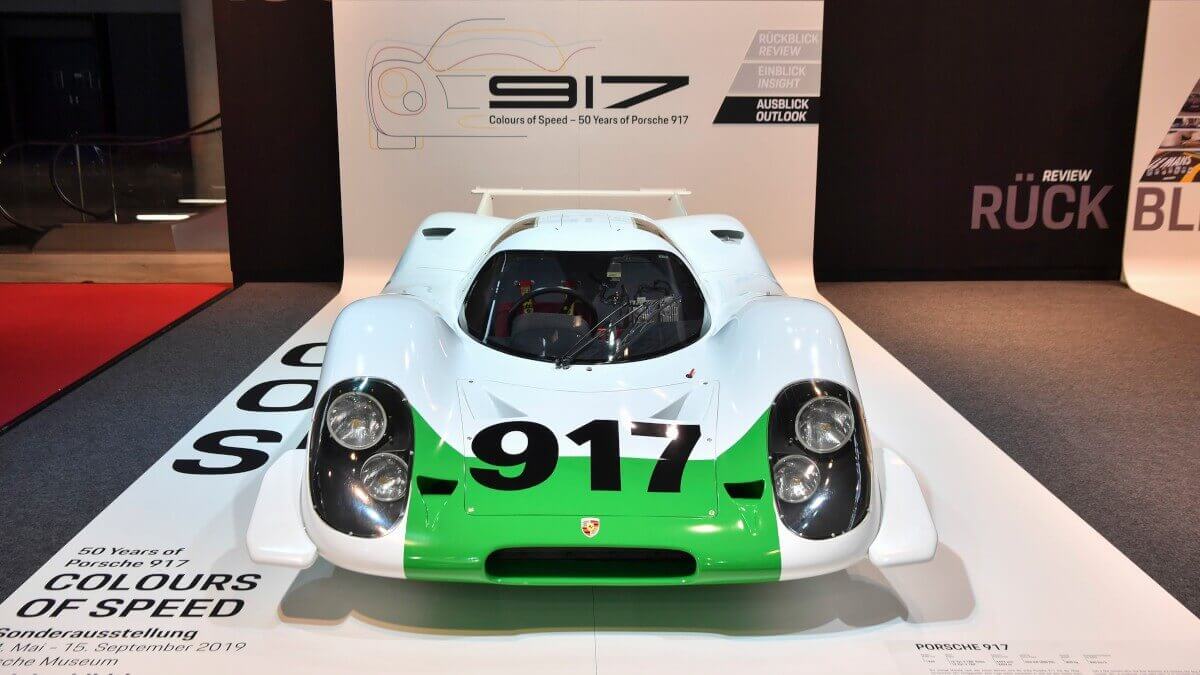
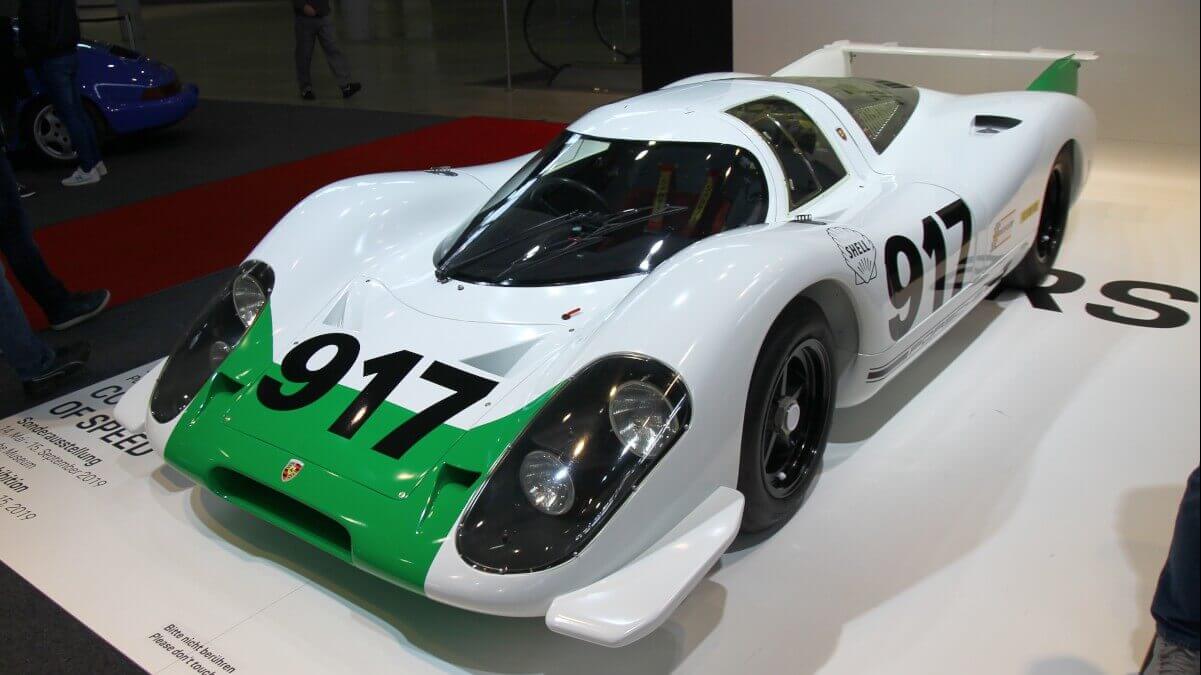
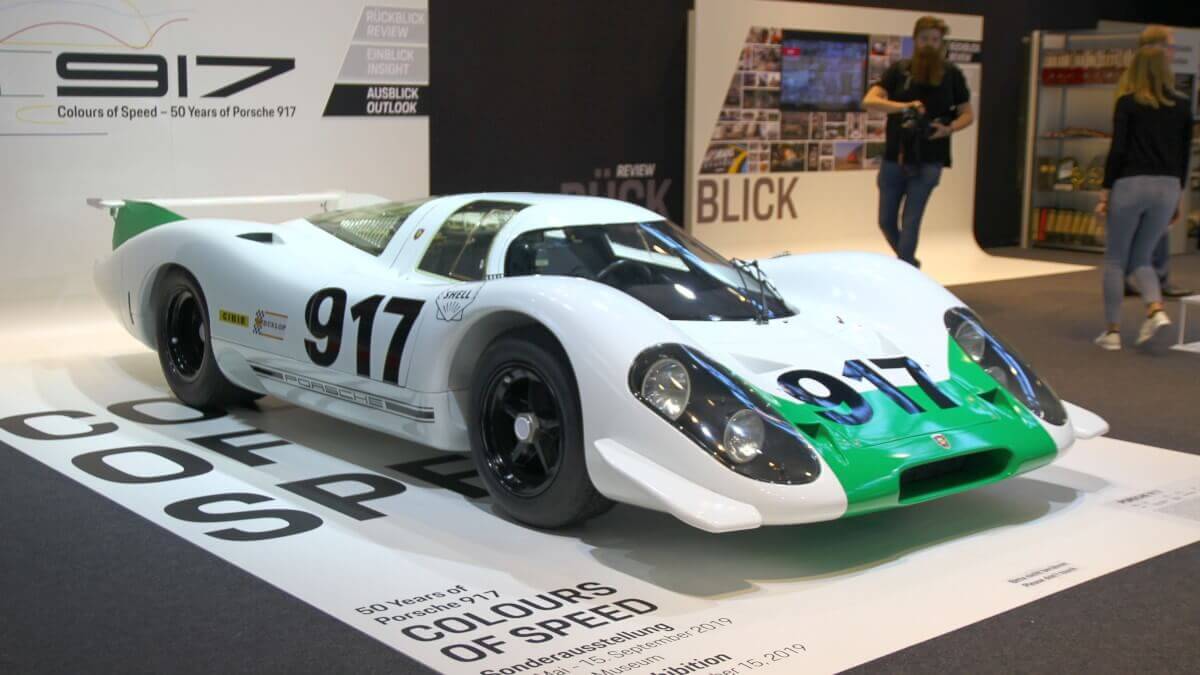
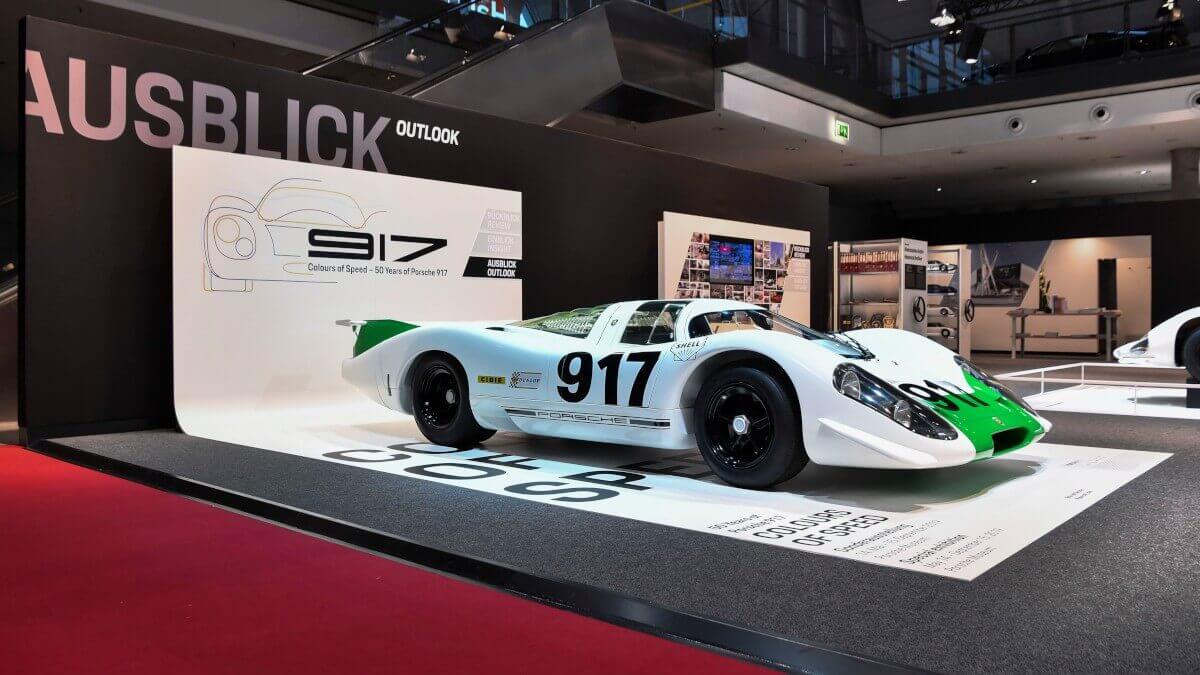


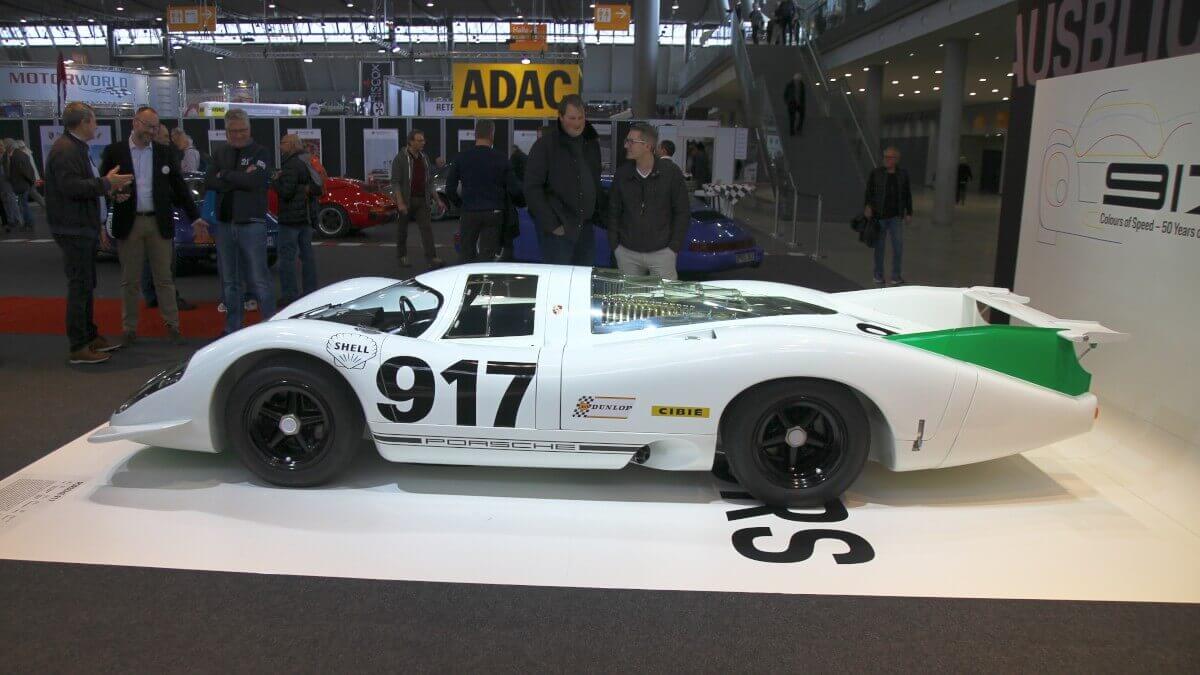
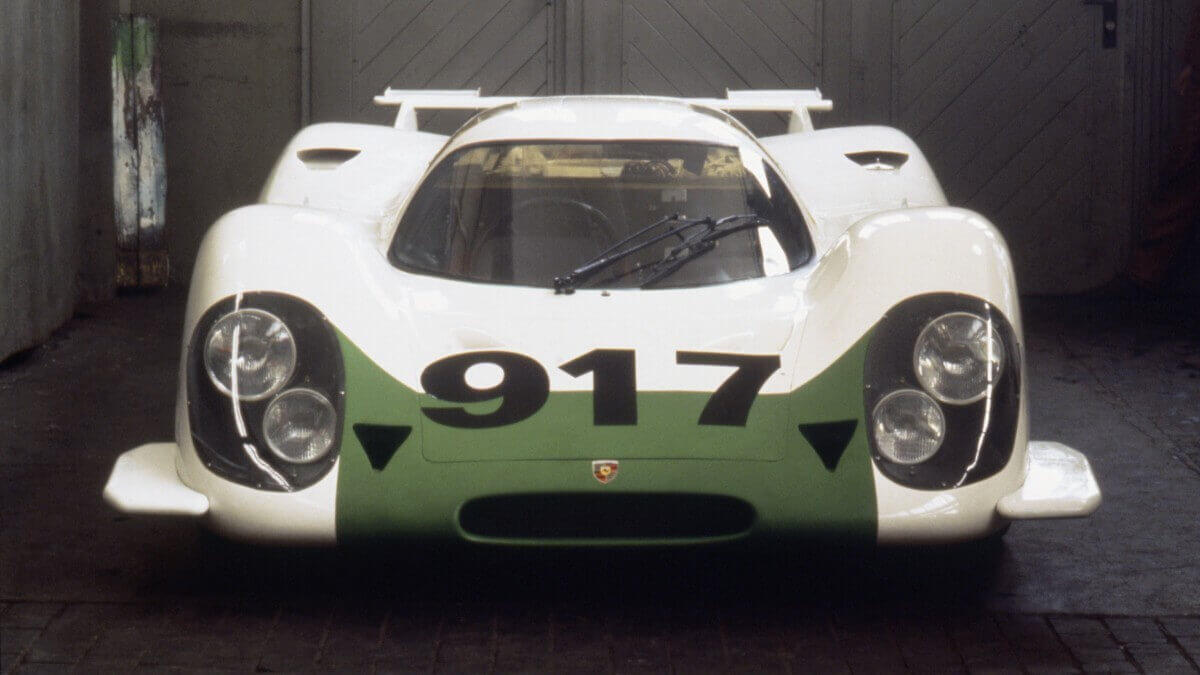
Due to the difficult handling of the original version and the significantly improved nature of the 917 after its modification into the 917 K, all existing cars were modified. Thus, since 1970 no vehicle existed in original specification. For the 50th anniversary, Porsche rebuilt the 917 with chassis number 001, which once made its debut in Geneva, back to its original state. This car has a pretty interesting history, although it wasn’t ever used for racing. For the IAA in Frankfurt the same year, the green accents were changed for new orange ones and the big number 917 changed for a 3. It went another two start numbers down when the ‘J.W. Automotive Engineering’ racing team of John Wyer was announced as the new official team to race the cars instead of the factory team. For this, #001 was repainted in light blue with an orange arrow on the front – the now famous Gulf colors.
After the Porsche team from Salzburg won the 24h of Le Mans in 1970, Porsche converted #001 into an exact replica of the race winning car and borrowed it to Porsche Salzburg in October 1970. Since the end of 2017, a team of technicians, engineers and museum mechanics from Zuffenhausen were busy restoring the car back to its original appearance. For this purpose, the front and rear sections were elaborately made using the latest 3D technology available based on original design drawings. Original sketches also helped to rebuild the tubular frame construction in the rear area. At the Retro Classics in Stuttgart visitors could take a first look at the newly finished racecar.
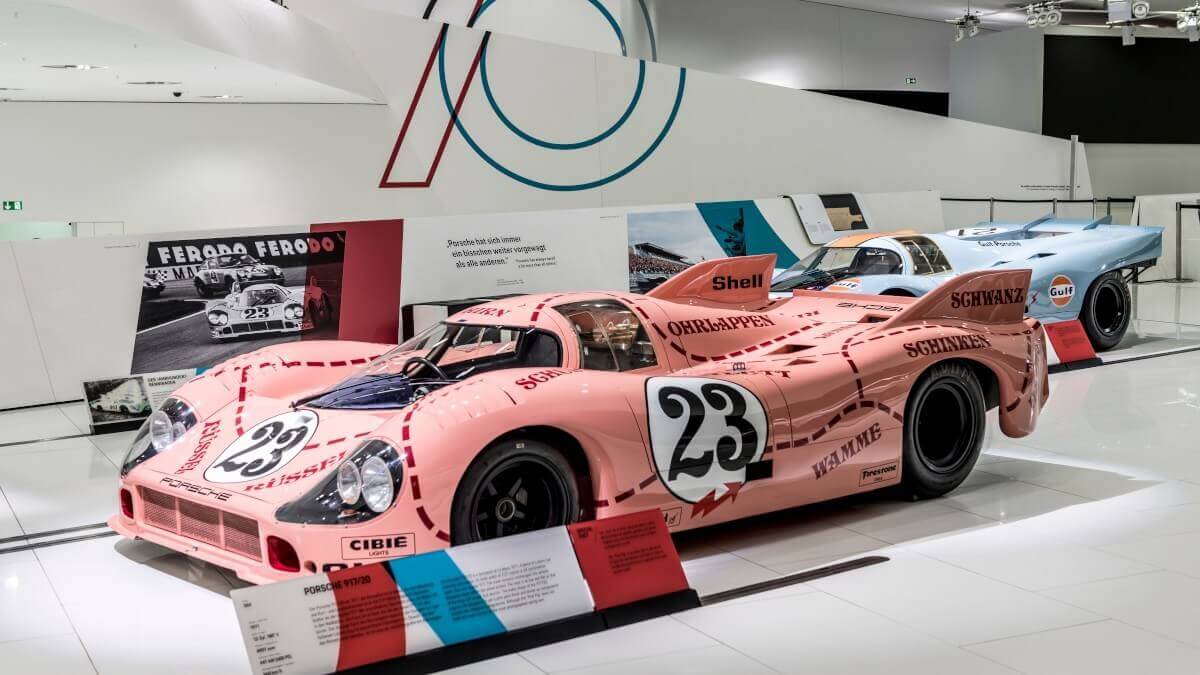
From 14 May to 15 September, the Porsche Museum in Stuttgart Zuffenhausen is dedicating a special exhibition to the legendary racing sports car, in which ten 917 and four other exhibits will be on display. In addition, some new 917-items will arrive in the Porsche shops.
Images: Porsche, Matthias Kierse