F.K.P. Tribute: The final chapter of the Bugatti Veyron
The year is 2005. Cell phones still flip open, YouTube is just a few months old—and in an automotive world that has become accustomed to V12 cylinders, carbon wings, and wedge-shaped drama, a car enters the stage that redefines all the rules. Bugatti launches the Veyron 16.4 into series production. 1,001 hp. Over 400 km/h. All–wheel drive. Full leather. Air conditioning.
Twenty years later, this trump card is making a comeback. Not as a reissue, not as a retro show car, but as the ultimate essence of what the Veyron would be today: the Bugatti F.K.P. Hommage.
The story behind this triumph can be summed up in one phrase: uncompromising engineering. Ferdinand Karl Piëch, then CEO of the Volkswagen Group, sketched out the W-engine architecture not in Molsheim, but on a Japanese bullet train. Based on VR, W8, and W12 concepts, the W16 with four turbochargers was born. An engine whose extremely compact design made the Veyron’s balance, short wheelbase, and everyday usability possible in the first place. Combined with all-wheel drive and near-perfect weight distribution, the Veyron defined a completely new segment: the hypercar grand tourer, which pushed technical boundaries without ever appearing nervous.
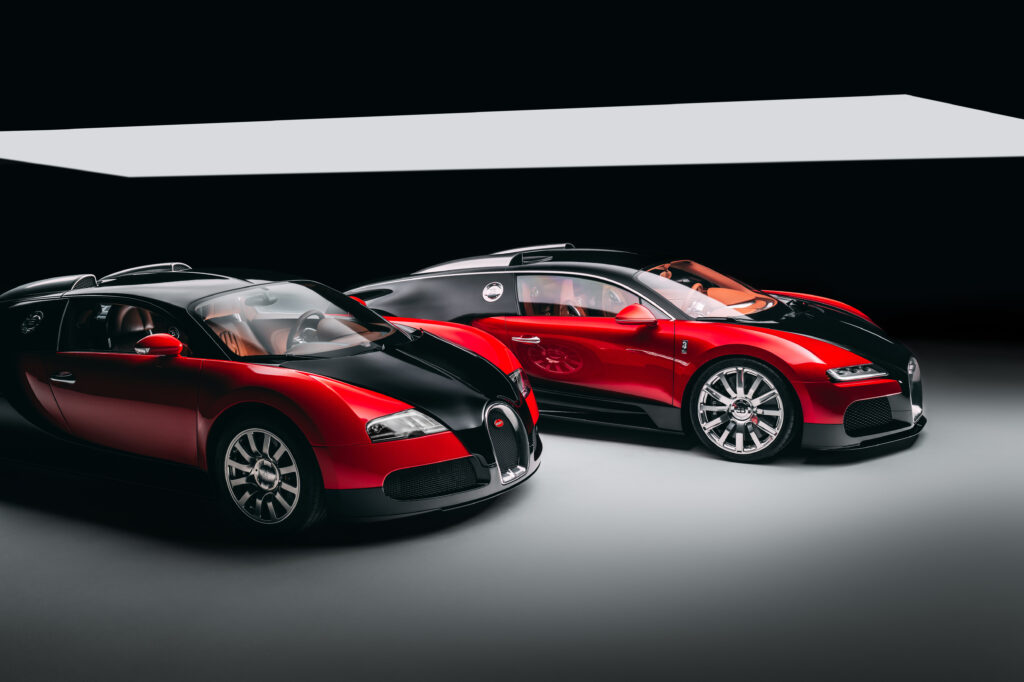
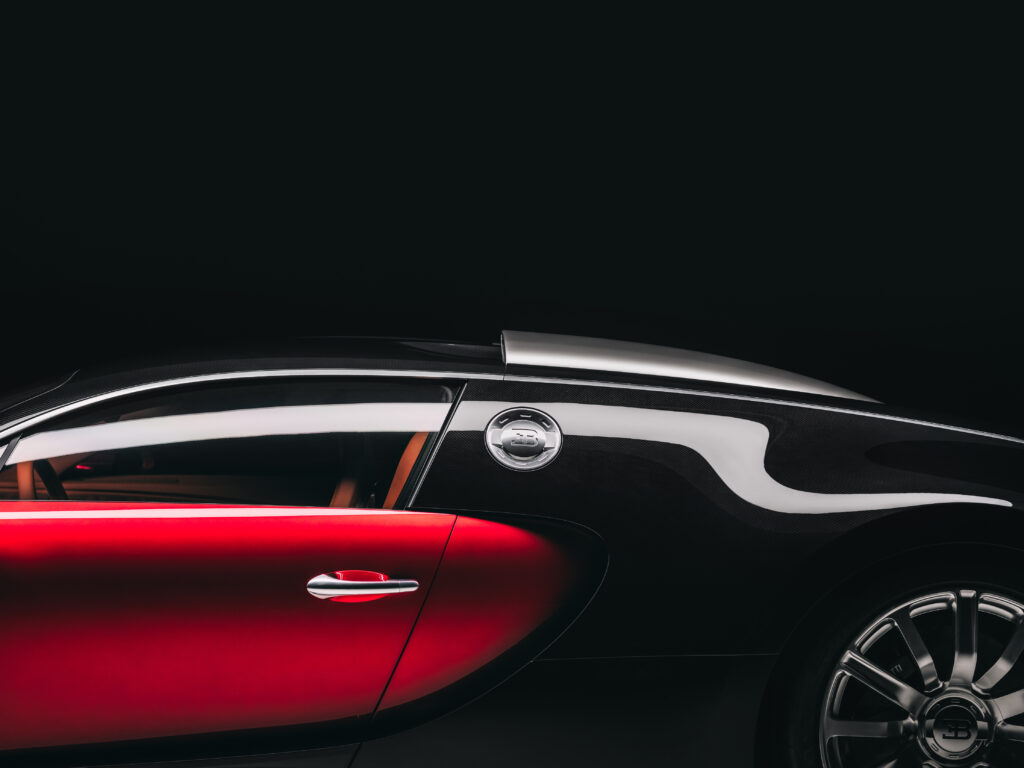

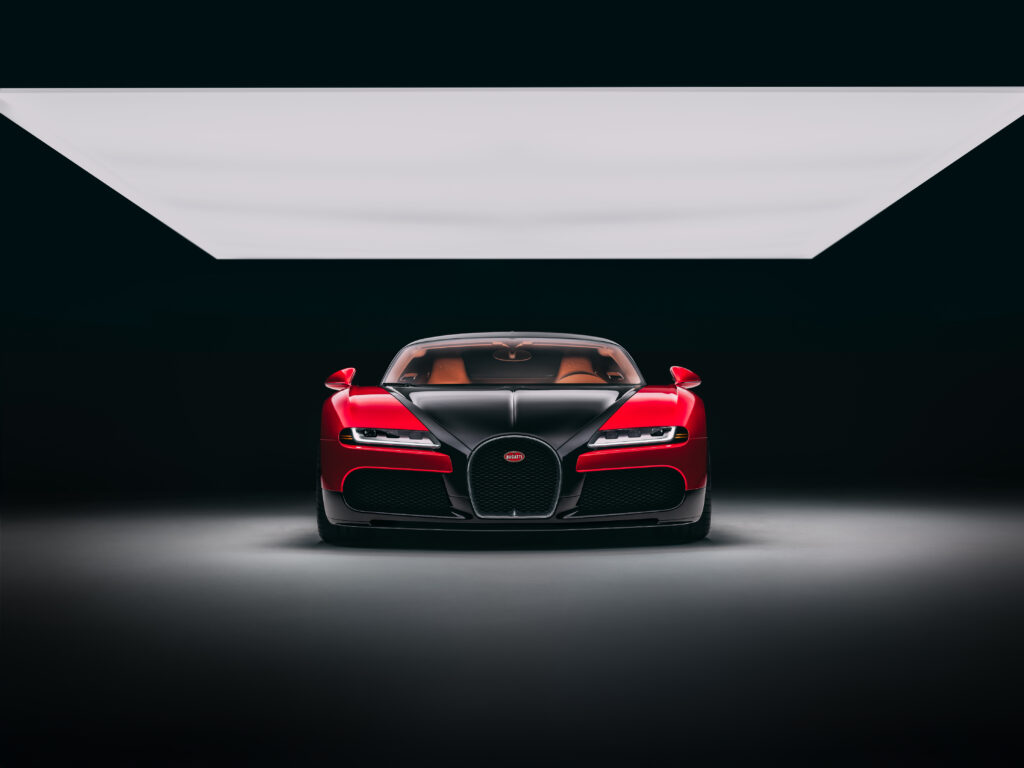
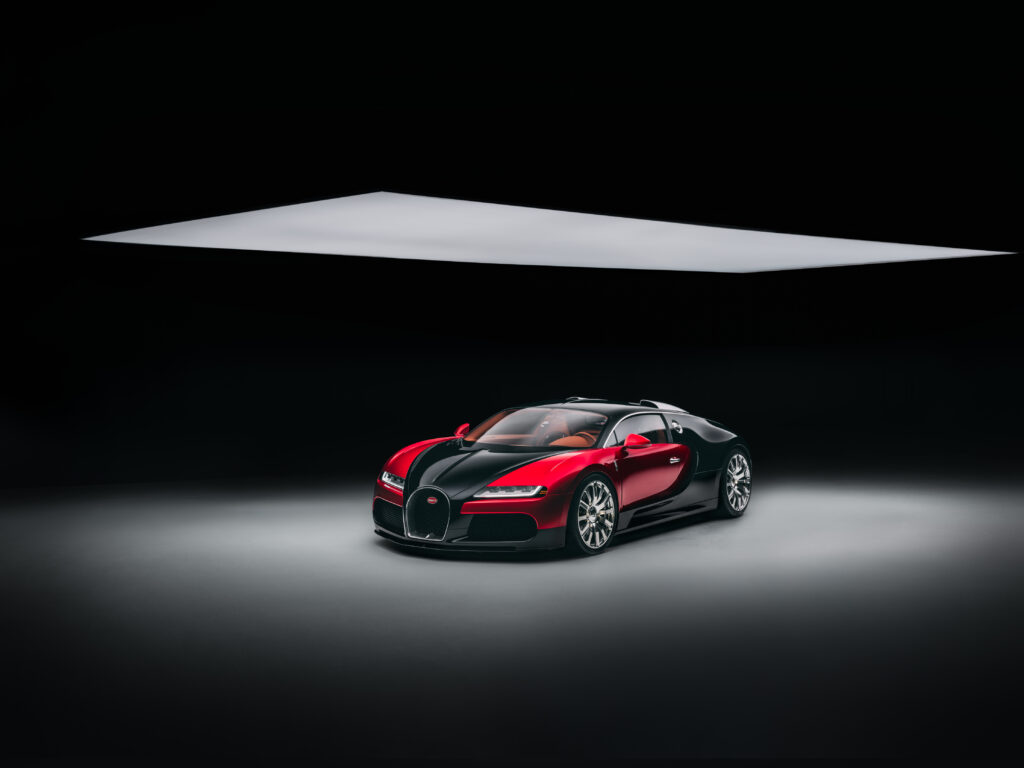
Twenty years later, Bugatti is reviving this spirit, not as a reminiscence, but as a consummation. The F.K.P. Hommage is the second creation in the Programme Solitaire and is considered the definitive Veyron. Beneath its familiar, deliberately understated silhouette lies the highest evolutionary stage of the W16: 1,600 hp, four turbochargers, reinforced peripherals, optimized thermodynamics, and a transmission that confidently handles the enormous torque. It is this engine that made the 300 mph mark a reality in the Chiron Super Sport, and here it returns in a form that could hardly be more timeless.
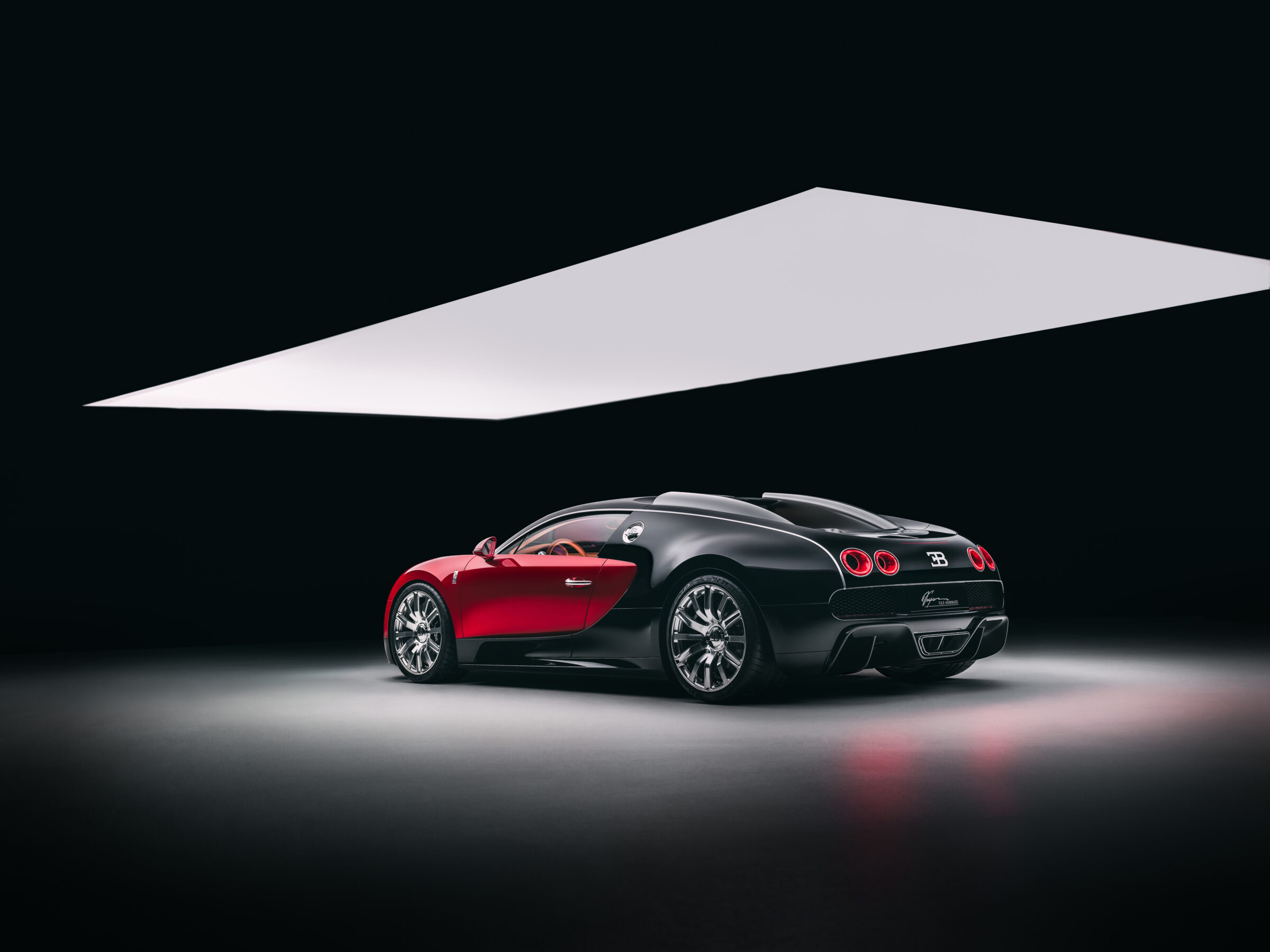
Externally, too, the F.K.P. pays homage to the character of the original. The rearward-sloping stance, the lowered beltline, the calm presence—all of this is immediately recognizable. But every detail has been sharpened: the three-dimensional horseshoe radiator grille, milled from a solid block of aluminum, blends organically into the bodywork, the panel architecture is clearer, the proportions more precise. Larger air intakes supply the more powerful drive, while the iconic intakes behind the occupants have been deliberately retained. New wheel sizes and state-of-the-art Michelin tires ensure a visual and dynamic balance that underlines the maturity of the concept.
The paintwork is particularly impressive: a deep red with exceptional visual depth, achieved by applying a silver aluminum base under red-tinted clear coat. Instead of classic black, Bugatti has opted for lightly tinted visible carbon fiber, which combines contrast and technical opulence. It is not a loud statement, but one that only becomes fully apparent at second glance, very much in keeping with the original Veyron.

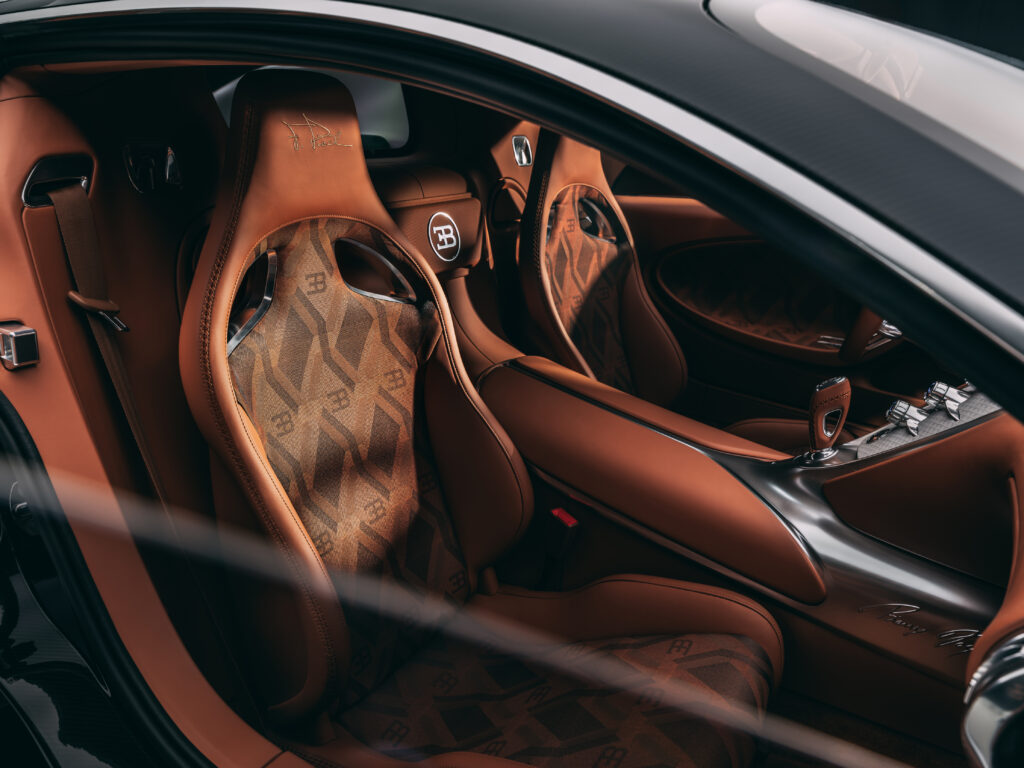


The interior ultimately takes the biggest step forward. A round steering wheel in Bauhaus style, a center console and transmission tunnel cover made of solid aluminum, plus textile elements made from fabrics woven exclusively in Paris for the first time. At the center is a specially made Audemars Piguet Royal Oak Tourbillon, mechanically connected to the vehicle without an electrical interface, staged like a technical work of art. Watchmaking, automotive engineering, and customer vision merge here into an object that goes far beyond classic customization.
The Bugatti F.K.P. Hommage is neither a nostalgic look back nor a design experiment. It is a final chord. If the Veyron was once the trump card in the super sports car game, then this car is the completely rigged deck—not to win again, but to show what perfection looks like.